The whole world today is aware of yoga, India’s unique gift to humanity. It is recognised as the foundational concept of Indic civilisation. It is ironic that the equally seminal idea of rasa is often overlooked- even at home. Yoga emphasises unification and rasa celebrates diversity. The two complement each other. It was sage Bharat who compiled Natyashastra, a treatise on aesthetics that is as stimulating as the aphoristic wisdom of sage Patanjali, who is credited with the authorship of Yoga Sutra.
Yoga is often associated with self-discipline and ascetic austerities rasa invites the individual to enjoy without inhibition the sensual delight the world offers- food and flavours, changing colours and moods that the cycle of seasons brings taking delight in music, dance, painting and poetry. Everything becomes a matter of taste- inherited or acquired. Rasa, in brief, provides the key that opens up the resplendent treasure trove we are inheritors to.
Everything, let us not forget, begins with food. An ancient dictum from the Upanishads tells us Annam vai brahma, Annam vai rasam! Food is the cosmic reality and food is the sap of life- its essence. Food for thought indeed. It’s not only the body but also the mind that requires nourishment. Rasik is the word used not only for the gourmand or gourmet but all who relish the spread laid out in myriad art forms.
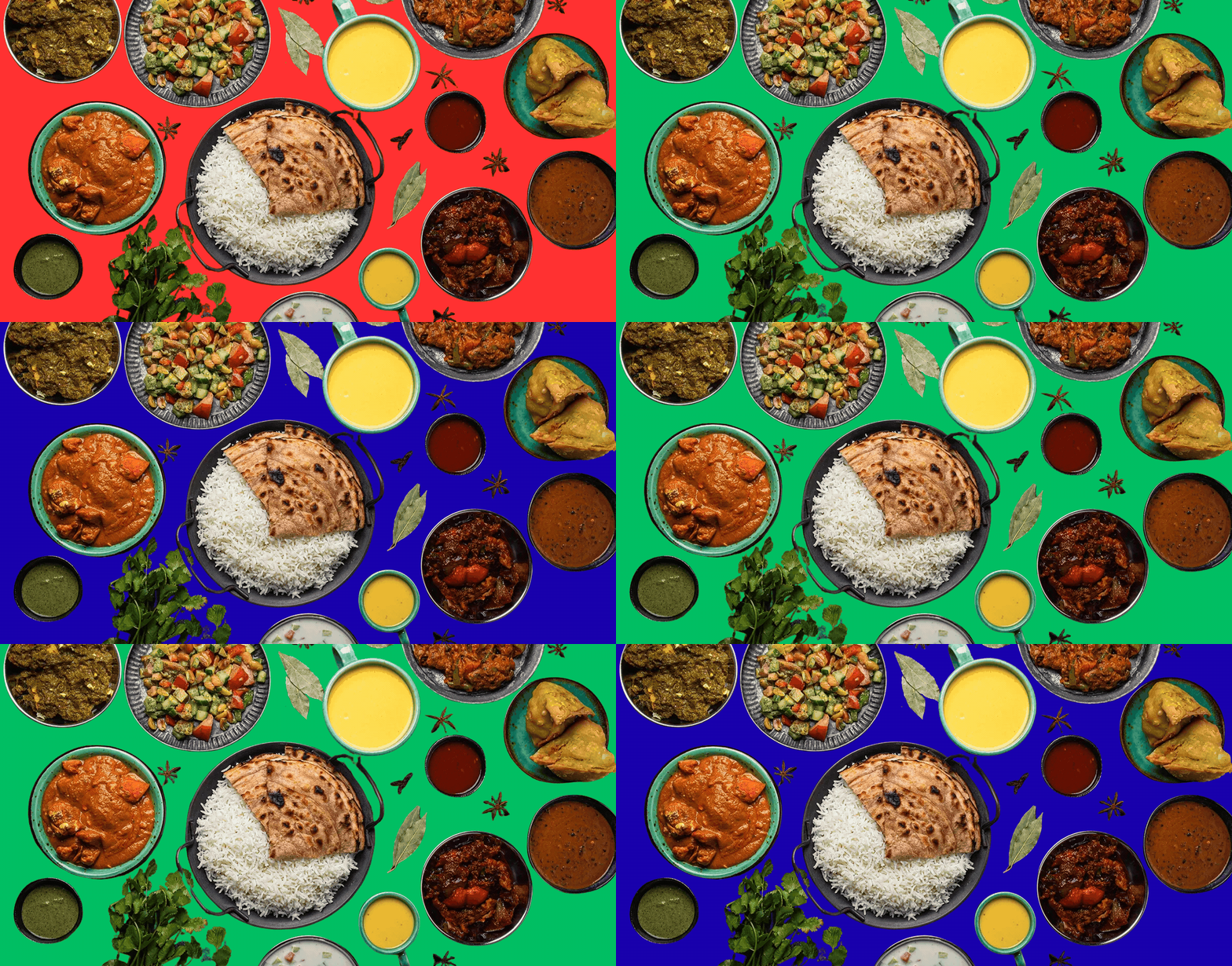
To return to food and flavours. Millennia before a Japanese chemist stumbled upon umami- the fifth taste- Indians had discovered six basic tastes- sweet and savoury, sour and bitter, pungent and astringent. What is even more amazing is that, with the passage of time, they established a correspondence between the six tastes (shadras) and six seasons (shadritu). Our ancestors gently nudged us to eat and enjoy in harmony with nature. Ayurveda wasn’t equated with a system of medicine but started as an art of good life, laying emphasis on inherent properties of edible ingredients and exploring the correlation between body types of different individuals and their psychological orientations. The seasons transformed their impact on us. One was advised to bring about changes in diet accordingly.
Music and painting have reinforced this message for centuries. The Rajput, Mogul and Pahari miniatures in the ragmalika genre portray musical modes as persons indicating the mood they induce. The barahmasa portfolios do the same, depicting how the six seasons cause distress and delight. The background has fruits, blossoming trees that bring relief or enhance the euphoria. In the realm of music, the folk and the classical intermingled. The compositions relied on poetry- devotional, heroic, romantic, and even erotic. Couplets, wonderfully evocative, contributed to tranquility or euphoria.
The idea was to consume what kept the frost melted, the body cool in blistering heat, and warm when bitter cold made teeth chatter. Then there was the rainy season when stomach ailments caused trouble, and one waited for the autumn to arrive. This was when one could eat as one wished and prepare for the onset of winter. Two months of short days and long nights before one could hear the footsteps of the spring- Vasant, the king of all seasons. The frost melted, mustard spread a yellow velvety carpet, and fruit trees sprouted blossoms. The earth is being rejuvenated, and desire begins to stir in human hearts.
There are traditional, time-tested foods that are seasonal- sherbets and raita-pachadi, chutneys and curd rice in the summer, sizzling deep-fried pakoda when it is pouring, and rich halwas and kheer-payasam in the winters. Light and heavy, subtle and gross, the foods remind us that there is a time for everything under the sun.
Food is a multi-sensorial experience. It has colour, aroma, texture and temperature that combine to create taste. Home cooks and master chefs are like alchemists creating magic every day. The perfumes prescribed for different seasons (for instance, khus and sandal for the summer and musk or oud for the winter) are fragrant mood manipulators!
The texture of what we wear cotton-gossamer-like muslin, or wafta woven with natural mixed yarns in hot weather, and woolens from softer-than-silk pashmina or homespun, rough-hewn tweed like pattu when the chill sets in is a reflection of individual taste- not rigid adherence to a prescription.
Food, attire, music – everything is really a matter of taste. The options are countless, and the choice is ours to make.