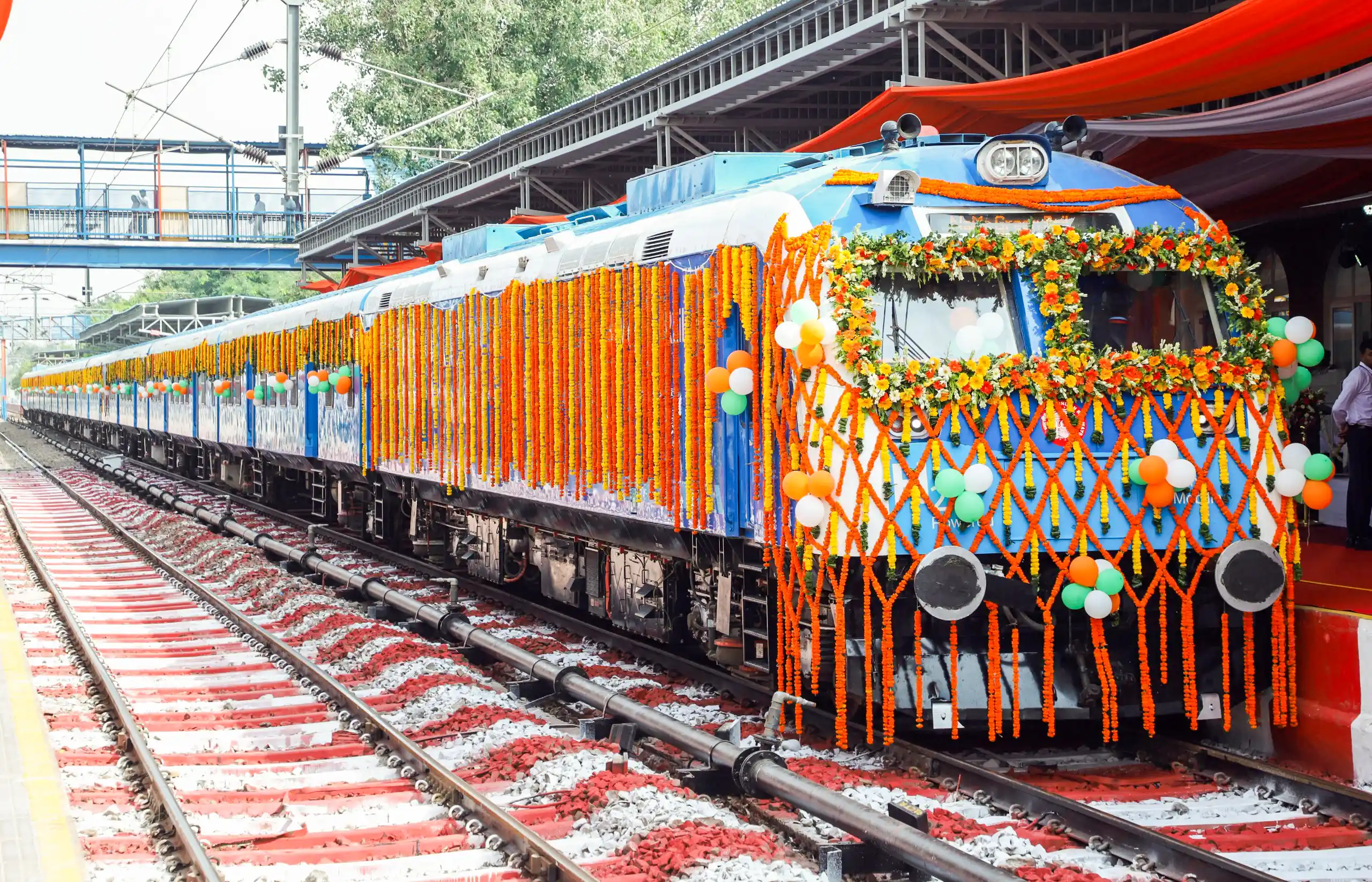
On July 17, 2026, Prime Minister Narendra Modi flagged off India’s first indigenously developed hydrogen-powered passenger train from Jind in Haryana. Dubbed the “NaMo Green Rail,” this 10-coach marvel runs on an 89-km route to Sonipat, powered by a 1,200 kW hydrogen fuel cell system that generates electricity onboard and emits nothing but water vapour.
For a nation whose railways still rely heavily on diesel in many pockets, this is more than a technical milestone — it is a powerful declaration of intent. India is not merely catching up with the world; it is carving its own path toward sustainable mobility with homegrown innovation.
Why This Matters
Hydrogen fuel cell technology represents one of the cleanest forms of propulsion available today. Unlike battery-electric systems that require extensive overhead wiring or catenary infrastructure, hydrogen trains produce their own power on board. This makes them ideal for routes where full electrification is challenging or uneconomical — precisely the kind of flexible, future-ready solution India needs for its vast and diverse rail network.
The environmental dividend is immediate and compelling. Every kilometre this train travels avoids the diesel fumes that contribute to air pollution and climate change. Scaled up, the plan to deploy 35 such hydrogen trains under the “Hydrogen for Heritage” initiative could transform scenic and ecologically sensitive routes while advancing the National Green Hydrogen Mission and the country’s Net Zero 2070 ambitions.
Atmanirbhar in Action
What makes this launch truly inspiring is that the train was designed, engineered, and integrated in India. It joins a select club of nations — Germany, Japan, China, and a few others — that have operational hydrogen rail services. But India’s entry carries a distinct flavour of self-reliance. In an era of global supply chain vulnerabilities and technological protectionism, developing such a complex system domestically sends a strong message: Indian ingenuity is ready for the green industrial revolution.
This achievement also dovetails beautifully with other recent breakthroughs, such as Skyroot Aerospace’s successful private orbital launch just a day later. Together, they paint a picture of a confident, innovation-driven India that is simultaneously tackling climate challenges and expanding its technological frontiers.
A Symbol of Hope
The hydrogen train is more than rolling stock. It is a rolling laboratory of possibility — proof that India can leapfrog outdated polluting technologies and embrace cutting-edge, clean solutions tailored to its needs. For millions of passengers who will ride it, breathing cleaner air and witnessing technology that respects the environment, it offers tangible hope.
As India hurtles toward becoming a developed nation, initiatives like this remind us that progress need not come at the expense of the planet. The NaMo Green Rail is not just a train; it is a vehicle for a more sustainable, self-reliant, and responsible future. Full steam — or rather, full hydrogen — ahead.
The journey has begun. Let us ensure it accelerates.