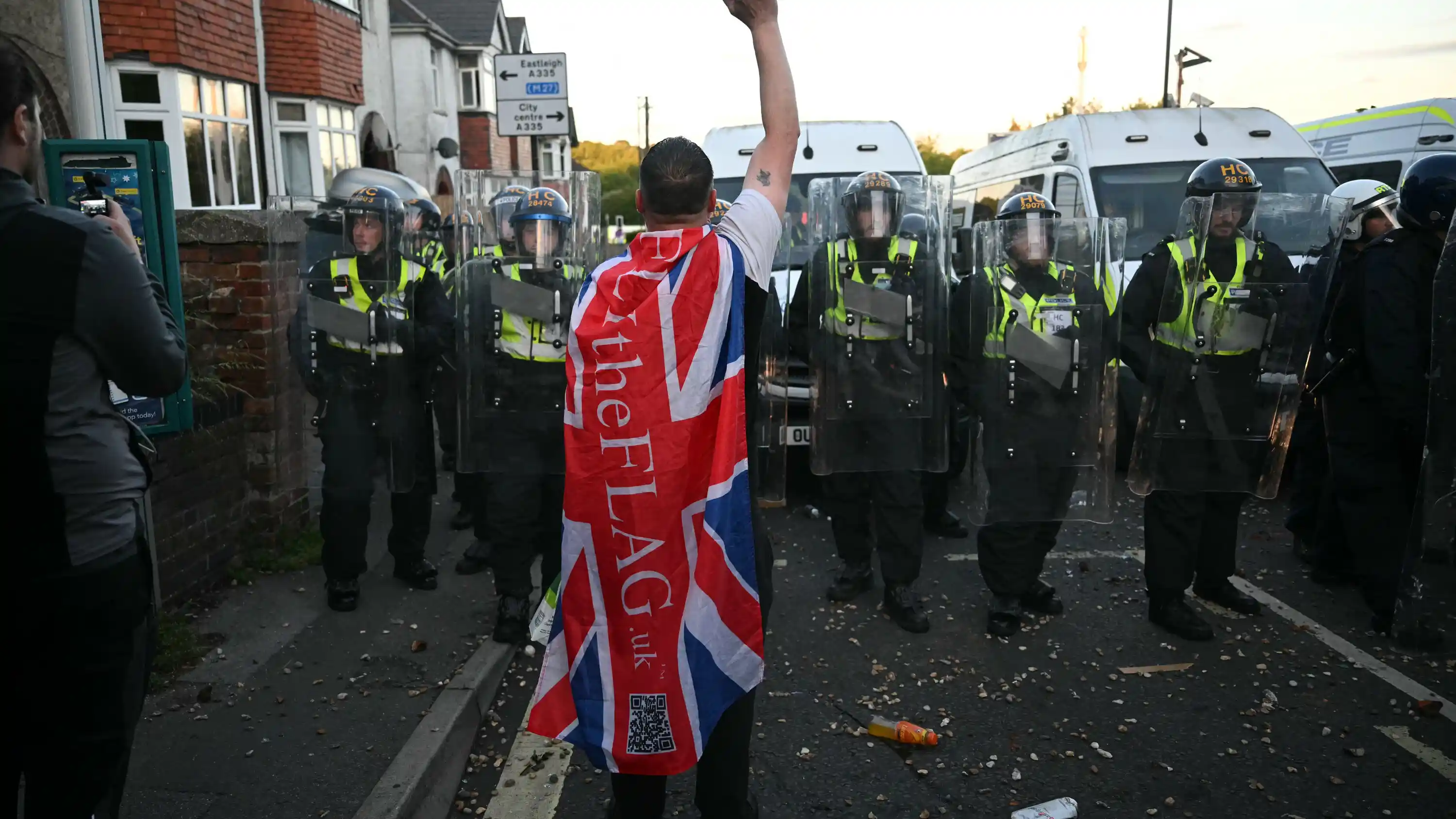
This week, the streets of Rochdale filled with men who shouldn’t have had to be there.
Organised by local campaigner Billy Howarth, groups of residents have begun patrolling their own town — not because the police asked them to, but because the state, once again, could not guarantee their children’s safety. The trigger was the release of Shabir Ahmed, the 73-year-old ringleader of the Rochdale grooming gang, freed after serving 14 years for the rape and sexual abuse of girls as young as 12. He walks free. He cannot be deported. And the women he tortured as children are, once more, afraid to leave their homes.
That last part should stop us cold. Fourteen years. That is what a life sentence of trauma was worth in the eyes of the system. Ahmed’s citizenship has been stripped. Every government minister asked about his case insists they are “looking at every route” to remove him. And yet a clause buried in the Immigration Act 1971 — a provision written for a different Britain, dealing with a different set of circumstances — shields men like him from deportation because they arrived before 1973. Fifty-five years later, that clause is still standing between victims and justice.
This is not a technicality. It is a policy failure with a face, and that face belongs to the girls of Rochdale who were groomed, plied with alcohol and drugs, and passed between men who saw them as disposable. The independent inquiries that followed — the Jay Report in 2014, and the Casey National Audit more recently — did not mince words. They found organised, group-based abuse in town after town: Rotherham, Telford, parts of Greater Manchester, Rochdale itself. They found that the victims were overwhelmingly vulnerable girls, many in council care, many from families already struggling. And they found that for years, the people meant to protect those girls looked away.
Why they looked away is the harder, more uncomfortable question — and it’s one Britain still hasn’t fully answered. The Jay Report and subsequent reviews described a culture of institutional avoidance: social workers, police, and council officials who had the warnings in front of them and did not act, in no small part because they feared being called racist if they named the ethnic pattern in the offending. That fear did not protect community relations. It protected offenders. It bought predators more years, more victims, more silence. Whatever discomfort exists in naming that pattern honestly, it is nothing compared to the discomfort of a twelve-year-old being told no one is coming.
The damage did not stay contained to the courtroom. It metastasised into the wider relationship between working-class communities in the North of England and the institutions meant to serve them. When people in Rochdale say they no longer trust the police or the council to protect their kids, that isn’t paranoia — it’s a conclusion drawn from a documented record. And when trust in the state collapses, people don’t simply stop caring. They organise. Billy Howarth’s patrols are what happens when a community concludes it must do the job the system won’t.
None of this means every generalisation thrown around online or in Parliament is fair, or that an entire community should be made to answer for the crimes of a network of predators within it. It doesn’t. Collective blame is its own injustice, and cheap point-scoring dishonours the victims just as thoroughly as institutional cover-up did. But there is a difference between smearing a community and refusing to look honestly at what specific inquiries, run by serious people over years of evidence-gathering, actually found. Pretending the pattern doesn’t exist is not tolerance. It’s the same instinct that let Ahmed keep offending for as long as he did.
What should happen now is not complicated, even if closing the loophole legislatively will take work. Foreign nationals — or those, like Ahmed, stripped of the citizenship that once shielded them — convicted of the organised rape of children should not be entitled to remain in this country by virtue of an accident of immigration law from more than half a century ago. Labour MPs Paul Waugh and Jim McMahon have both said as much. The Shadow Home Secretary has said as much. When politicians across the spectrum agree the law is broken, the only real question is why it still hasn’t been fixed.
Until it is, Rochdale will keep patrolling its own streets, and victims who already gave the state their childhoods will keep paying interest on that debt. The measure of a country isn’t how it talks about protecting children. It’s whether the law lets the men who hurt them walk past their windows.