Why This Visit Matters
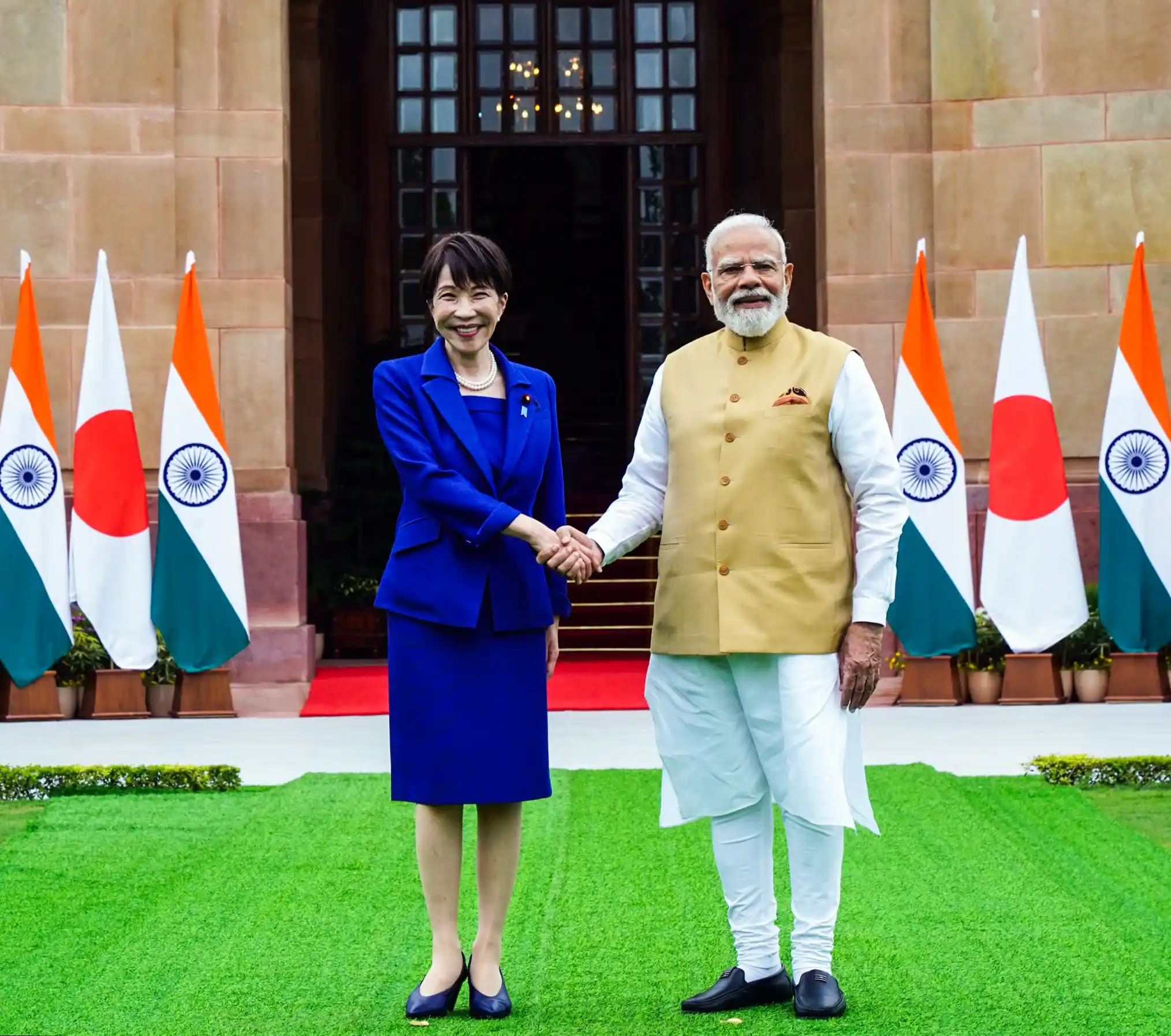
Sanae Takaichi’s visit to India should be seen as a carefully timed strategic move rather than a routine diplomatic engagement. It comes at a moment when both Tokyo and New Delhi are trying to strengthen their position in a rapidly changing Indo-Pacific, where security concerns, economic uncertainty, and technological competition are closely linked. The visit sends a clear message that Japan views India not just as a friendly partner, but as a central actor in its long-term regional strategy.
The main reason for the visit is to deepen the India–Japan partnership across strategic and economic lines. Japan regards India as an essential partner in building a stable and open Indo-Pacific, and that broader vision gives the visit its real significance. The relationship is no longer limited to polite diplomacy or regular summit language. It is now being shaped by the practical need to work together on issues that matter for power, resilience, and regional influence.
The Mindset Behind the Visit
What makes this visit especially important is the mindset behind it. The approach appears pragmatic, forward-looking, and highly focused on results. Japan seems to be seeking a partnership that can deliver concrete outcomes in areas such as supply-chain resilience, advanced technology, clean energy, critical minerals, and defence cooperation. In that sense, the visit reflects a shift from symbolic friendship to operational partnership.
Tokyo is looking for a relationship that can help it manage global uncertainty while also creating new opportunities for investment and industrial cooperation. That is a significant change in tone. It suggests that Japan now sees India less as a ceremonial partner and more as a strategic and economic anchor in Asia. The visit therefore carries both immediate diplomatic value and long-term policy importance.
Economic Security First
This is also why the visit has to be understood in economic terms as much as strategic ones. Japan is increasingly concerned about the fragility of global supply chains and the risks of overdependence in key sectors. India offers a meaningful answer to that problem because it has scale, political stability, and growing importance in manufacturing and digital innovation. The summit therefore becomes a space where both sides can discuss how to reduce vulnerability and build more reliable cooperation in sectors that will shape the future.
The expected outcomes of the visit are likely to center on economic security and technology. A stronger framework for supply-chain cooperation would be one of the most significant results, especially if it covers semiconductors, artificial intelligence, critical minerals, ICT, and clean energy. These are not isolated issues. They are part of a larger effort to make the bilateral relationship more durable and more relevant to the changing global economy.
Technology and Future Growth
Another important dimension of the visit is the technological agenda. Japan and India are both aware that future power will depend heavily on control over advanced technologies, digital systems, and industrial innovation. That is why cooperation on AI, semiconductors, and clean energy matters so much. These sectors are not only economically valuable; they are also strategically sensitive and directly linked to national competitiveness.
If the two sides can move toward formal declarations or coordinated policy statements, that would give the summit real substance. It would show that the partnership is not just about broad political understanding, but about building a shared platform for future growth. In that sense, the visit can be seen as an effort to align strategic thinking with technological ambition.
Business and Investment Push
There is also likely to be a strong business dimension to the visit. The presence of Japanese business leaders suggests that Tokyo wants the summit to lead to actual investment and industrial engagement, not just government-level assurances. That matters because the value of such a visit is measured not only by diplomatic language but by whether it creates conditions for long-term economic cooperation.
If the summit encourages more Japanese companies to deepen their presence in India, it will add weight to the strategic relationship. This could help India attract more investment in manufacturing, infrastructure, clean energy, and technology-based industries. At the same time, it gives Japan access to one of the world’s most dynamic large markets and a partner capable of supporting long-term diversification.
Strategic Core of the Partnership
The broader strategic core of the visit lies in the way it connects economics, security, and regional geopolitics. Japan and India are both trying to build a partnership that can support resilience in an uncertain international environment. This means the relationship is no longer being shaped only by shared values or traditional friendship. It is increasingly defined by the need to cooperate on energy stability, industrial competitiveness, technology leadership, and strategic balance in Asia.
That makes the summit more than a bilateral event; it becomes part of the wider architecture of Indo-Pacific politics. Japan and India both have an interest in preserving openness, preventing overdependence, and maintaining a stable regional balance. Their cooperation is therefore not just about each other. It is also about the kind of regional order they want to help shape.
Defence and Security Linkages
Defence and security also remain part of the background, even if the economic agenda is more visible. Both countries understand that a strong partnership must rest on more than trade and investment. It must also support trust, coordination, and shared responses to regional challenges. That is why the visit matters for the broader strategic balance of the region.
The meeting shows that Japan wants India to be a long-term partner in shaping a stable and open Indo-Pacific, while India benefits from Japan’s support as it expands its own regional role. This makes the relationship deeper than a simple economic arrangement. It is becoming a strategic partnership with political, technological, and security dimensions that reinforce one another.
Main Highlight of the Visit
The main highlight of the visit is Takaichi’s first official trip to India as prime minister, along with her summit meeting with Prime Minister Modi in New Delhi. This gives the visit high diplomatic value, but the deeper highlight is the shift in tone. The relationship is moving away from broad statements of goodwill and toward a more operational partnership based on deliverables.
That is a significant change because it shows that both sides are now focused on practical cooperation rather than just symbolic alignment. The real value of the visit lies in whether it can produce clearer commitments, stronger coordination, and visible momentum in key sectors. In that sense, the summit is a marker of transition from general partnership to more structured collaboration.
Wider Regional Message
There is also a wider regional message in the visit. Japan’s engagement with India signals its desire to work more closely with major democratic partners in shaping the Indo-Pacific. India, meanwhile, gains recognition as a major strategic and economic partner whose importance is growing steadily. This makes the visit relevant beyond the bilateral level.
It speaks to the larger question of how Asian powers are adapting to a more competitive and uncertain regional order. In that sense, the summit is not only about Japan and India. It is also about how they see their role in a changing Asia, where security, technology, and economic resilience are becoming tightly linked.
Conclusion
Overall, Takaichi’s India visit should be understood as a strategic statement with practical intent. It reflects Japan’s desire to deepen ties with India in a way that is more structured, more outcome-oriented, and more closely linked to the realities of the modern Indo-Pacific. The visit matters because it shows that both countries are no longer content with general alignment.
They are trying to build a partnership that can deliver real value in a time of strategic change. That is what gives the visit its importance, its momentum, and its relevance for the future of Asia.