Living in the harsh environment of Ladakh, India’s high-altitude trans-Himalayan region, communities face severe water insecurity as one of their greatest challenges. Irrigation primarily depends on glacial meltwater channeled through canals. Traditionally, farmers have relied heavily on melting snow and glaciers, locally called ‘kangs-chhu’ (ice water), to sustain agriculture, even as climate impacts are increasingly ringing alarm bells.
Using their indigenous knowledge, the farmers store glacier melt evening and nighttime runoff in small stone reservoirs called “zings” and use this water the next morning. Another way to manage water scarcity is the utilisation of artificial glaciers—ice stupas, which freeze winter water and melt during the hotter summer months.
But things are gradually seeing a change in Ladakh, the Union Territory carved out of Jammu and Kashmir, to meet people’s aspirations. The focus is to expand the region’s irrigation capabilities by constructing reliable, high-altitude modern canals.
As Sahil Dogra, a journalist from Jammu, notes, “Some recent initiatives of the government in Ladakh have shown commendable results in ensuring water security, improving agricultural productivity, connectivity, and also sustainable growth despite all geographical and climatic changes.”
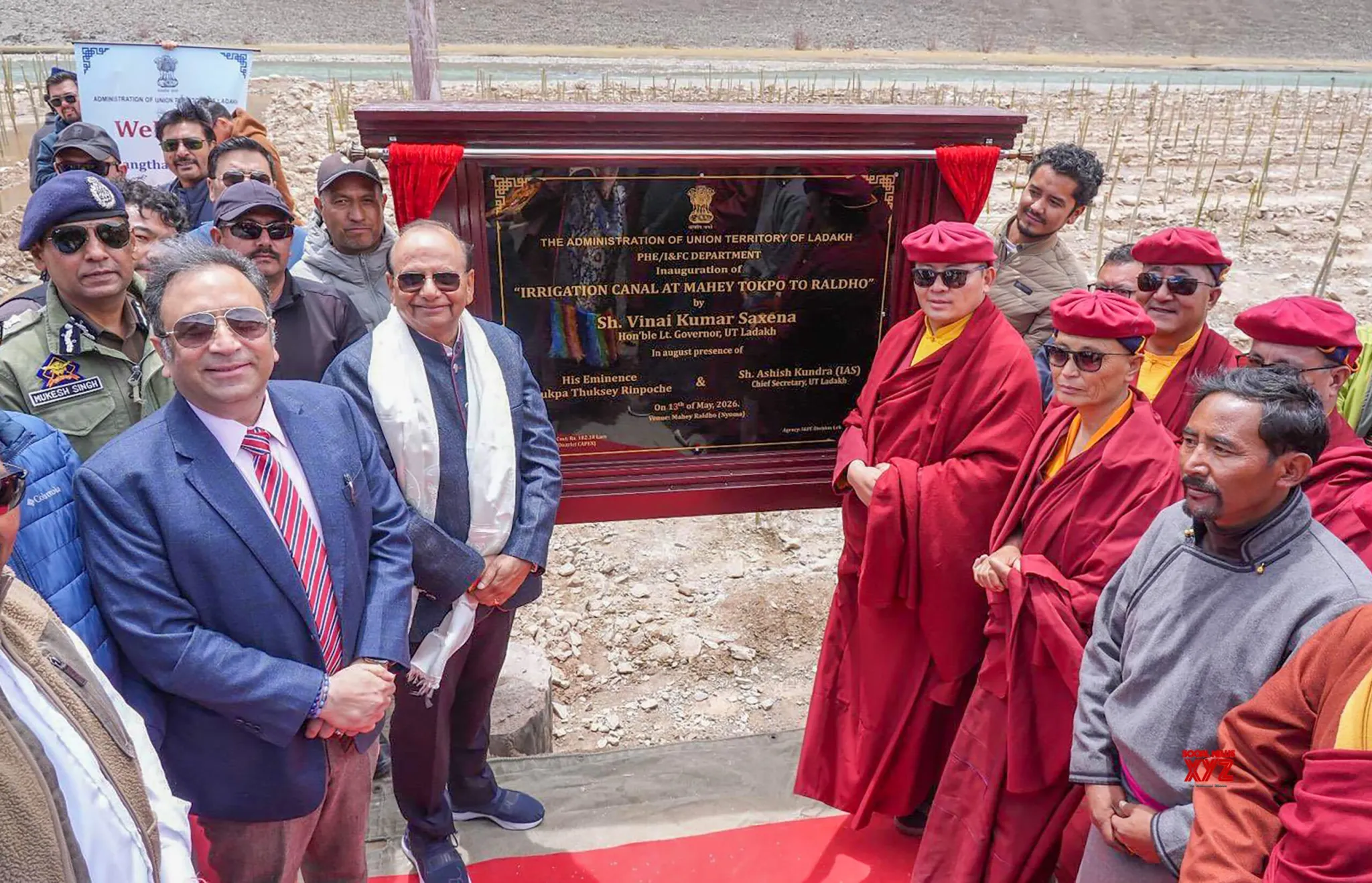
One of the landmark projects that marks a new beginning relates to the commissioning of the Mahey Tokpo–Raldho irrigation canal—India’s first irrigation canal at a height of 14,000 feet in the Changthang area of the UT.
The 2.1-km canal is designed to bring water from Yaya Lake, also called Yaya Tso Lake, Ladakh’s first Biodiversity Heritage Site under the Biological Diversity Act, holding high ecological importance. The canal will provide irrigation facilities to 100 acres of land, transforming the region into a highly productive zone.
This is especially important because farmers in the Changthang, till now, have long depended on seasonal glacier melt, traditional water channels, and an unpredictable water supply.
Historically, one of Ladakh’s remote and ecologically sensitive regions, Changthang, also faces harsh weather conditions, and because of limited farming seasons and non-availability of access to water, the communities have been demanding a reliable irrigation facility for both the agriculture and pastoral livelihoods in the region.
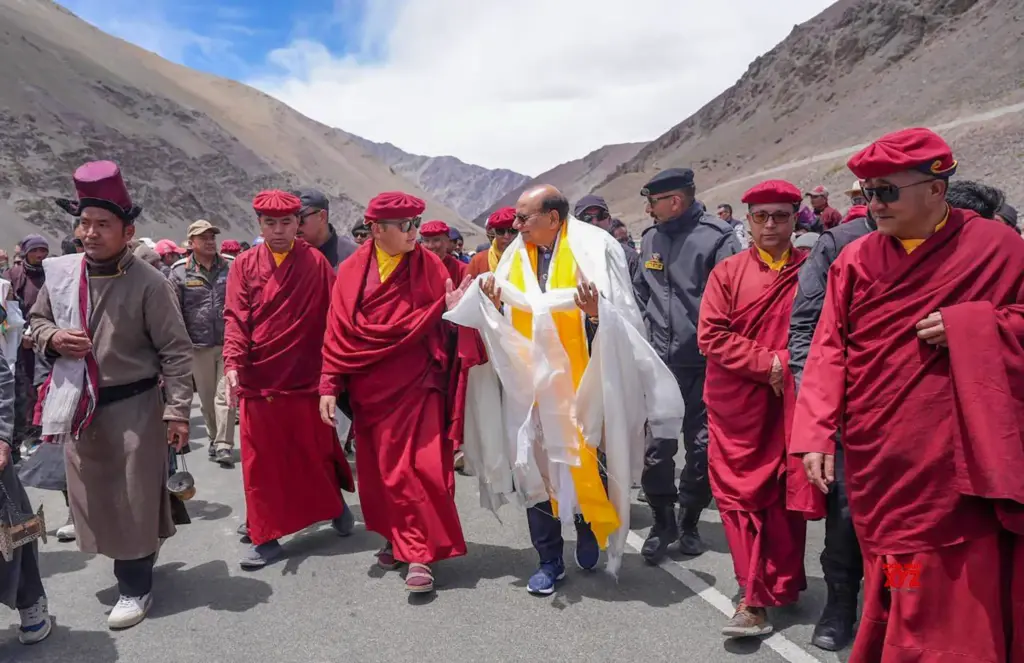
The newly constructed canal will reduce the dependence on uncertain glacier-fed irrigation, and it offers a more structured water distribution system, as admitted by Lieutenant Governor Vinai Kumar Saxena, who inaugurated the canal on May 14, 2026.
The work on the project started in 2022-23, three years after Ladakh was officially made a Union Territory on October 31, 2019, but the progress remained slow as it involved high-skilled engineering and technological interventions, keeping in view the climatic conditions and fragile high mountain ecology. By March, only 1,250 meters of construction had been completed. The officials say the work also got stalled because of administrative challenges.
However, after assuming the office on March 13, 2026, Lieutenant Governor Saxena reviewed the project and passed orders to put the work on a fast track.
“Despite the formidable challenges posed by extreme weather conditions, low oxygen levels, tough mountainous terrain, and logistical constraints, the project has been executed successfully. Given its urgency and the risk of escalating costs, it could not be allowed to remain pending indefinitely,” said an aide to the Lt. Governor.
The canal is built 200 feet above the road with a 2-foot width and 2-foot depth. Due care has also been taken to make the structure durable and maintain slope stability and resistance against extreme weather conditions, besides using PCC lining and breast wall protection. There is also a plan afoot to undertake a massive plantation of 15,000 trees involving local villagers and communities to check soil erosion and ecological restoration.
The lieutenant governor stressed the need for undertaking extensive plantation drives to increase green cover, protect Ladakh’s fragile ecosystem, and mitigate the growing impact of climate change.
Highlighting the environmental vulnerabilities of the high-altitude region, Saxena said that sustained afforestation efforts and eco-friendly practices are vital for maintaining ecological balance and
safeguarding the livelihoods of local communities.
Another major project underway in Ladakh is an attempt to build a 43-km Igoo–Phey Irrigation Canal, which supports irrigation and hydropower generation in the Leh district.
In addition, projects such as the Sodh Lift Irrigation Scheme in Kargil are improving irrigation facilities and increasing farmers’ incomes. Most of these efforts are bound to help Ladakh to move toward self-reliance and balanced regional development, feels Saxena.