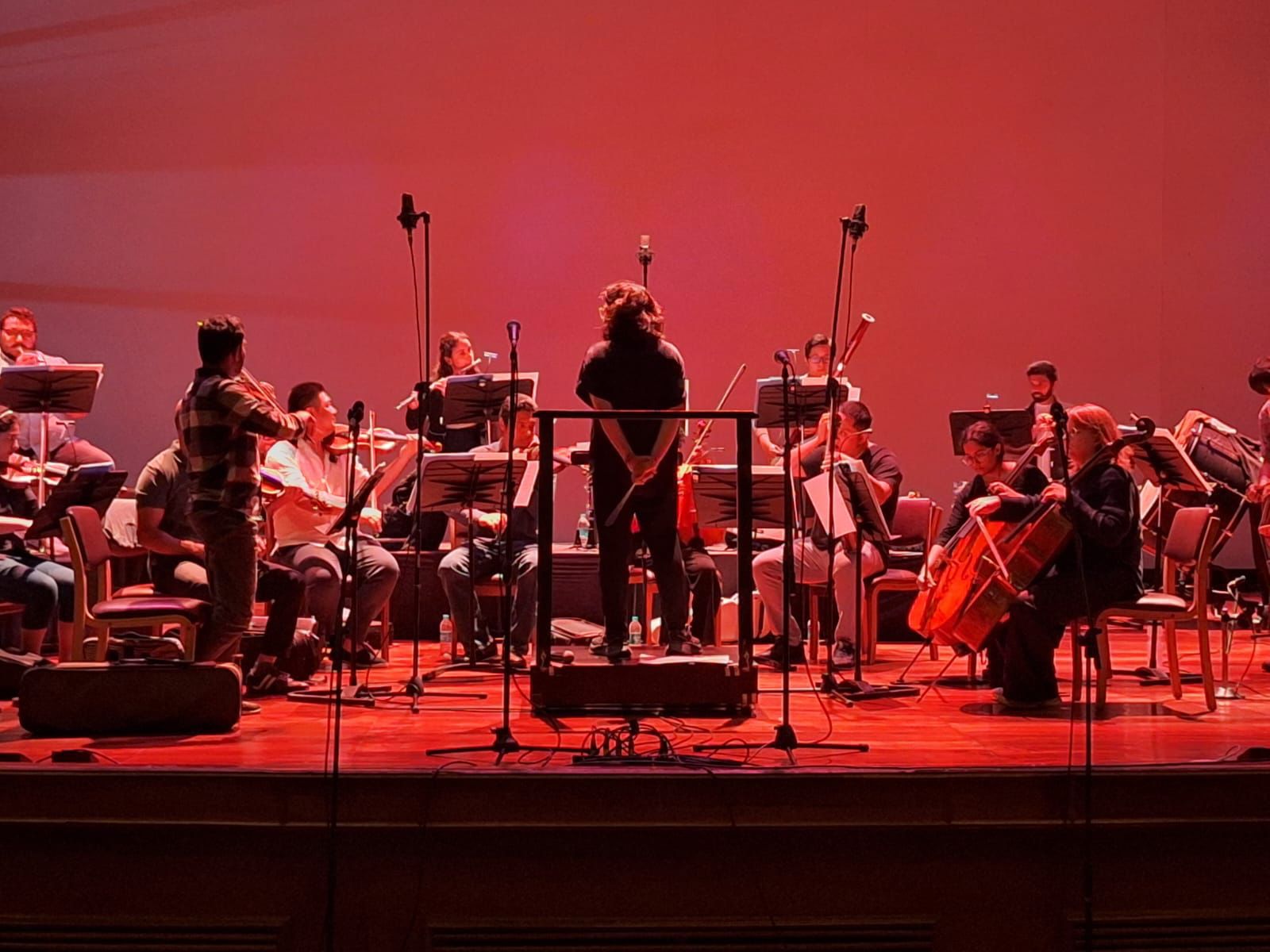
Cover Photo by Kalyani Nedungadi
Bengaluru, a city celebrated for its innovation, cosmopolitan energy, and vibrant cultural diversity, recently witnessed a unique artistic milestone. The South Asian Symphony Orchestra (SASO), a visionary project that brings together musicians from across South Asia, presented a four-event residency titled “Peace Notes”, which combined grand operatic performances, orchestral storytelling, and intimate workshops. Over several days, audiences experienced the magic of opera and symphonic music while also glimpsing the deeper vision of SASO: to build a symphony orchestra that Bengaluru can call its own.
Four Events, One Vision of Harmony
The residency was structured around four interconnected events, each contributing to the larger goal of celebrating harmony, collaboration, and cultural dialogue through music.
1. The Conductor’s Toolkit – July 31 & August 1
The residency began with an immersive workshop series titled “The Conductor’s Toolkit” at The Bangalore School of Music and Fine Arts. Led by Alvin Arumugam, an internationally recognized conductor and SASO’s Music Director, the workshop demystified the art and science of orchestral conducting.
Participants explored the fundamentals of score study, baton technique, rehearsal preparation, and musical leadership, while also learning about the intangible aspect of conducting: the ability to communicate with musicians through gesture, presence, and emotion. Alvin emphasized that conducting is not about dominating the orchestra, but about guiding, listening, and enabling every voice to come together in harmony.
For observers and students alike, these sessions were a revelation—an opportunity to see how leadership in music mirrors leadership in life, relying on empathy, timing, and trust.
2. Peace Notes: An Evening at the Opera – August 2
The heart of the residency was “An Evening at the Opera”, performed at Christ University Auditorium. This concert transported the audience to the grandeur of European opera houses, featuring excerpts from Georges Bizet’s Carmen, Giuseppe Verdi’s La Traviata, and Charles Gounod’s Roméo et Juliette.
Before the main performance began, the audience was welcomed with a moving invocation of peace. Akshata Rudrapatna performed the timeless hymn “Maitreem Bhajata”, composed by the Sage Kanchi Paramacharya. Her serene and soulful rendition set a spiritual tone for the evening, inviting the audience into a space of harmony and reflection—a perfect prelude to SASO’s message of unity through music.
The orchestra, conducted by Maria Badstue, an India-born Danish conductor acclaimed for her dynamic and precise leadership, delivered a performance that blended emotional intensity with musical finesse. The South Asian Symphony Orchestra, composed of musicians from across borders, became a living symbol of collaboration, reflecting SASO’s mission of uniting South Asia through music.
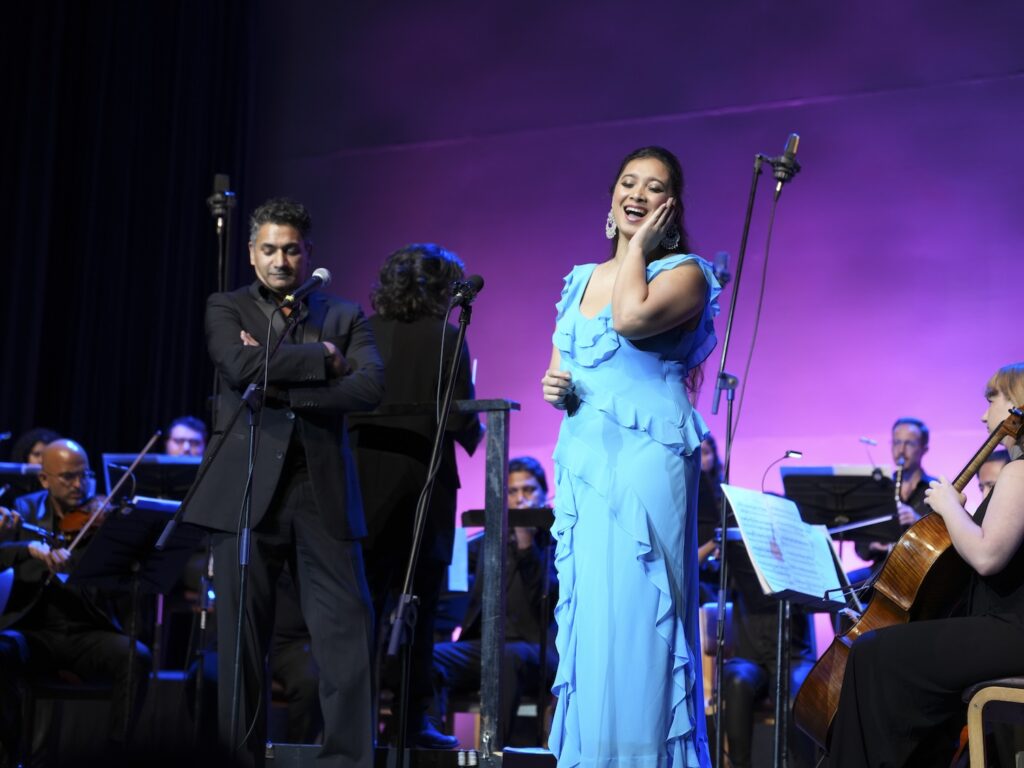
The evening’s vocal highlights came from soprano Cheryl Bains and Indian-American tenor Alok Kumar, who transformed into operatic characters like Violetta, Carmen, and Romeo (https://www.symphonyofsouthasia.org/book). Their unamplified voices soared effortlessly, filling the hall with raw, emotive power that captivated the audience.
For many, this was their first encounter with live opera, and the reaction was electric. The combination of storytelling, music, and drama earned the performers an enthusiastic standing ovation.
3. Peace Notes: An Evening at the Opera – August 3
A second operatic performance followed at the Bangalore International Centre, extending SASO’s reach to a broader audience. While the repertoire mirrored the previous evening, the setting created a new intimacy, allowing listeners to appreciate the nuances of orchestral color and vocal interpretation.
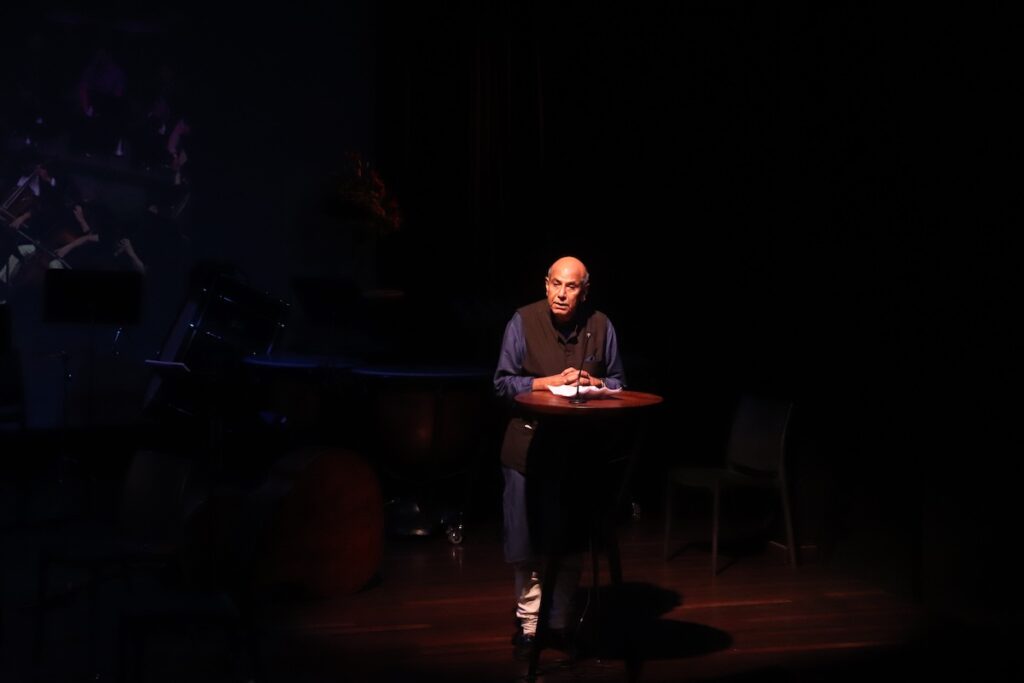
Our chief guest at the event was the President of the India International Centre, New Delhi, Ambassador Shyam Saran, former Foreign Secretary and former Special Envoy of the Prime Minister on Climate Change. Addressing the audience, Mr. Saran said: “May SASO continue to touch hearts, transcend borders, and remind us of the better angels of our nature.”
Once again, the concert opened with Akshata Rudrapatna’s invocation of “Maitreem Bhajata”, anchoring the event in a call for peace and unity. While the repertoire mirrored the previous evening, the setting created a new intimacy, allowing listeners to appreciate the nuances of orchestral color and vocal interpretation.
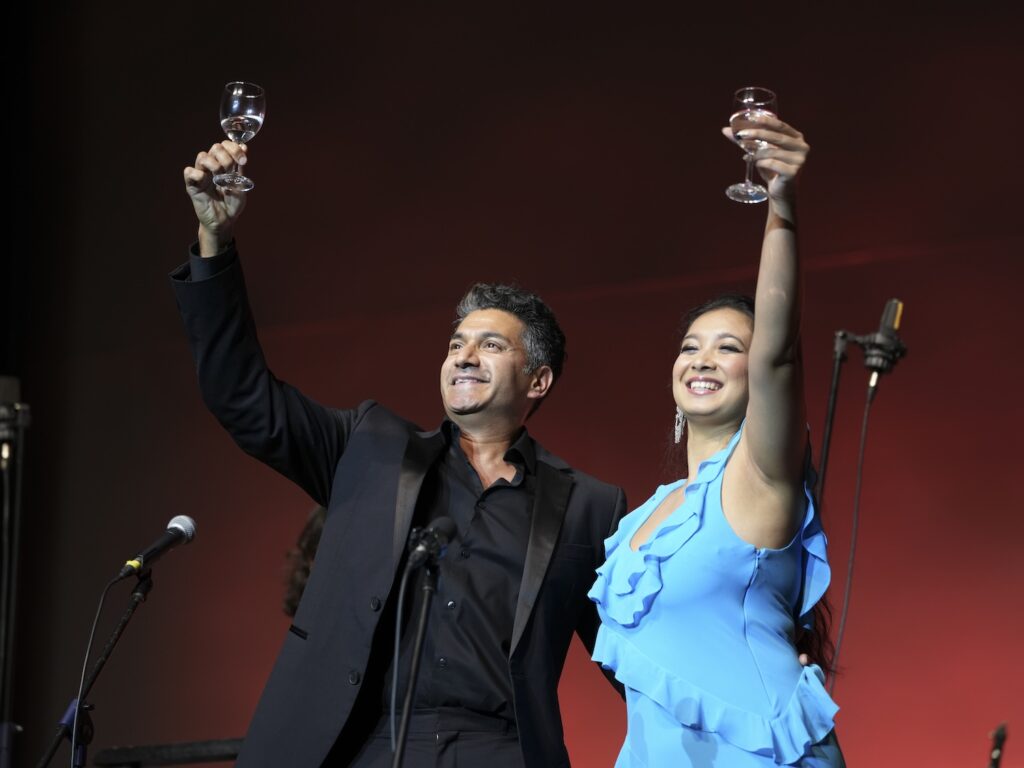
Here, the idea of music as cultural diplomacy came alive. SASO is not just a performing ensemble; it is a bridge across nations, with musicians from India, Sri Lanka, Bangladesh, Nepal, and beyond performing side by side. The shared language of music replaced borders and differences, embodying a vision of peace through art.
4. Leadership & Collaboration in Music – August 4
The residency concluded with a unique interactive workshop at Sabha BLR, focusing on the principles of leadership and collaboration in music. Conducted by Maria Badstue and featuring Alok Kumar and pianist Soundarie David Rodrigo, the session explored how orchestral performance is a metaphor for effective teamwork.
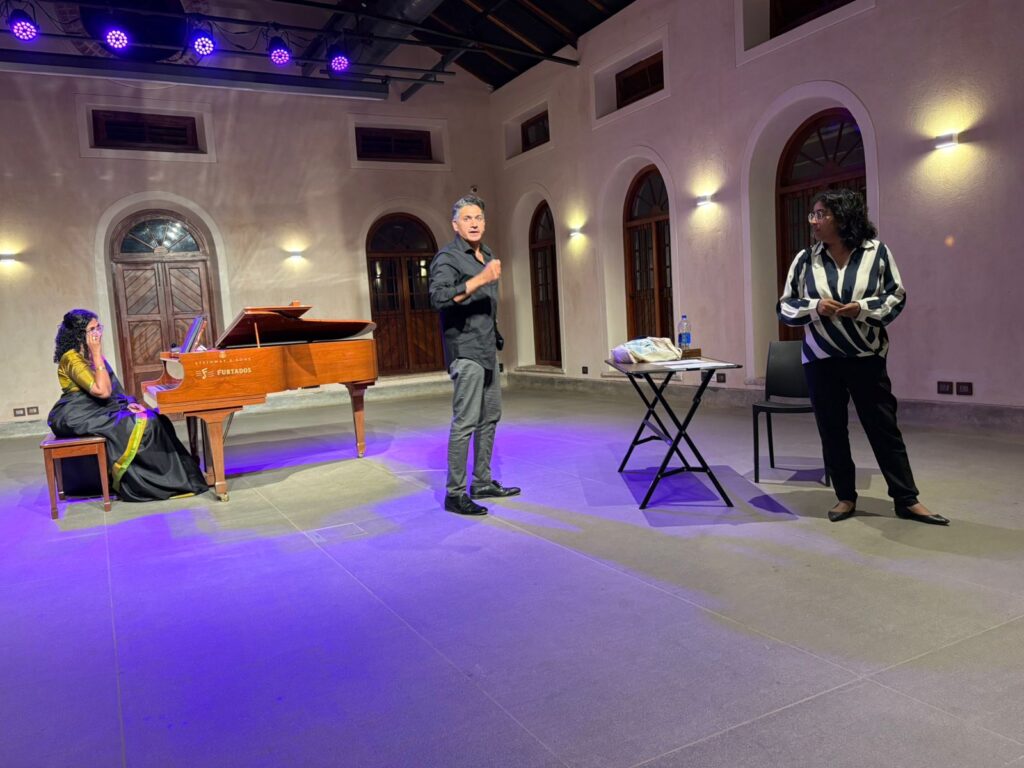
Participants and observers were invited to consider how listening, timing, and trust are as critical in music as they are in diplomacy, business, or community-building. This workshop reflected SASO’s philosophy that an orchestra is not just an art form—it is a model for harmony in society.
Bengaluru: The City with an Orchestra
Central to SASO’s mission is the dream articulated by founder and former Indian Foreign Secretary, Nirupama Menon Rao: to create a world-class orchestra that Bengaluru can call its own. In her address to the audience, she reflected on the symbolic power of an orchestra:
“Many voices, each distinct, yet listening and creating something beautiful together.
An orchestra is a miracle of collaboration.
The city with an orchestra. The orchestra with a city.”
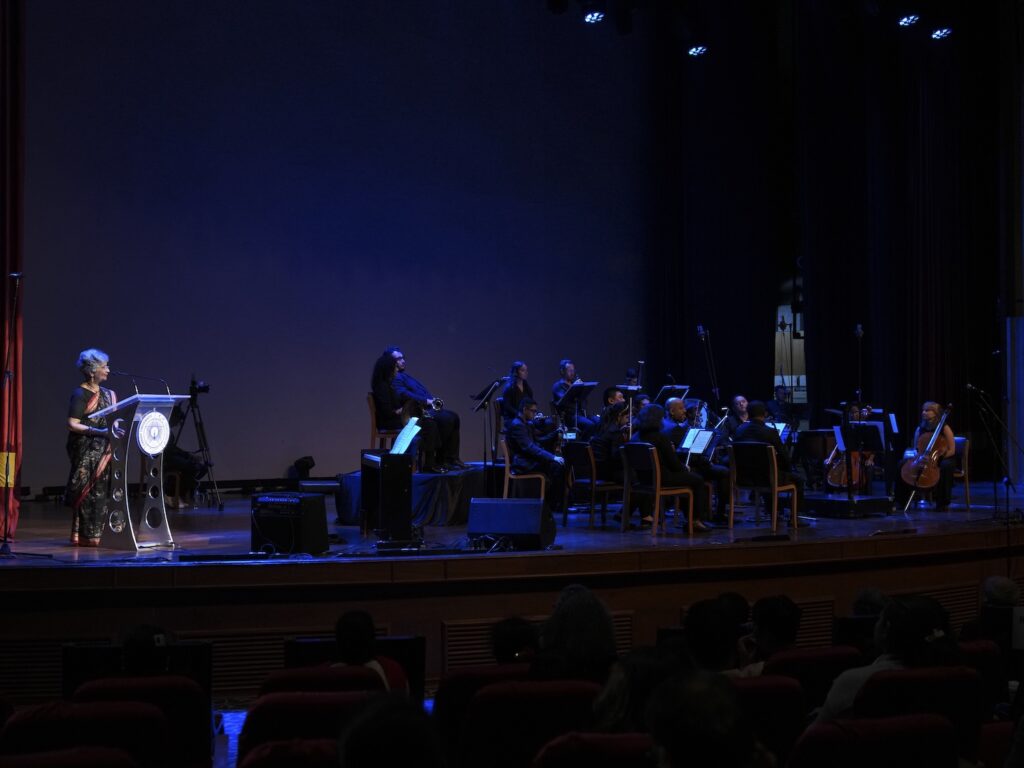
Her words captured the essence of SASO’s cultural initiative. Bengaluru, with its global outlook and young, diverse population, is poised to embrace a symphony orchestra as part of its cultural identity. This residency was not just a series of performances; it was the laying of a foundation for a musical tradition that can grow with the city.
Artistry, Diplomacy, and Legacy
SASO’s concerts in Bengaluru were more than entertainment—they were acts of cultural diplomacy. By bringing together musicians from South Asia and the world, SASO embodies the belief that music can heal divisions and foster understanding.
The concerts also provided a platform for emerging and established artists to shine. Cheryl Bains, who has a deep personal connection to the city, shared her gratitude:
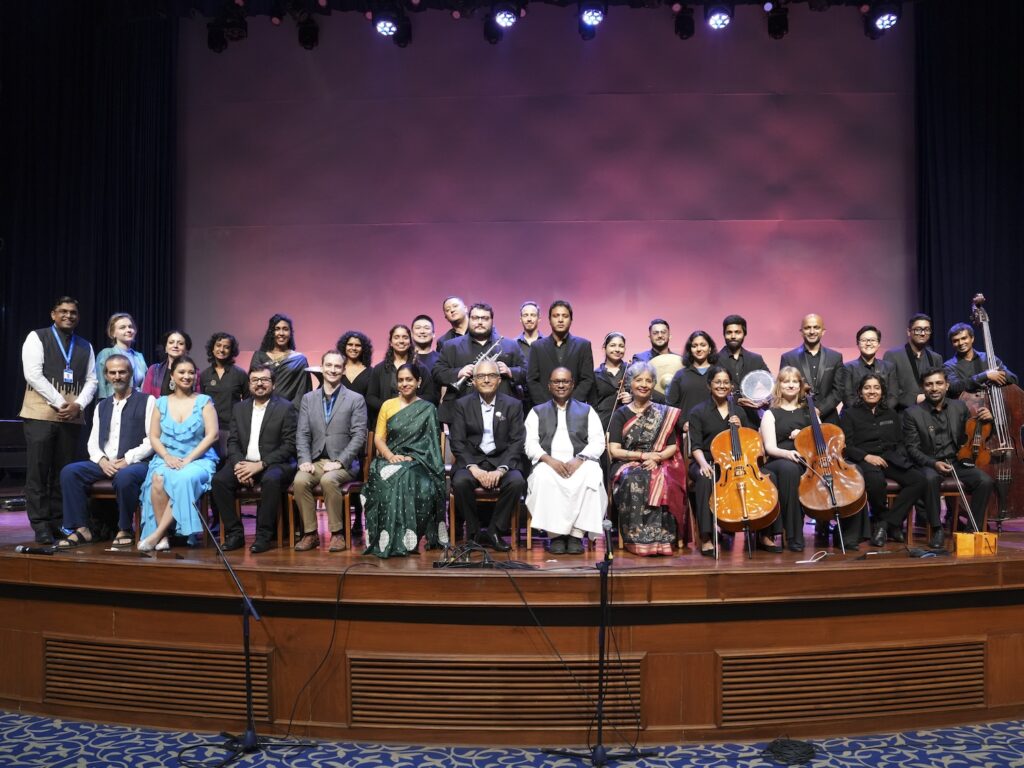
“Bangalore is very close to my heart… this city has given me a lot of training and I am singing here almost after 10 years.”
Moments like these reminded the audience that SASO is not only a bridge between nations but also a homecoming for artists, connecting them to their roots while sharing their talent with the world.
A Standing Ovation for the Future
As the final notes faded and the last applause subsided, one truth became clear: Bengaluru now has its orchestra.
The Peace Notes residency was a resounding success, blending performance, education, and inspiration. It left audiences enriched, young musicians motivated, and the city itself awakened to a new cultural possibility.
In the coming years, SASO hopes to expand its repertoire, deepen its ties with Bengaluru, and nurture a generation of music lovers and practitioners who will carry forward this legacy.
Through every rehearsal, workshop, and performance, SASO reminds us that music is not just an art—it is a language of peace, a tool for connection, and a reflection of our shared humanity.
As Bengaluru applauds this new chapter, the dream of a South Asian symphony in the heart of India’s innovation capital feels closer than ever.