
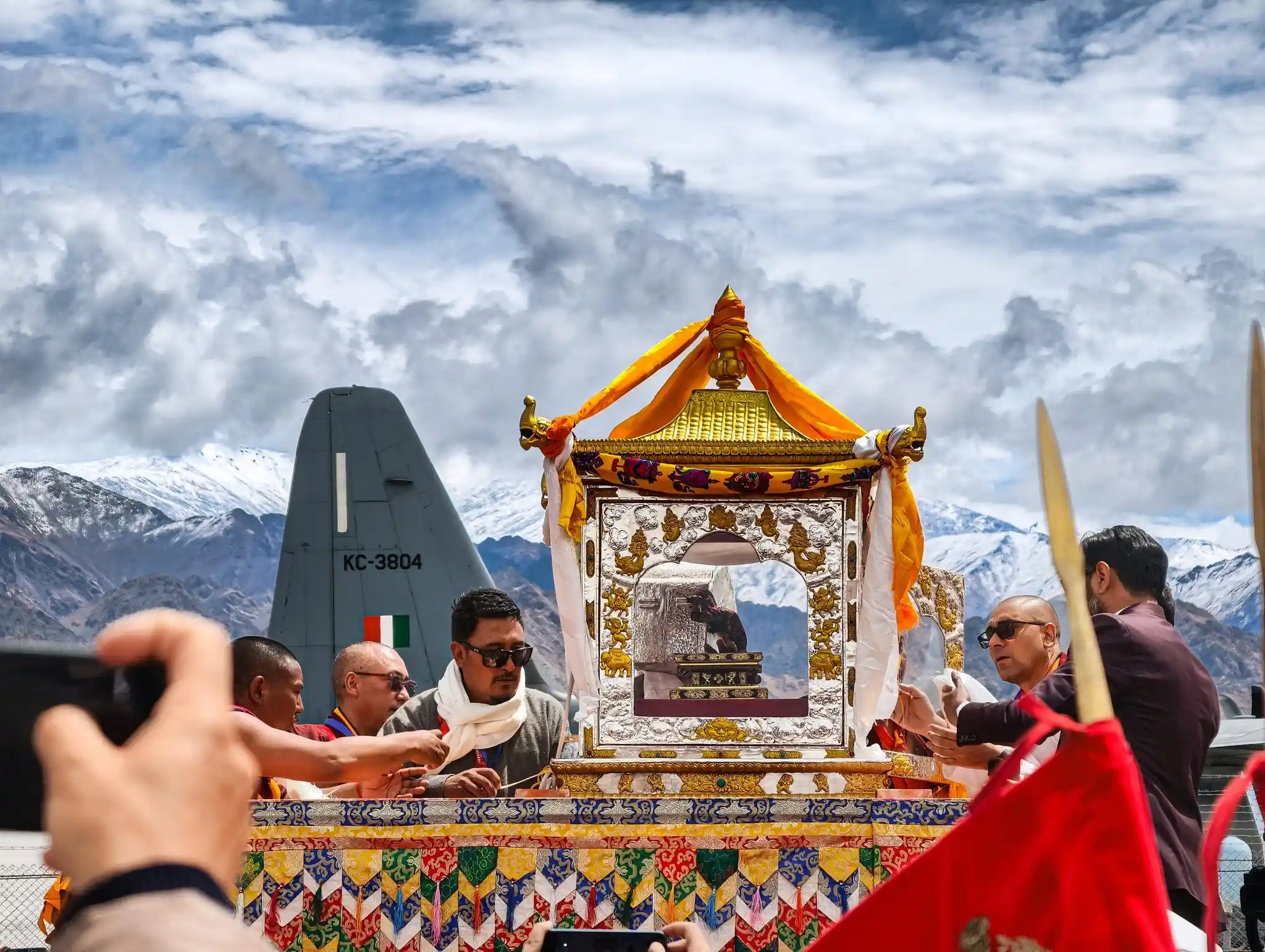
High in the cold desert air of Ladakh, prayer flags flutter against a cobalt sky while monks in crimson robes chant beneath snow-lined peaks. In the ancient Himalayan region where silence itself feels sacred, thousands of devotees are gathering for a rare spiritual moment: the public exposition of the Holy Relics of Tathagata Buddha. For many, it is not simply an exhibition. It is an encounter with history, faith, and a message the modern world urgently needs — peace beyond borders.
From May 1 to 14, 2026, Ladakh becomes the centre of a global Buddhist pilgrimage as relics believed to be associated with Gautama Buddha are displayed for public veneration. Usually preserved under strict conservation at the National Museum in New Delhi, the relics are travelling to Leh and the Zanskar Valley in a carefully orchestrated spiritual and cultural initiative that combines devotion, diplomacy, and heritage preservation.
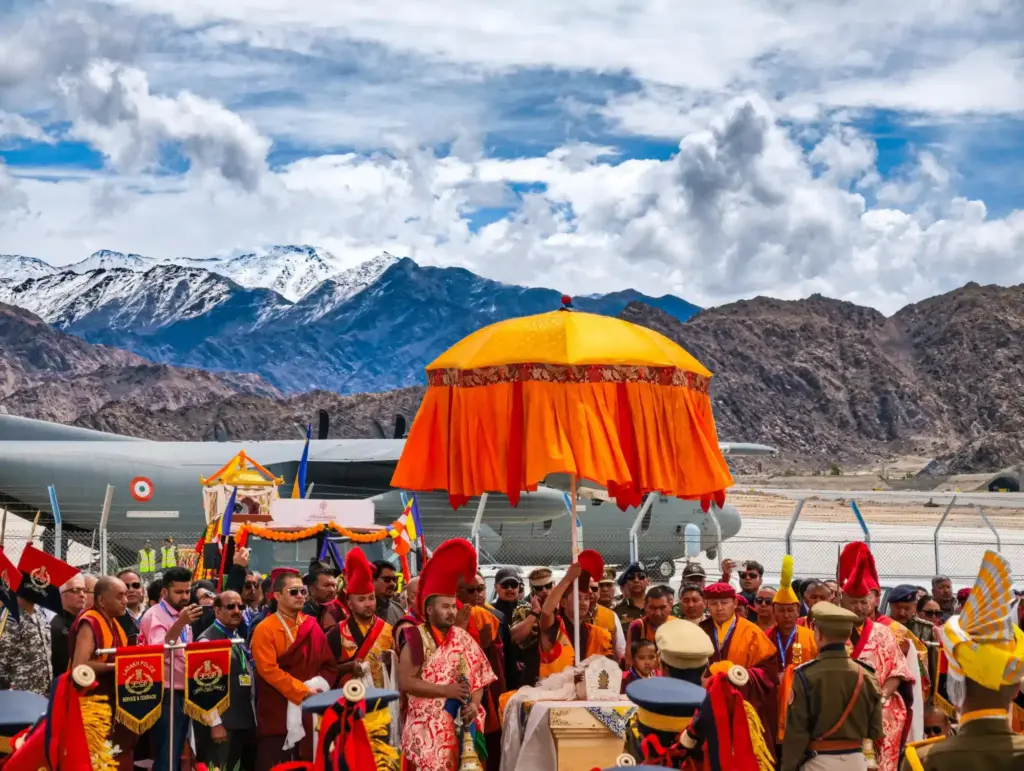
The timing is deeply symbolic. The exposition coincides with the 2569th Buddha Purnima celebrations and carries the theme “Peace in Times of Conflict.” In an era marked by geopolitical tensions and social fragmentation, the event seeks to revive Buddha’s enduring teachings of compassion, non-violence, and ethical living.
The relics arrived in Leh aboard an Indian Air Force aircraft on April 29, escorted under high security before being welcomed with a grand ceremonial procession through the mountain town. The image was striking: soldiers, monks, scholars, and local residents united in reverence as chants echoed through the valley. The relics are currently enshrined at the Jivestal Site, where pilgrims from across the world have begun to arrive.
Yet the exposition is about far more than ritual devotion. It is also a celebration of Ladakh’s historic role as a crossroads of Himalayan civilisation. Alongside prayer ceremonies and public viewing, the programme includes interfaith dialogues, meditation sessions, conferences on Himalayan Buddhism, and lectures exploring the relationship between Buddhism and science. A photo exhibition at Leh Palace titled Beyond the Pass: The Shared Spirit and Ethnic Tapestry of Ladakh highlights the region’s centuries-old connections with trans-Himalayan cultures and trade routes.
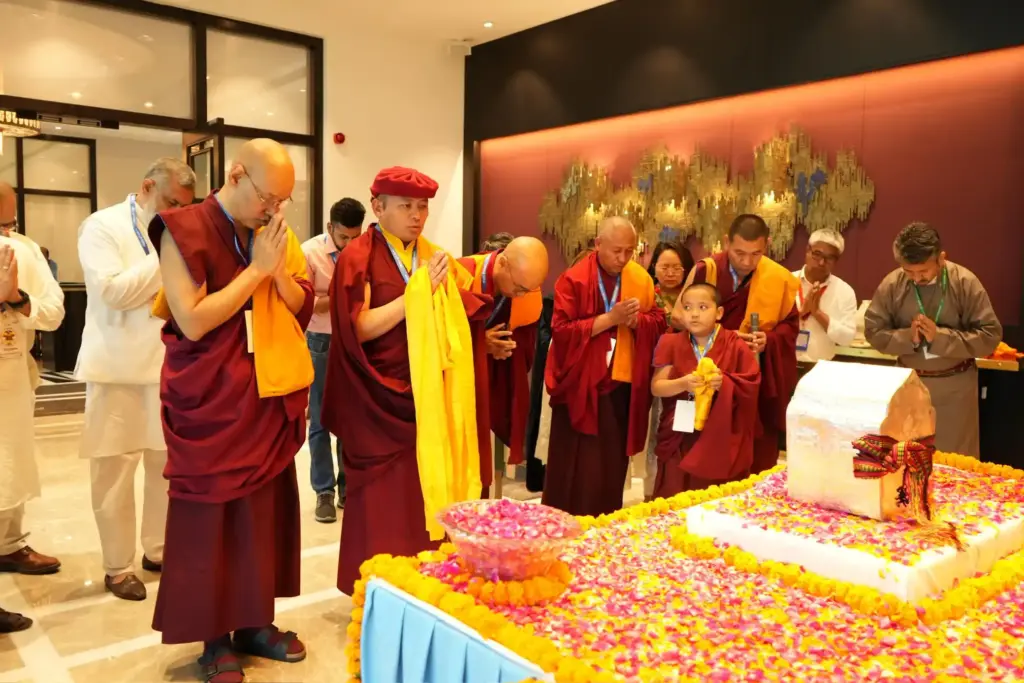
At the heart of the exposition lies a remarkable archaeological story. The sacred relics are part of the Piprahwa discoveries in present-day Uttar Pradesh, near the ancient city of Kapilavastu associated with the Buddha’s early life. First excavated in 1898 by British landowner William Claxton Peppe and later studied extensively by the Archaeological Survey of India, the site yielded stone caskets containing bone fragments, ashes, gemstones, and intricately carved gold sheets. One inscribed soapstone casket identified the relics as belonging to the Buddha himself.
For Buddhists, these are not museum objects frozen in time. They are living symbols of enlightenment and continuity. The relics embody a civilisational memory stretching back more than 2,500 years — one that continues to inspire millions across Asia and beyond.
India, increasingly aware of Buddhism’s soft-power potential, has also transformed such expositions into instruments of cultural diplomacy. In recent years, sacred relics have travelled to Mongolia, Thailand, Vietnam, Bhutan, Sri Lanka, and Russia, strengthening spiritual and cultural ties across the Buddhist world. Earlier this year, a landmark exhibition in New Delhi reunited relic jewels taken to Britain during the colonial era with artefacts preserved in Indian museums, symbolising both historical recovery and renewed cultural confidence.
In Ladakh, however, the experience feels deeply intimate despite its global significance. Pilgrims spin prayer wheels in quiet concentration. Butter lamps flicker against monastery walls. Elderly devotees bow slowly before the relics, some with tears in their eyes. For them, the exposition is not merely about seeing sacred remains. It is about reconnecting with a moral universe rooted in compassion and mindfulness.
As dusk settles over Leh and the mountains fade into shadow, the chants continue. In that stillness, the message of the Tathagata feels startlingly contemporary: that peace is not an abstract ideal, but a practice of empathy carried across centuries, borders, and human hearts.

