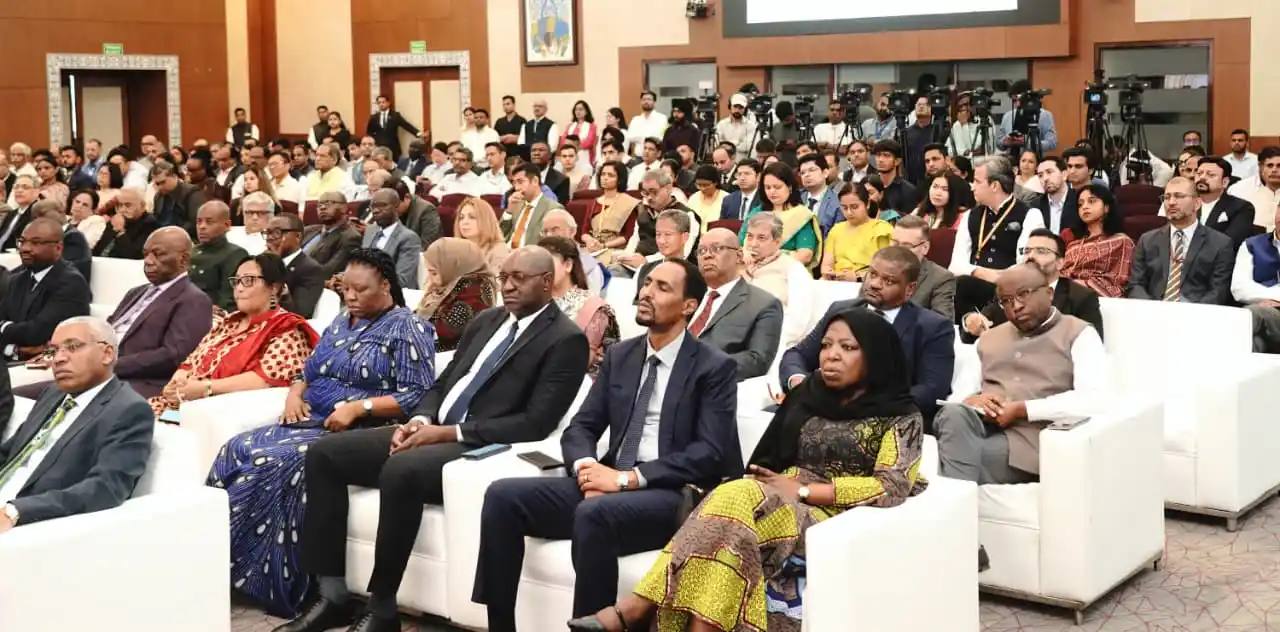
As India prepares to host the fourth India–Africa Forum Summit (IAFS), expectations are high—not just for grand announcements, but for tangible shifts in how this partnership evolves in a rapidly changing global order. The summit arrives at a moment when both India and African nations are navigating economic uncertainty, technological disruption, and intensifying geopolitical competition. What emerges from this meeting will signal whether the relationship is ready to move beyond goodwill into a more strategic, results-driven phase.
One clear expectation is a sharper focus on trade and investment. Despite decades of engagement, India–Africa trade remains below its potential. The summit is likely to emphasize reducing barriers, improving logistics, and expanding value-added exports rather than just raw materials. India has positioned itself as a partner in capacity-building rather than extraction, but African nations increasingly want market access and industrial collaboration. If India can propose concrete mechanisms—such as easier financing, digital trade corridors, or sector-specific partnerships in pharmaceuticals, agriculture, and manufacturing—it could redefine the economic pillar of the relationship.
Technology will almost certainly take center stage. India’s digital public infrastructure—especially systems like Aadhaar, UPI, and CoWIN—has gained global attention as scalable, low-cost models. African countries, many of which are leapfrogging legacy systems, are natural partners in this domain. Expect announcements around digital identity, fintech expansion, and e-governance platforms. However, success will depend on localization and trust; exporting technology without adapting to local contexts has historically limited impact. The summit will test whether India can offer flexible, co-created solutions rather than one-size-fits-all models.
Another major theme will be development cooperation, but with a shift in tone. India has long emphasized demand-driven assistance, lines of credit, and human resource development. This summit is likely to highlight climate resilience, renewable energy, and healthcare infrastructure—areas where African needs are urgent and India has practical experience. Solar alliances, telemedicine networks, and vaccine manufacturing partnerships could feature prominently. Still, delivery will matter more than declarations. Past commitments have sometimes been slowed by bureaucratic delays, and African partners are increasingly vocal about the need for timely execution.
India is a partner of equality, rooted in shared colonial histories and South–South cooperation. The summit offers a chance to further reinforce that—but it will only resonate if backed by consistent policy and visible outcomes. African nations are not choosing sides; they are choosing partners who deliver.
People-to-people ties may also receive renewed attention. The Indian diaspora in Africa and longstanding cultural links provide a foundation that few other external partners can match. Expanding scholarships, skill development programs, and mobility agreements could help deepen this connection. In a world where soft power increasingly complements economic influence, these human links are not peripheral—they are strategic assets.
Ultimately, the fourth IAFS will be judged less by the breadth of its announcements and more by the credibility of its follow-through. The relationship has matured beyond symbolism; it now requires precision, speed, and mutual accountability. If India can align its ambitions with African priorities—while delivering on promises—it has an opportunity to shape one of the most consequential partnerships of the coming decades.
The summit, then, is not just another diplomatic event. It is a test of whether India–Africa relations can transition from promise to performance.