
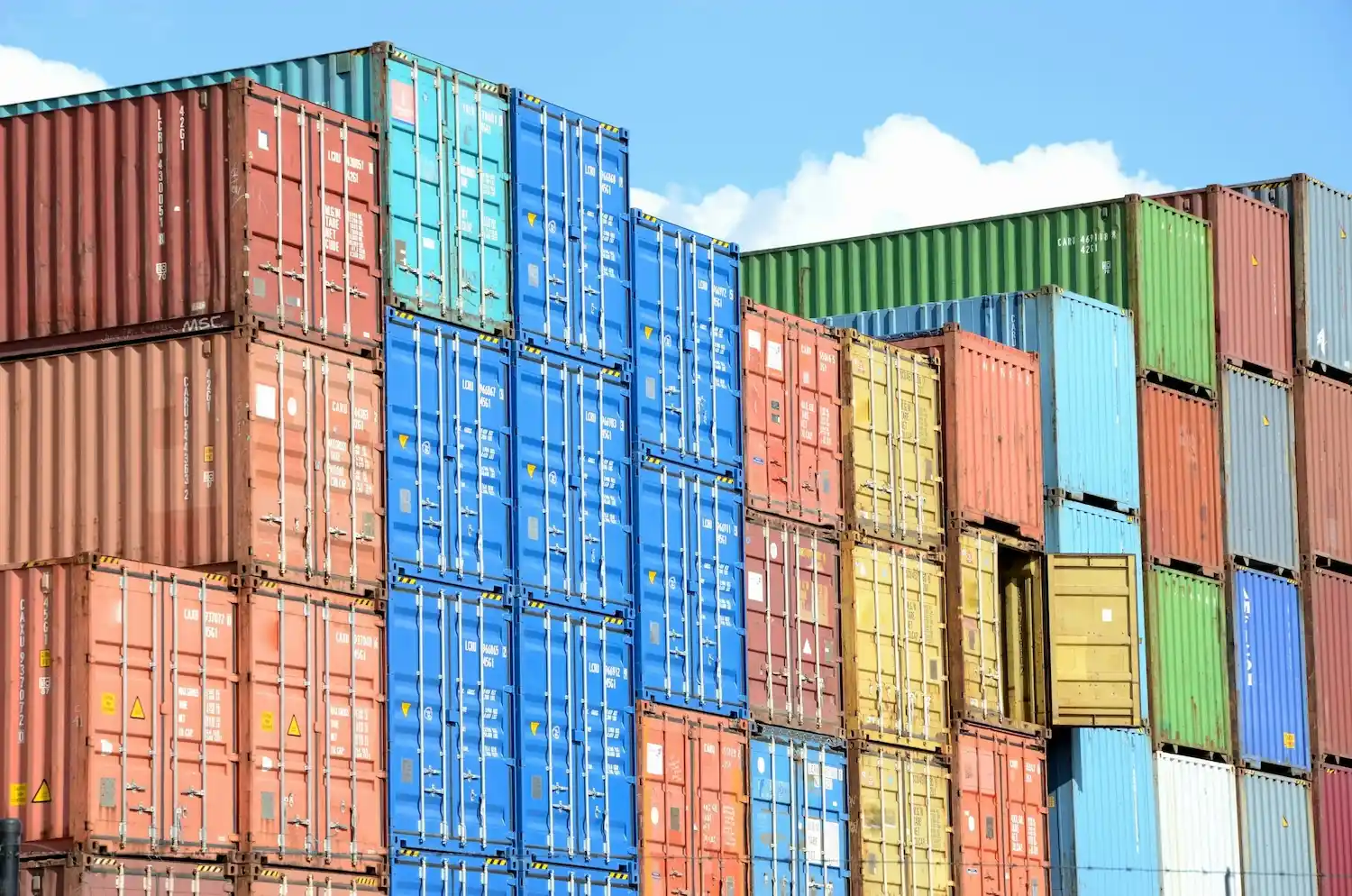
India’s export landscape is experiencing a defining transformation. Between April and August 2025, exports grew 5.19% year-on-year, reaching USD 346.1 billion, compared to USD 329.03 billion during the same period in 2024. This performance — against a backdrop of global trade uncertainty — underscores the country’s growing competitiveness, diversification, and resilience. From high-tech electronics to traditional commodities like tea and textiles, India’s export growth story is being powered by innovation, strategic reforms, and expanding trade alliances.
The Big Picture: India Outpaces Global Export Growth
India’s export growth of 7.1% in 2024 exceeded the global average of 2.5%, according to World Bank data. Exports now contribute 21.2% to India’s GDP, up from 19.8% in 2015, highlighting their rising importance in the national economy. In August 2025 alone, exports rose 4.77% year-on-year, with merchandise and services contributing 53.09% and 46.91% respectively.
Buoyed by this momentum, the government has set an ambitious export target of USD 1 trillion for FY 2025–26, with over a third already achieved in just five months. This rapid progress is a result of the synergy between government policy, digital transformation, and the entrepreneurial dynamism of Indian exporters — all advancing the vision of Atmanirbhar Bharat on a global scale.
Key Drivers of Merchandise Export Growth
India’s merchandise exports reached USD 183.74 billion in April–August 2025, up 2.31% from the previous year. Non-petroleum and non-gems & jewellery exports performed even better, rising 7.76% to USD 146.7 billion, underscoring the strength of sectors like engineering goods, electronics, chemicals, and pharmaceuticalsdoc2025107659901.
1. Electronics and Smartphones: The New Export Stars
Electronic goods led the surge with a 40.6% increase, adding USD 5.5 billion in value compared to the same period in 2024. This success is closely linked to the Production-Linked Incentive (PLI) and Make in India schemes that have transformed India from a net importer to a net exporter of smartphones. Exports of smartphones alone crossed INR 1 lakh crore in the first five months of FY26, a remarkable 55% increase over the previous year.
2. Agricultural Exports: The Rise of “Other Cereals”
Amid shifting global food preferences, India’s exports of other cereals — including barley, quinoa, and oats — grew 21.95% year-on-year. These products are benefitting from the global trend toward healthy, sustainable foods, with Nepal, Sri Lanka, and the UAE among top buyers. Supportive initiatives like the Agriculture Export Policy and APEDA’s market development programs have been instrumental in expanding India’s agri-export reach.
3. Meat, Dairy, and Poultry: Revving Up Rural Prosperity
Exports from this category rose 20.3%, with key destinations including Vietnam, UAE, Egypt, and Saudi Arabia. The sector’s performance demonstrates how agricultural reforms and export promotion schemes are translating into tangible growth for rural producers.
4. Traditional Strengths: Tea, Textiles, and Minerals
Tea exports surged 18.2%, with India overtaking Sri Lanka as the world’s second-largest tea exporter in 2024. Iconic varieties like Assam and Darjeeling continue to dominate markets in the UAE, Iraq, and the USA.
In minerals and processed ores, exports rose 16.6%, fueled by rising demand from China, the U.S., and Oman.
Textiles and apparel, a labor-intensive industry, grew 5.78% to USD 6.77 billion, reaffirming India’s global standing as the sixth-largest textile exporter.
Sectoral Highlights: Engineering and Pharmaceuticals Lead the Charge
Engineering goods, a mainstay of Indian exports, climbed 5.86% to USD 49.24 billion. The U.S., UAE, and Germany remain top buyers, with products ranging from industrial machinery to valves and ATMs. Government schemes like EPCG (Export Promotion Capital Goods) and MAI (Market Access Initiative) continue to enhance competitiveness.
The pharmaceutical sector, another export powerhouse, grew 7.3%, reaching USD 12.76 billion. India’s reputation for affordable, high-quality generics and specialty drugs ensures continued demand from major markets such as the U.S., Brazil, and France. Regulatory reforms like the UCPMP 2024 and National Medical Devices Policy 2023 have strengthened compliance and expanded export potential.
Expanding Horizons: India’s Key Export Destinations
India’s exports are not just growing in value — they’re spreading across new markets.
- Hong Kong: Exports up 26.19% to USD 2.62 billion, solidifying its role as a “Gateway to India.”
- China: Exports rose 19.65%, led by petroleum, engineering goods, and chemicals.
- U.S.: Despite minor month-to-month fluctuations, it remains India’s largest destination, taking in electronics, pharmaceuticals, and textiles worth USD 6.87 billion in August 2025.
- Germany and Korea: Exports to Germany increased 11.7%, while those to Korea rose 9.7%, thanks to deeper trade ties under the India-Korea CEPA.
This diversification — spreading across Asia, Europe, and the Americas — mitigates risk and strengthens India’s resilience amid shifting global trade dynamics.
Services Exports: The Powerhouse of India’s Trade Balance
India’s services exports grew 8.65% in April–August 2025, reinforcing their role as the backbone of India’s trade surplus. With USD 79.97 billion in surplus, services have been instrumental in narrowing the overall trade deficit.
The driving forces:
- Technology and IT: Accounting for 7.3% of GDP, the tech sector’s exports in IT, FinTech, and cloud services continue to expand, supported by Digital India and Startup India initiatives.
- Demographic Dividend: India’s youthful population — 65% under age 35 — provides a skilled labor base fueling IT, consulting, and professional services.
- FDI Liberalization: Policies like the 100% FDI cap in insurance and new digital trade commitments under the India-UK CETA have boosted investor and export confidence.
Government Reforms: Making Exports Faster, Cheaper, and Smarter
Several policy reforms are reshaping India’s export competitiveness:
- Foreign Trade Policy 2023 and RoDTEP Scheme reimburse taxes and duties, having refunded nearly ₹58,000 crore by March 2025.
- Districts as Export Hubs initiative empowers 734 districts with localized export action plans.
- PLI schemes across 14 sectors have drawn ₹1.76 lakh crore in investment, created 12 lakh jobs, and generated ₹16.5 lakh crore in output.
- Digital trade infrastructure, such as the National Single Window System, Trade Connect e-Platform, and E-Commerce Export Hubs, has streamlined logistics and documentation.
Infrastructure programs like PM GatiShakti and the National Logistics Policy have improved India’s logistics ranking from 44 in 2018 to 38 in 2023, reducing costs and boosting delivery speed.
New Trade Momentum: GST Reforms and Export Promotion Mission
Recent GST reforms (effective November 2025) promise to accelerate refunds, cut rates on key inputs like textiles and packaging, and reduce costs for small exporters. The Export Promotion Mission, with a ₹2,250 crore fund, targets export credit access, non-tariff barriers, and MSME competitiveness.
Additionally, upcoming trade agreements — including India-EU FTA, India-Australia CECA, and India-Peru FTA — will further open markets and diversify export opportunities.
A Confident March Toward a Trillion-Dollar Export Economy
India’s export surge in 2025 is not a one-off achievement — it’s the result of long-term structural reforms, innovation, and strategic diplomacy. From electronics and pharmaceuticals to IT and agri-products, India’s export basket reflects a mature, diversified, and resilient economy.
With digital tools, policy support, and expanding trade partnerships, India is not only strengthening its global footprint but also redefining its identity as a trusted trading partner and global growth engine. If current trends persist, the USD 1 trillion export goal may soon shift from ambition to reality.

