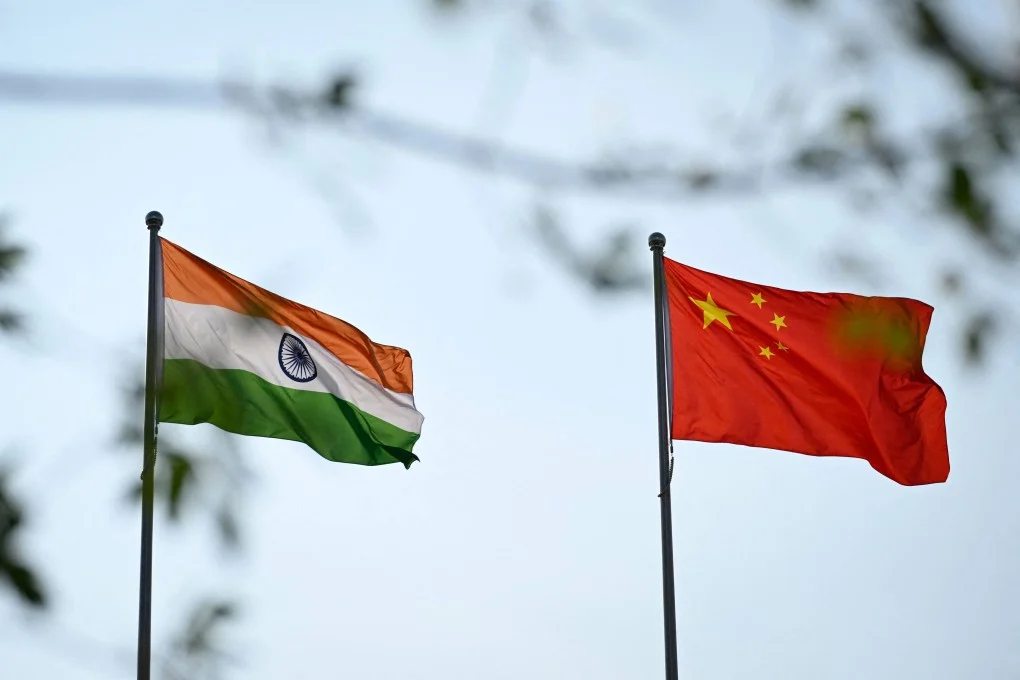
Recent troop face-offs in Arunachal Pradesh have once again exposed the unresolved core of the India–China relationship. Even as New Delhi and Beijing speak of stabilising ties, the disputed Line of Actual Control (LAC) remains a zone of persistent military friction, competing infrastructure, and strategic mistrust.
Tensions have intensified in the Upper Subansiri sector of Arunachal Pradesh, where Indian and Chinese forces have reportedly faced off near Taksing and Asaphila. According to the Indo-Tibetan Border Police (ITBP) chief, Shatrujeet Kapur, the confrontations began in July. Both sides initially withdrew, but Chinese troops later returned in greater strength and established tents in areas India considers to be on its side of the LAC.
The developments have not been accompanied by a detailed public account from either government. That silence reflects the sensitivity of border management, but it also leaves room for uncertainty about the scale and duration of the deployments. India’s Ministry of External Affairs has described the issue as one of Chinese forces departing from established patrolling arrangements, while both sides maintain that diplomatic and military channels remain open.
The episode is significant because it has occurred despite a visible improvement in high-level political engagement between the two countries. It demonstrates that diplomatic normalisation and military competition can coexist, particularly where the boundary itself remains unsettled.
The roots of the dispute
Arunachal Pradesh, administered by India as a full state, lies along India’s north-eastern frontier and borders Tibet. India regards it as an integral part of its territory. China, however, claims most of the state as “South Tibet” or “Zangnan,” making it one of the most sensitive elements of the broader India–China boundary question.
The frontier between the two countries stretches for roughly 3,440 kilometres and remains largely undemarcated. In the absence of an agreed and precisely mapped boundary, both sides operate according to differing perceptions of the LAC. This gap between maps, patrol routes, and physical control creates recurring opportunities for confrontation.
The dispute has deep historical roots. The 1962 war left the broader frontier unresolved, and subsequent decades of negotiations have produced mechanisms for managing incidents rather than a final settlement. India maintains that China occupies around 38,000 square kilometres in Aksai Chin, while China claims approximately 90,000 square kilometres in Arunachal Pradesh. These competing claims continue to shape military planning, border infrastructure, and diplomatic posture.
Why the state matters
Arunachal Pradesh is strategically important for reasons beyond its land area. It lies adjacent to Tibet, overlooks key approaches to India’s north-east, and sits near China’s expanding infrastructure and military presence on the Tibetan Plateau. For India, maintaining effective administration, patrolling access, and local support in the state is central to both national security and the credibility of its sovereignty.
For China, the region is closely connected to its Tibet policy. Beijing has repeatedly objected to visits by Indian leaders to Arunachal Pradesh, issued Chinese names for places in the state, and promoted the terminology of “South Tibet.” These measures are not merely rhetorical. They form part of a longer-term effort to contest India’s administrative control and normalise China’s territorial claims.
The state’s economic and environmental importance has also grown. India’s proposed 11,200-MW Siang hydropower project has become entangled in the wider dispute. Chinese commentary has portrayed the project as an effort by India to consolidate control over contested territory, while defending China’s own upstream hydropower developments on the Yarlung Tsangpo as development activity. The controversy shows how water, energy, sovereignty, and security have become inseparable in the Himalayan frontier.
Incremental pressure on the ground
Many analysts characterise China’s conduct along the LAC as incremental. Rather than launching a direct military challenge, a state may establish a presence, expand infrastructure, alter patrol patterns, and then seek to negotiate from the new reality. This approach is often described as “salami slicing,” though the term can oversimplify a mix of military posture, geography, and political signalling.
In the present context, reports of sustained Chinese deployments and restricted access to traditional grazing areas in parts of Arunachal Pradesh point to the practical consequences of such pressure. Even without a formal change in maps, repeated physical presence can alter the operational meaning of the LAC and complicate India’s ability to patrol areas it considers its own.
India has responded with border infrastructure, troop deployment, surveillance, and diplomatic protests. Yet the challenge is not only to react to individual incidents. It is to prevent a gradual shift in the balance of control while avoiding actions that could provoke a wider crisis.
The military equation
Arunachal Pradesh is as much a military theatre as a territorial dispute. The eastern sector is defined by high mountains, dense forests, poor connectivity, and long supply lines. These conditions make rapid reinforcement difficult and place a premium on all-weather roads, tunnels, helipads, forward depots, and reliable communications.
China’s infrastructure build-up in Tibet, including roads, railways, airfields, and military facilities, gives its forces improved access to forward areas. India’s task is to reduce this asymmetry through better roads, logistics, surveillance, and troop readiness, while ensuring that its own build-up is not misread as preparation for offensive action.
The security architecture on the Indian side involves multiple agencies. The Indian Army is responsible for conventional defence, while the ITBP performs border-guarding functions and the Assam Rifles operates in parts of the north-east. Coordination among these forces is essential in remote sectors, where early detection, rapid communication, and a disciplined local response can determine whether an incident remains contained.
Technology has become central to this competition. Drones, satellite imagery, electronic surveillance, mountain radars, night-vision systems, and secure communications can improve awareness along the LAC. But technology cannot replace physical presence, patrolling, and the capacity to hold difficult terrain. In high-altitude conditions, limited visibility and close proximity between forces increase the risk of miscalculation.
Since the 2020 Galwan clash, both countries have relied on commander-level talks, hotlines, and agreed protocols to prevent local incidents from escalating. These mechanisms remain necessary, but they are not a substitute for political agreement. A changed patrol pattern, new construction, or an unannounced deployment can still be interpreted as a deliberate challenge rather than a local misunderstanding.
Diplomacy amid deployment
The renewed tensions have emerged alongside signs of a broader thaw in India–China relations. High-level engagement, including Chinese President Xi Jinping’s visit to India for the BRICS Summit, has been accompanied by language emphasising partnership, stability, and mutual respect. Yet the face-offs in Arunachal Pradesh show that political warmth has not removed the underlying military rivalry.
In September, the two sides held corps commander-level talks at the Wacha-Damai border point. Such talks provide an essential channel for local commanders to defuse tensions and clarify intentions. However, past experience suggests that dialogue alone has not produced a durable settlement or fully restored the pre-2020 status quo in contested areas.
Both governments have strong incentives to avoid another Galwan-style crisis. War would carry enormous economic, military, and geopolitical costs for both. At the same time, neither appears prepared to abandon its fundamental territorial position. The result is a fragile equilibrium: neither open conflict nor genuine peace.
The people on the frontline
The border dispute is often discussed in the language of strategy, but its consequences are most immediate for communities living near the frontier. Restricted access to grazing land, disrupted movement, military deployments, and infrastructure construction can affect livelihoods, trade, and everyday life in border districts.
India’s long-term position in Arunachal Pradesh depends not only on soldiers and roads but also on the confidence of local communities. Development in healthcare, education, digital connectivity, and employment can strengthen the state’s presence in remote areas. At the same time, large projects such as dams must address concerns over displacement, ecology, and cultural impact. Security policy that ignores local realities risks weakening the very foundations it seeks to protect.
Water and strategic leverage
The Siang project has added a hydrological dimension to the dispute. China’s major hydropower plans on the Yarlung Tsangpo, upstream of the Brahmaputra, have implications for downstream river flows, flood management, and ecological stability. India and China lack a comprehensive water-sharing treaty, leaving India with limited institutional protection against upstream infrastructure decisions.
Chinese commentary has sought to frame India’s Siang project as expansionist, while presenting China’s upstream projects as development. This framing shifts attention away from Beijing’s control of Tibetan rivers and toward India’s activity within Arunachal Pradesh. For India, the challenge is to pursue legitimate development while addressing environmental risks, local rights, and the strategic consequences of upstream Chinese infrastructure.
A balanced assessment
It would be misleading to interpret every patrol incident as evidence that China is preparing for imminent war. There is no public evidence that either side seeks a full-scale conflict, and both have compelling reasons to prevent escalation. Some analysts argue that China may prefer a prolonged stalemate, using sustained pressure to improve its bargaining position over time.
It would be equally misleading to dismiss these incidents as routine misunderstandings. The LAC is not simply a technical boundary problem. It is the site of an active strategic rivalry in which infrastructure, deployments, naming campaigns, and access restrictions can gradually reshape the balance of control. Even without firing, such developments carry serious political and security consequences.
The most accurate reading is that both countries are engaged in competitive border management. China is asserting its claims through physical presence, infrastructure, symbolism, and diplomatic pressure. India is defending its administration and patrolling rights while attempting to avoid a crisis that could destabilise the wider relationship. The outcome is persistent friction rather than either resolution or war.
Priorities for New Delhi
India’s response must combine firmness with restraint. Militarily, it requires stronger surveillance, rapid-response capability, all-weather infrastructure, secure communications, and clear rules of engagement in contested zones. Modernisation of the Army, ITBP, and Assam Rifles remains essential in terrain where detection and mobility are difficult.
Diplomatically, India should continue to use existing mechanisms while insisting on verifiable disengagement and restoration of patrolling access where it has been restricted. General assurances are insufficient if conditions on the ground continue to change. Greater transparency with Parliament and the public, consistent with operational security, would also strengthen accountability.
Regionally, India should deepen investment in border communities and coordinate more closely with Bhutan and other Himalayan partners. Chinese infrastructure and territorial claims affect the wider Himalayan security environment, making regional cooperation an important complement to national defence.
Beijing’s calculations
From Beijing’s perspective, Arunachal Pradesh is tied to its Tibet policy and its broader effort to consolidate territorial claims through administrative, symbolic, and physical means. Renaming places, issuing stapled visas to residents, objecting to Indian official visits, and promoting the “South Tibet” narrative all serve to challenge India’s sovereignty.
China may calculate that an unresolved but stable border offers strategic advantages. It can maintain pressure without triggering a major war, while India must devote resources to defence and infrastructure. Yet this strategy carries risks. Repeated incidents can harden Indian opinion, accelerate India’s security partnerships, and make eventual political reconciliation more difficult.
The larger relationship
India and China remain major Asian powers with substantial economic interdependence. China is an important source of imports for Indian industry, including electronics and fertilisers, while both countries share interests in platforms such as BRICS. This interdependence gives both sides reasons to manage tensions, but it does not eliminate the structural rivalry between them.
The central question is not whether India and China can speak to each other. They clearly can. The question is whether dialogue can produce enforceable arrangements on patrolling, disengagement, infrastructure, crisis communication, and river management. Without such arrangements, diplomatic summits will continue to coexist with military stand-offs.
Conclusion
The renewed face-offs in Arunachal Pradesh underline a difficult truth: India–China relations may improve diplomatically while remaining unstable at the frontier. The dispute is rooted in incompatible territorial claims, an undefined LAC, competing infrastructure, and the strategic weight of the Himalayas.
For India, the priority is to defend its territorial integrity without triggering unnecessary escalation. For China, the immediate objective appears to be maintaining pressure while preserving its claims. For the people of Arunachal Pradesh, the stakes are more immediate: security, land access, development, and the ability to live without becoming collateral participants in a great-power rivalry.
A durable settlement will require more than military vigilance or diplomatic statements. It will demand a clearly understood LAC, verifiable rules for patrols and infrastructure, mechanisms to manage water and environmental risks, and genuine attention to border communities. Until then, Arunachal Pradesh will remain both a frontier state and a frontline in one of Asia’s most consequential rivalries.