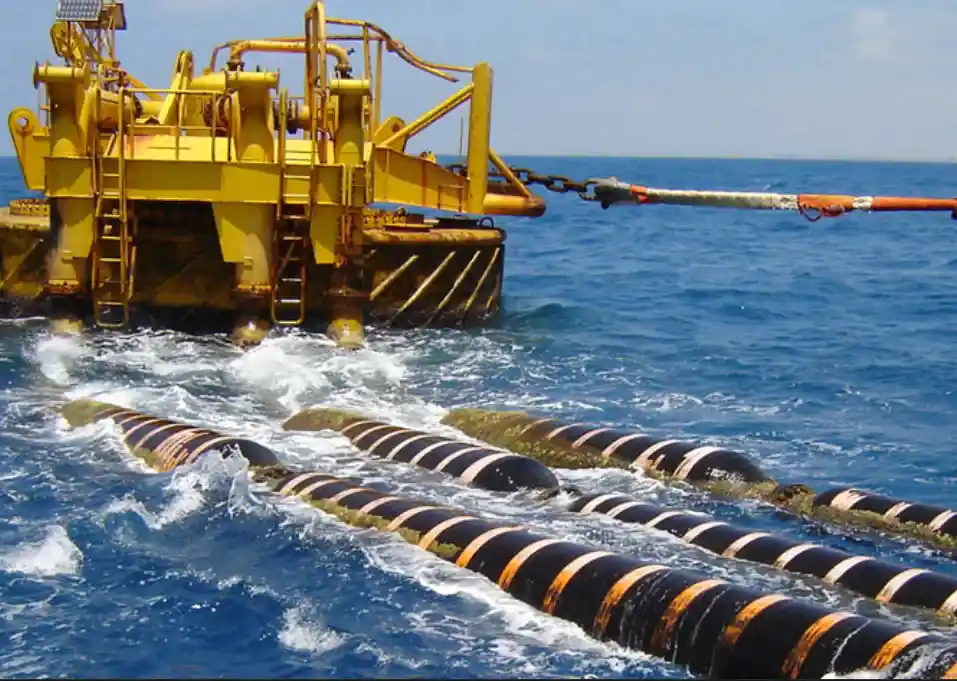
When strategic thinkers assess maritime security in the Indian Ocean, the discussion almost invariably circles back to surface geography. Analysts examine the narrow waterways of the Malacca Strait, monitor container movements through the Bab el Mandeb, and count the naval vessels patrolling the Arabian Sea. This traditional focus overlooks the most sensitive artery of modern national power. Beneath the waves lies an invisible network of fiber optic cables resting silently on the ocean bed. These slim strands of glass and steel carry more than ninety five percent of global internet traffic and settle trillions of dollars in international financial transfers every day. While satellites capture popular imagination, the modern economy runs on the seabed. For India, a country whose digital commerce, cloud computing networks, and military communications rely on these submarine corridors, this physical infrastructure remains an acute strategic vulnerability.
The scale of India’s dependence on subsea lines is staggering. As the nation marches toward a trillion dollar digital economy, its vast tech industry and digital public infrastructure are tethered to undersea cables landing at coastal gateways. Mumbai and Chennai alone handle more than seventy percent of these landing points. These stations funnel critical financial data, cloud workloads, and government traffic into terrestrial fiber grids. Yet, the security of this infrastructure has received only a fraction of the attention given to surface sea lanes. The threats to subsea cables are no longer theoretical. Recent years have witnessed mounting disruptions across crucial maritime corridors. Anchor drags from commercial cargo vessels, underwater seismic tremors, and deliberate acts of sabotage have repeatedly severed vital lines. In the Red Sea and the Baltic Sea, broken cables took weeks, and in some instances months, to restore. In conflict zones, hostile actors can easily disrupt communication lines while maintaining plausible deniability, causing immediate chaos to national banking networks and supply chains.
However, the most dangerous bottleneck in this entire equation is not the vulnerability of the cable itself. The real crisis lies in our inability to repair them quickly. Repairing a deep sea cable requires highly specialized ships equipped with precision grappling hooks, underwater robotic vehicles, and certified technicians capable of splicing microscopic glass strands in open waters. Worldwide, there are only about sixty ships capable of laying and fixing these underwater networks. Even worse, fewer than twenty of these vessels are dedicated purely to emergency repair missions. The entire planet shares this tiny fleet. When an outage occurs, a ship must be chartered, staffed, and sailed across thousands of nautical miles before work can even begin. Each individual repair operation typically takes ten to twenty days and can cost between one million and three million dollars.
To compound the problem, this global repair armada is growing dangerously old. Nearly two thirds of all operating cable maintenance vessels will reach retirement age by 2040. Over twenty vessels currently in service are already more than thirty years old, and replacing them requires massive capital investment that the private sector has been slow to provide. At the same time, geopolitical rivalries are fragmenting the maritime commons. A concentrated oligopoly of European, American, Japanese, and Chinese companies controls the global fleet. In any regional crisis, sovereign states will naturally prioritize their own national links. If hostile actors create coordinated disruptions in the northern Indian Ocean, India would find itself at the mercy of foreign vessel availability and overseas diplomatic goodwill simply to keep its domestic digital networks alive.
This dynamic reveals a glaring mismatch in India’s maritime doctrine. The Indian Navy has rightfully earned respect as a primary security provider across the regional waters. Indian warships routinely conduct anti piracy missions, protect merchant shipping, and deliver humanitarian assistance to littoral neighbours. Yet, while New Delhi invests billions in modern guided missile destroyers, conventional submarines, and aircraft carriers, it does not own a single dedicated deep sea cable repair ship under the national flag. Our digital highway has no tow trucks of its own. In the event of a simultaneous cut to the high capacity cables off Mumbai or Chennai, naval frigates cannot mend the glass fibers. A modern economy can survive a delayed container ship, but a sudden blackout of international financial messaging, cloud services, and global export processing would bring economic life to an abrupt halt. True strategic autonomy cannot exist if digital connectivity depends on foreign repair permits and rented foreign vessels.
To address this silent vulnerability, India must undertake a decisive policy shift. Undersea repair ships should no longer be viewed as routine commercial assets left entirely to private telecommunication consortia. They are critical national security assets, just like naval fleet tankers and offshore patrol vessels. The government needs to incentivize domestic public and private shipyards to construct specialized cable laying and maintenance ships under the Make in India initiative. Establishing dedicated maintenance berths and equipment stockpiles at strategic ports like Kochi on the western seaboard and Visakhapatnam on the eastern coast would drastically cut response times. When a break happens in the Bay of Bengal or the Arabian Sea, Indian vessels should be able to sail within twenty four hours.
Furthermore, this domestic capability can anchor a broader regional strategy. Through platforms like the Quad and the Colombo Security Conclave, New Delhi can champion an Indian Ocean cable protection framework. By offering repair services and joint seabed surveillance to friendly littoral partners, India can reinforce its standing as a genuine net security provider. Securing physical sea lanes is vital, but the battlefield of tomorrow will be fought across digital domains. Protecting the undersea cables that carry our data and building the sovereign capacity to repair them is not merely an engineering detail. It is a fundamental prerequisite for India’s rise as an unshakeable maritime power.