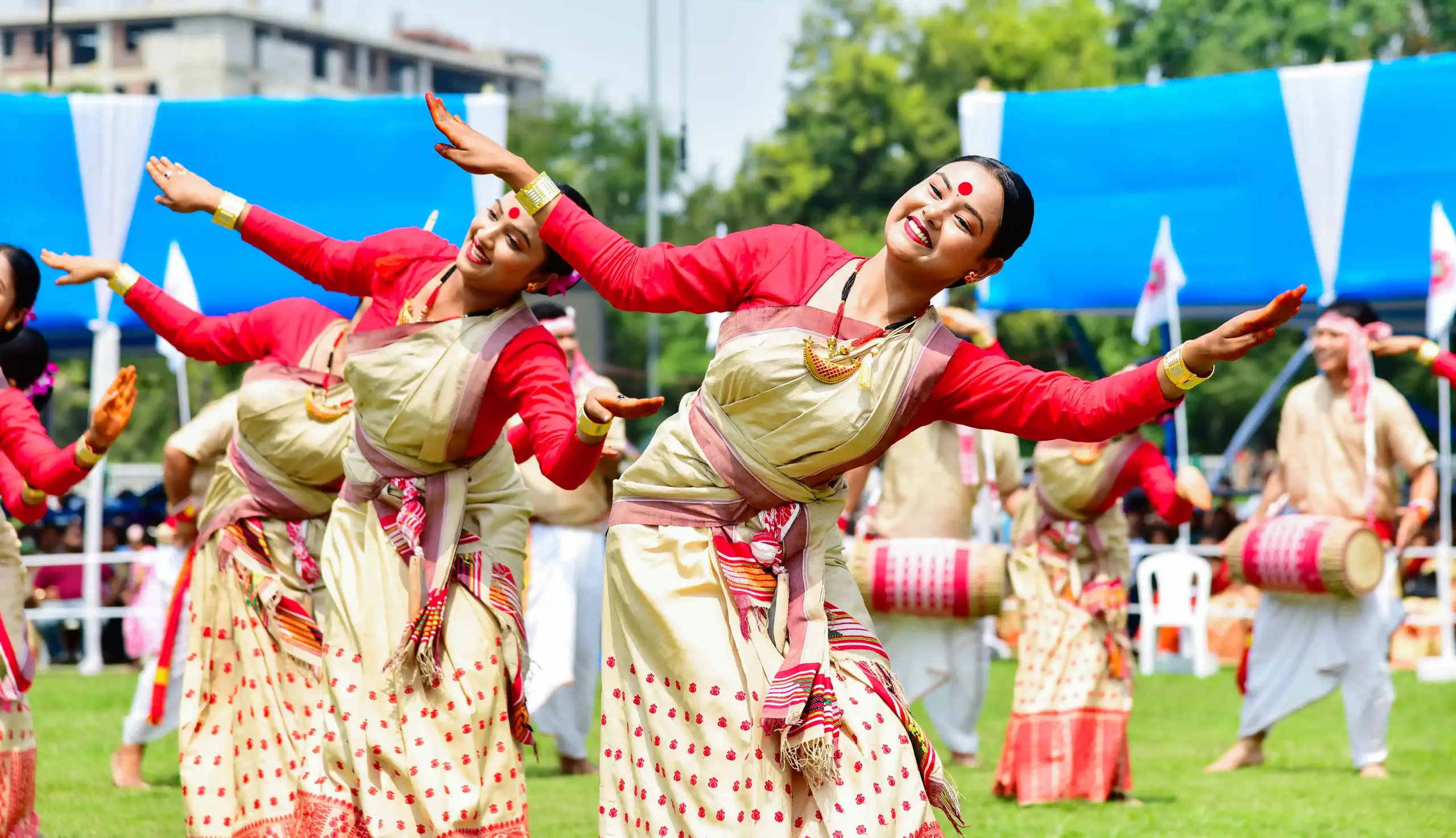
As Assam welcomes spring and the Assamese New Year, Rongali Bihu or Bohag Bihu, unfolds not as a singular celebration but as a richly layered cultural cycle spread across seven days. This extended rhythm of festivity, often referred to as Xaat Bihu, reflects the depth of Assamese life, where nature, community and spirituality are interwoven. At a time when festivals are increasingly reduced to spectacle, Bohag Bihu stands as a reminder that culture is best experienced as a continuum.
The first day, Goru Bihu, is dedicated to cattle, which have traditionally been central to agrarian life. Cows and bulls are bathed in rivers or ponds, their horns adorned, and their bodies gently cleansed with herbs like turmeric and black gram. They are then fed special preparations and allowed to rest. This ritual underscores an ethic of gratitude towards animals that sustain agriculture, a practice that carries renewed ecological significance in today’s context of environmental strain.
The second day, Manuh Bihu, marks the Assamese New Year and shifts the focus from nature to human relationships. People wear new clothes, seek blessings from elders and exchange greetings. The symbolic offering of gamosa, a handwoven cloth, reflects respect and affection. Traditional delicacies such as pitha and laru are prepared and shared. This day embodies renewal at a personal and social level, reaffirming bonds that hold communities together.
The third day, Gosai (or Gosain) Bihu, introduces a spiritual dimension. Households offer prayers to deities, seeking prosperity, protection and well-being for the year ahead. It represents the integration of faith within the broader cycle of celebration, reinforcing the idea that material and spiritual aspects of life are inseparable.
The fourth day, often associated with Kutum Bihu, is devoted to kinship and social ties. Families visit relatives, friends and neighbours, strengthening bonds that extend beyond immediate households. These interactions, marked by hospitality and warmth, highlight the communal ethos of Assamese society, where relationships are nurtured through shared experiences.
The fifth day, sometimes referred to as Senehi Bihu, celebrates affection and emotional connection. Traditionally associated with expressions of love and camaraderie, this day finds resonance among the youth, where songs, dances and exchanges of tokens convey sentiments that are otherwise left unspoken. It adds a layer of intimacy to the broader festival.
The sixth day, Mela Bihu, is characterised by community fairs and gatherings. Villages and towns host melas where people come together for cultural performances, games and trade. These fairs not only provide entertainment but also serve as spaces of economic and social exchange, reflecting the vibrancy of rural life.
The seventh and final day, Chera (or Bohagi Bidai) Bihu, marks the symbolic conclusion of the festivities. It is a moment of quiet reflection, where the exuberance of the previous days gives way to a sense of closure and anticipation for the agricultural cycle ahead. The rituals of this day emphasise continuity, reminding communities that celebration and labour are part of the same cycle.
Taken together, these seven days offer a holistic vision of life. Bohag Bihu is not merely a festival of dance and music, though its Bihu songs and performances are among its most visible expressions. It is, fundamentally, a lived philosophy, one that acknowledges the cyclical nature of time, the interdependence of humans and nature, and the centrality of relationships.
Yet, this depth is increasingly at risk of being overshadowed in contemporary celebrations. Urbanisation and changing lifestyles have led to a condensation of Bihu into a few days of organised events, often centred around stage performances and public gatherings. In cities like Guwahati, corporate sponsorships and media-driven spectacles dominate, sometimes at the expense of the quieter, more intimate traditions that define the festival’s essence.
This transformation is not without its benefits. The expanding reach of Bihu has allowed it to transcend geographical boundaries, with Assamese diaspora communities celebrating it across India and the world. These adaptations ensure continuity in new contexts, keeping the festival relevant for younger generations.
The challenge, therefore, lies in balancing visibility with authenticity. Cultural institutions and policymakers must support grassroots celebrations that preserve the diversity and depth of Bihu’s practices. Educational initiatives can help younger generations understand the significance of each day, ensuring that the festival is not reduced to a singular performance.
Equally important is the ecological wisdom embedded in Bohag Bihu. As climate change disrupts traditional agricultural cycles, the values of sustainability, gratitude and coexistence that underpin the festival acquire renewed urgency. Reviving these elements can make Bihu not just a cultural celebration but also a guide for living in harmony with nature.
Ultimately, Bohag Bihu endures because it is more than a festival, it is a way of understanding life. Its seven-day structure is not an indulgence of time but a reflection of a worldview that values process over immediacy, connection over isolation and continuity over fragmentation.
As Assam celebrates another Rongali Bihu, the task ahead is to preserve not just its vibrancy but also its layered wisdom. For in its seven days lies a timeless lesson: that renewal is not a moment but a journey, one that must be lived, shared and sustained.