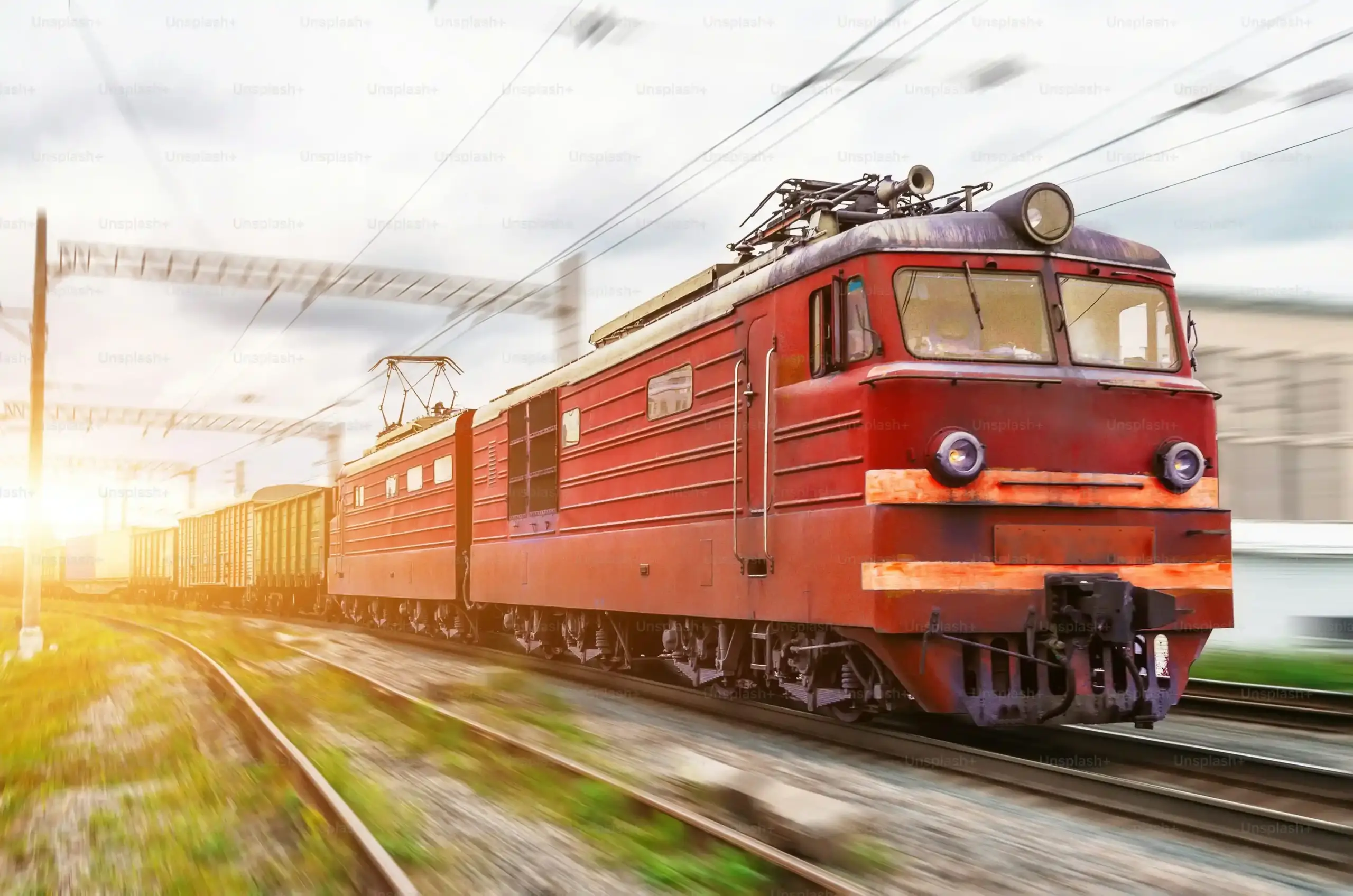
On April 16, 1853, a 21-gun salute echoed across Bori Bunder station in Bombay, marking a moment that would change the course of Indian history. As the steam locomotive named Falkland pulled 14 passenger carriages toward Thane, it carried just 400 passengers—and the promise of a new era of connectivity. Fast forward 173 years to the fiscal year 2025–26, and the scale of this evolution is staggering: Indian Railways now transports 741 crore passengers annually and operates approximately 25,000 trains every single day.
What began as a 34-kilometre experimental run has transformed into one of the largest and most sophisticated railway networks in the world. This journey from “steam to speed” is more than just a history of transport; it is the story of a nation’s economic and social integration.
The Foundation of an Empire’s Grid
The initial expansion following that 1853 run was rapid. By 1880, the network had already reached a route mileage of approximately 9,000 miles. This era was defined by innovative engineering, such as the opening of the Darjeeling Himalayan Railway in 1881, which proved that railways could conquer even the most challenging mountainous terrains.
Operational diversity was also key to this growth. To reach remote areas and transport merchandise to main lines, different gauges were adopted, including the 1.6-metre broad gauge and the 1-metre metre gauge. Perhaps the most significant milestone of the late 19th century was the birth of self-reliance; in 1895, the Ajmer Workshop produced Loco No. F-734, the first steam locomotive built entirely in India. This established the indigenous manufacturing capability that remains a cornerstone of the network today.
The Century of Transformation
The 20th century brought a shift toward efficiency. While steam dominated for decades, the first spark of modernization arrived in 1925 with India’s first electric train running between Bombay Victoria Terminus and Kurla. Following Independence in 1947, the system underwent a massive administrative overhaul, combining 42 separate railway systems—including those of former princely states—into a unified national entity. By 1952, the network was reorganized into six administrative zones to streamline management.
The slow fade of the steam era began in earnest in 1985 as coal-fired engines were phased out in favor of diesel and electric locomotives. This period transitioned the railways from a colonial legacy into a modern operational base capable of supporting a burgeoning population.
A Green and Electric Revolution
Entering the 21st century, the focus shifted from mere expansion to high-tech modernization and sustainability. The most visible achievement of this era is the near-total electrification of the broad gauge network. As of March 2026, a remarkable 99.6% of the 70,142-kilometre network is electrified. To put this in perspective, only 20% of the network was electrified before 2014.
This shift has profound economic and environmental implications. Electric traction is approximately 70% more economical than diesel, and in the 2024–25 period alone, electrification saved roughly 180 crore litres of diesel, significantly reducing crude oil imports. With 82% of China’s and only 39% of the UK’s networks electrified, India has emerged as a global leader in green rail infrastructure.
Speed, Comfort, and the “Make in India” Spirit
The modern face of Indian Railways is best represented by the Vande Bharat Express. Launched in 2019, it is the country’s first indigenously designed and manufactured semi-high-speed train. In the 2025–26 fiscal year, the Vande Bharat network served nearly 4 crore passengers, and the recently launched Sleeper service is already seeing high demand.
While Vande Bharat targets speed and luxury, the Amrit Bharat Express ensures that modernization is inclusive. These non-AC trains are designed specifically for low- and middle-income families, offering improved comfort and safety at economical rates. Currently, 60 such services are operational across the country, ensuring that the “lifeline of the nation” remains accessible to all.
Safety in the Digital Age
As the network grows faster, it is also becoming smarter and safer. The indigenous Kavach Automatic Train Protection system—designed to prevent collisions—has been commissioned over 3,100 route kilometres, with plans to expand it to an additional 24,400 kilometres.
The digital infrastructure has also seen a massive upgrade through the Unified Telecom Backbone, utilizing IP MPLS technology at nearly 1,400 stations to support mission-critical applications. Passenger safety is further bolstered by AI-enabled video surveillance at 1,874 stations, featuring facial recognition and advanced analytics. For the modern traveler, the RailOne App, launched in July 2025, provides a “one-stop shop” for everything from ticket booking to grievance redressal.
The Horizon: High-Speed and Beyond
The future of Indian Railways is being written with a record capital outlay of ₹2,78,000 crore, the highest in the sector’s history. A significant portion of this vision is dedicated to High-Speed Rail (HSR). The Mumbai–Ahmedabad High-Speed Rail (MAHSR) corridor is the flagship project, designed for speeds of up to 320 kilometres per hour. Beyond this, seven additional high-speed corridors spanning 4,000 kilometres—including routes like Delhi–Varanasi and Hyderabad–Bengaluru—are planned to act as “growth connectors” for the economy.
Simultaneously, the physical experience of the railway station is being reimagined. Under the Amrit Bharat Station Scheme, 119 stations have already been redeveloped, offering modern amenities that turn basic platforms into bustling hubs of activity.
From the inaugural 21-gun salute in 1853 to the silent, swift glide of the Vande Bharat today, Indian Railways has remained the country’s most dependable system. It has adapted to every technological shift—from steam to diesel, and from electric to high-speed—while maintaining its role as an engine of economic growth. Today, it stands as a reflection of sustained engineering effort and a vital contributor to national development, proving that even a historic institution can lead the way into a high-tech future.