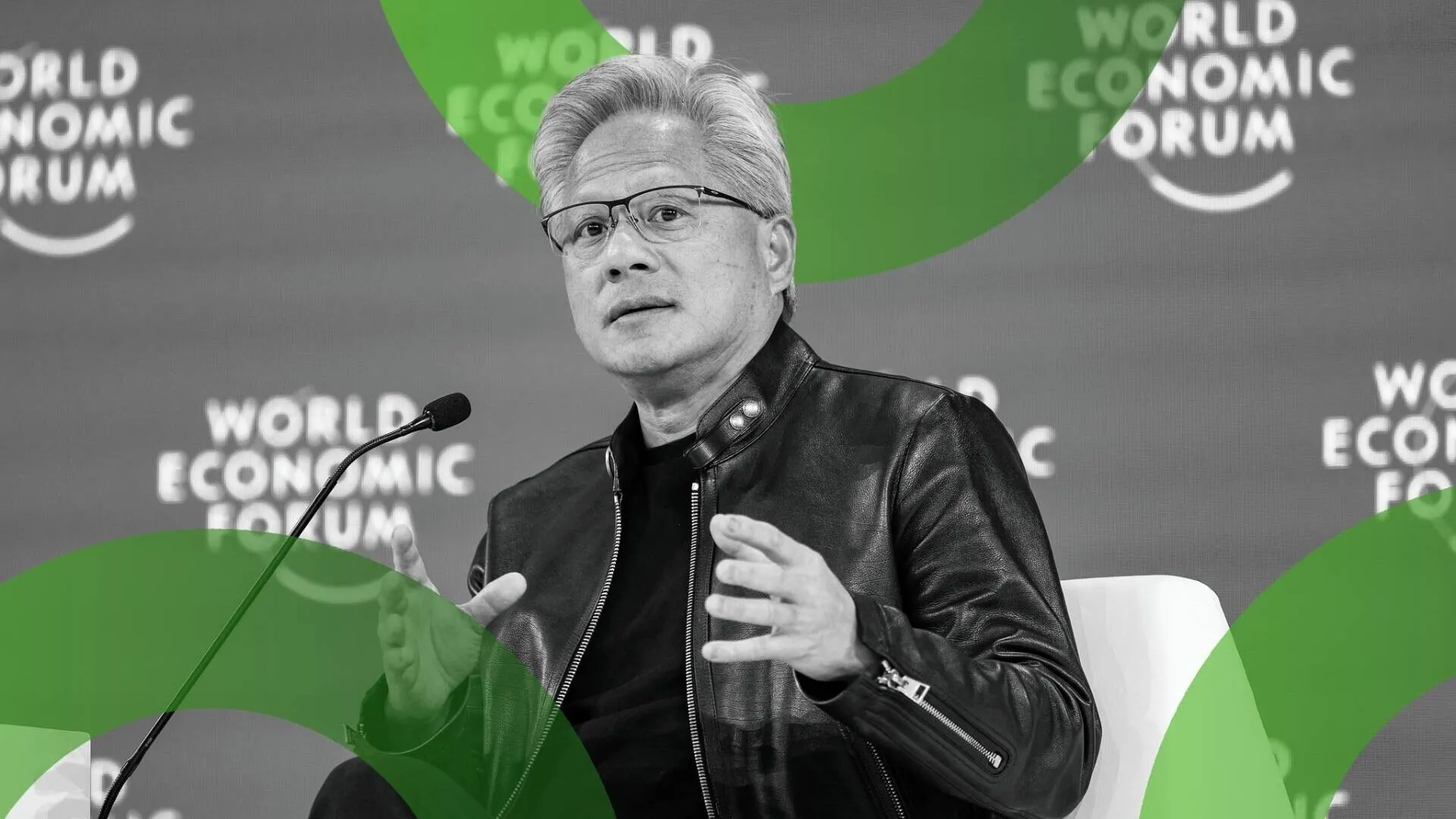
Nvidia’s Jensen Huang’s spy scandal may be the biggest case of economic espionage or a soft red sparrow attempt against one of the biggest tech companies and a frontrunner in the global AI race. What was more interesting and surprising was that Huang’s ties with Megaspeed executive Alice Huang, who is also suspected of being a spy working for the Chinese Ministry of State Security (MSS), helped facilitate the shipment of at least $7.5 billion worth of Nvidia chips through Chinese companies since 2023, according to reports. Beyond the incident, it also suggests that China is ramping up economic espionage, especially through human intelligence and the honeypot game, to shift the balance of power.
The US-China Spy Games
The US-China spy wars are largely fought in the economic domain to attain economic superiority and an edge in strategic competition. The idea of espionage in Chinese strategic thought is quite broad, capturing the strategic picture through sustained tradecraft efforts, rather than rapid, high-impact, surgical tradecraft aimed at high-value targets. Chinese espionage thinking, especially at the Human Intelligence level, is primarily based on long and sustained tradecraft, combining strategic patience, high volume, and generational cultivation. The Chinese philosophy of Thousand is a core driver of Chinese tradecraft thinking: instead of relying on one high-risk, aggressive tradecraft show, Chinese intelligence often tasks thousands of everyday travellers, researchers, and businesspeople with collecting tiny, seemingly harmless pieces of information.
Most importantly, the political structure provides the intelligence services with uninterrupted continuity, allowing planning across decades. Therefore, the Chinese intelligence community can afford long, sustained operations with full regime support. In contrast, in the US, administrations change every four to eight years and face strict annual congressional oversight that sometimes derails operations or, most importantly, forces the US intelligence community into an “Intelligence rush” to produce instant results. The sustained patience in China’s espionage game has helped China inflict more in- depth damage and mount more precise collective intelligence operations. The two cases reflect the long-term success of China’s intelligence game.
If some reports are to be believed, Beijing spent years cultivating Dr Charles Lieber, the former chair of Harvard University’s Chemistry Department, through the Thousand Talents Plan. By offering him a $50,000 monthly salary, over $1.5 million to establish a research lab in Wuhan, and prestigious academic honours, Chinese officials turned a top U.S. nanoscience pioneer into a long-term asset who transferred cutting-edge US-funded research overseas without triggering traditional cyber alarms, according to reports. Lieber was convicted in 2021 for secretly accepting millions of dollars from China and lying about his ties to a state-backed recruitment program. However, he was not charged with espionage or working directly for Chinese intelligence. But many argue that he was turned into China’s strategic/intelligence asset.
Second, if some reports are to be believed, rather than hacking Apple’s tightly guarded servers, Chinese-backed firms recruited trusted insiders directly from Apple’s self-driving car division. Over several years, multiple senior engineers used their legitimate security credentials to download thousands of proprietary hardware schematics and circuit board designs onto personal devices before attempting to flee to China. While U.S. authorities intervened in two of these thefts, one engineer successfully fled to China with stolen data.
China’s intelligence thinking therefore focuses more on unconventional models than on traditional intelligence models of nurturing career intelligence officers and field officers to execute operations. It involves private citizens, by either encouraging or pressurising them, especially researchers and corporate employees, to act as assets or operatives to steal intellectual property and transfer it to Chinese companies. China’s intelligence approach has completely blurred the lines between tradecraft, state, and society, using a grain-of-sand philosophy where Chinese intelligence agencies compel state-owned enterprises, private tech firms, and academic institutions to assist with intelligence gathering and patiently wait for normal business and academic relationships to mature so that they can extract high-value intelligence.
The Long Wait
China’s intelligence combines layered intelligence operations with great patience in asset management and recruitment. One prime example is Noshir Gowadia, a principal propulsion engineer who helped design the U.S. Air Force’s B-2 Spirit stealth bomber. If some reports are to be believed, Chinese operatives patiently cultivated him after he left Northrop. Instead of immediately tapping Gowadia, the Chinese intelligence agency carefully built a relationship. It leveraged his financial pressures and desire for professional recognition, inviting him on multiple trips to China between 2003 and 2005. Though it may look like a simple high-value defection, the Chinese intelligence agency patiently waited and gradually extracted strategic information from Gowadia, enabling China to design a low-signature stealth exhaust nozzle for Chinese cruise missiles and ensuring the transfer of crucial infrared suppression data before Gowadia’s arrest.
There are two crucial intelligence lessons from this episode: first, strategic, long-term operations through gradual exploitation of individual and institutional trust. Second, delaying exploitation or action on intelligence by resisting the urge to act immediately on stolen intelligence. By waiting years to deploy stolen designs or expose compromised networks, they prevent U.S. counterintelligence from suspecting or directly tracing the source. This similar intent influences China’s honeypot operations.
China’s Honeypot Strategy
Strategic patience in intelligence gathering is also reflected in China’s honeytrap or honeypot operations. Western intelligence agencies primarily use honeytrap operations for blackmail, leveraging romantic or sexual attraction to compromise a target using compromising photos, video, or evidence of an affair. The Chinese concept of a honeytrap is more emotionally driven than seduction alone. China’s honeytrap primarily relies on intellectual flattery and romance, cultivating a long-term emotional and soft romantic relationship with targets, who are usually top tech executives, R&D researchers, academics, and rising local politicians or bureaucrats, with the core objectives of technology transfer, intellectual property theft, and long-term political influence.
In this case, China’s intelligence assets or operatives use deep emotional trust, shared ambition, financial backing, and voluntary sharing of insights as key drivers to cultivate an in-depth relationship with the target, creating massive emotional dependence, especially among older individuals who suffer from loneliness. To run operations more covertly and make them look clean, China uses extensive front organisations, front companies, and academic exchanges. This makes the relationship look like legitimate business or scholarly collaboration rather than state-sponsored spying. By manipulating emotional variables such as genuine affection, financial interdependence, or a sense of mutual loyalty, operatives ensure the target remains cooperative without realising they are being manipulated.
Nvidia’s Jensen Huang’s spy scandal resembles the characteristics of China’s sustained tradecraft and the imprints of China’s honeypot strategy, in which China’s intelligence community emotionally and intellectually manipulated him by planting an asset close to him. China knew that Huang was not on the same page with Trump on the issue of AI chip exports to China, where the former believed that exports to China should happen, as a strict ban may backfire, forcing China to build domestic capabilities and a competitive environment. Only this particular thought of Huang’s was emotionally manipulated, or, to be more precise, further exacerbated by a Chinese asset to secure a mega deal of AI chips to China covertly under the nose of the US.
The US Intervention and Alarm
Huang incident refreshes the memory of another honeypot operation by China decades back targeting the FBI; according to reports, China cultivated and embedded an asset posing as a wealthy Chinese-American businesswoman. Katrina Leung became a prized FBI informant in the 1980s. Over 18 years, she maintained long-term relationships with two of her senior FBI counterintelligence handlers. Using their trust, she covertly copied classified documents to China to derail the FBI’s intelligence programme on China for nearly two decades. She spent almost 18 years in the FBI.
According to reports, US intelligence agencies and the FBI received intelligence suggesting Huang may have been compromised. Still, because of Huang’s personal relationship with Trump, little could be done, despite a memo to the White House and a briefing to Trump. The difficulty of fully detecting and presenting a clear picture was compounded by China’s masterful ability to cover and conceal the operation under the guise of companies and assets (Huang’s love interest, Alice, and her years of effort to build a close relationship with Huang). Such strategies kept Alice and Huang off the radar for a long time, enabling China to continue intelligence gathering on the tech and economics of AI chips.
China’s Growing Tradecraft
China is now combining its long tradecraft with enhanced cyber capabilities. Under President Xi Jinping, China’s Ministry of State Security has adopted far bolder cyber-espionage campaigns, such as Salt Typhoon, that combine HUMINT and TECHNIT for faster processing of intelligence gathered and, most importantly, to complement or compound damage to critical U.S. infrastructure for potential sabotage, viz., HUMINT/Strategic assets. All these advancing tech and Intelligence capabilities of China reflect China’s ambitious 100-year strategy, where economic growth, technological self-reliance, and intelligence operations are considered interconnected tools to surpass the US as the world-leading superpower. Therefore, there is a pressing need in the US to balance and counter China’s expanding tradecraft imprints. For India, China’s tradecraft tactics are another realisation that it must continue to deal with China strategically and cautiously amidst normalizing ties on the surface.