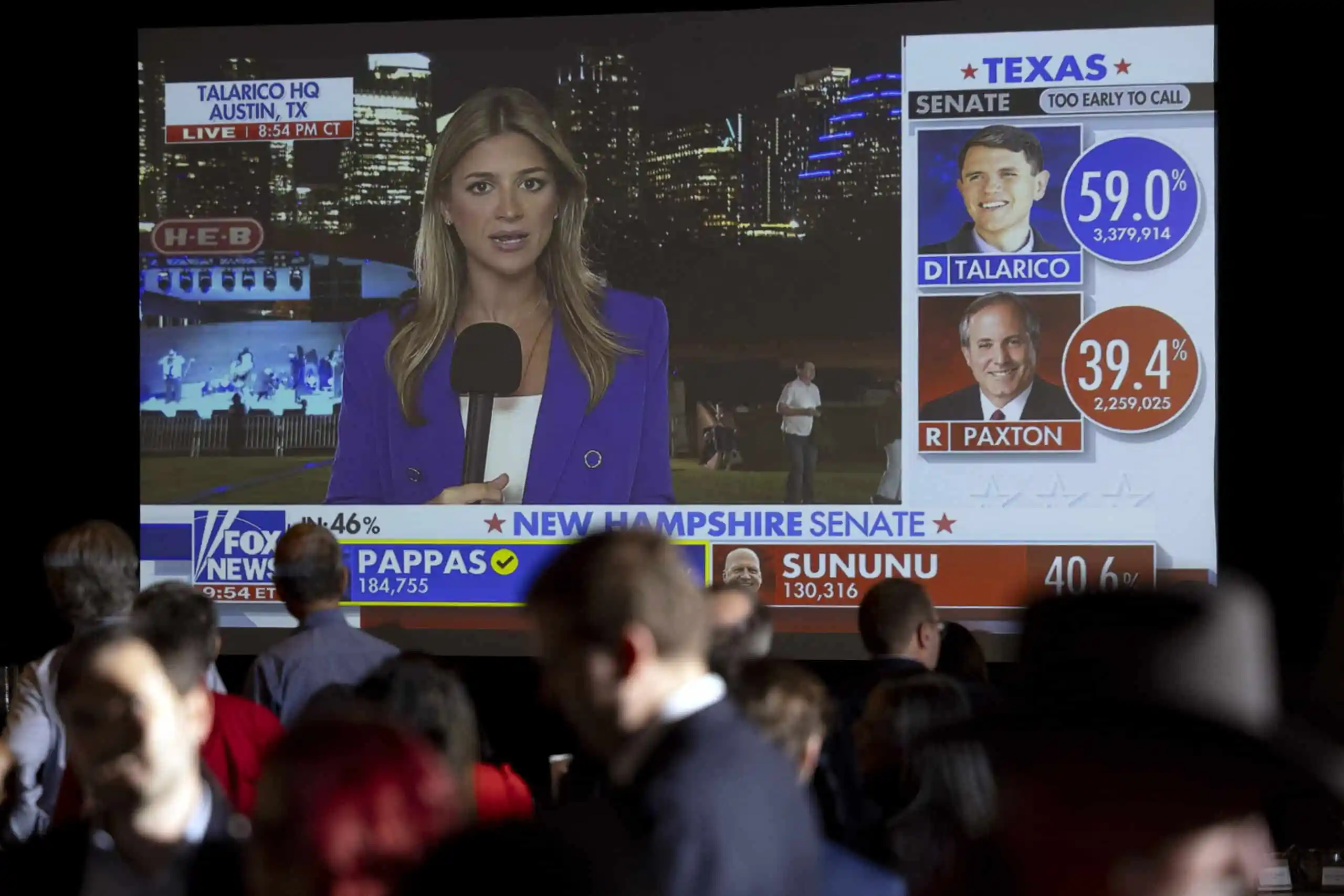
In the early morning of November 4, American media networks projected victory for the Democrats to take the House of Representatives and Senate in the United States (US). However, the reaction of India was subdued. No matter what is decided in the polling booths of America, no amount reduces the levy charged on shipments of Indian seafood, cotton yarn, or auto parts. The new Congress takes charge only in January 2027, and President Donald Trump holds veto powers for the next two years.
Nevertheless, Indian policymakers are wrong to categorize the results as domestic American politics. With midterms, the people who can say no to the president in Washington has changed. The impulsive trade policy of President Trump since 2025, which has adversely affected Indian exports, might slow down now, and it should affect India’s approach towards America.
As per data from 2025, the US imposed a tariff of 50% on most Indian goods including a 25 percent “reciprocal” tariff plus 25 percent penalty on purchasing Russian oil. However, in February 2026, President Trump announced an agreement with India reducing the rate of tariff to 18 percent in exchange for stoppage of Indian purchases of Russian oil and liberalization of trade. However, weeks later the US Supreme Court struck down the emergency-powers tariffs on which the deal rested. Later, Washington put a temporary tariff of 10 percent on global level and then initiated investigations against 60 economies, including India, citing Section 301 of the Trade Act of 1974. This Act permits US Trade Representative to retaliate against foreign practices. From July 24, India’s export goods carry additional 10 percent tariff duty under one of these investigations due to India’s forced labor import policy. Recently, Trump signed an act authorizing the US to impose tariff of up to 100 percent to countries that purchase Russian oil.
These tariffs are certainly harmful to India. However, frequent changing of tariffs has been equally painful. An exporter based in Tiruppur or Surat can easily calculate around high tariffs but not around a rate which varies four times a year under four different laws. India has declared in March that it will not sign any final deal until the US sorts out its tariff regime. However, eight months later, both sides claim that final deal is almost ready but it has not been signed yet.
Can the Democratic Congress curb Trump? Only partially and not immediately. The US Constitution gives the right to Congress to levy tariffs on imports but Congress has delegated major powers to the president through laws such as Section 232 (imposing tariffs on national security grounds) and Section 301. Revoking these powers requires legislation which Trump can veto and overcoming a veto requires two-third majority in both chambers which the Democrats do not have. What Congress can do from January is hold hearing on how tariffs impact American households, require economic analysis behind every tariff imposed, subpoena officials and impose conditions on budgetary bills. Committees that handle trade in both chambers will be led by Democrats.
However, the larger curb is political. Reuters reports that voters were blaming tariffs and the Iran war for persisting inflation. Republican senators who need to face reelection in 2028 now have a reason to oppose the next round of escalation, and the president who loses a national referendum on tariff tends to be more careful. Political pressure does not have legal enforcement and Trump has ignored it earlier.
India needs to be realistic about what this Congress will not do. It will not weaken Washington on Russian oil: the September sanctions law is a Congressional initiative and Democrats are equally hostile to Moscow as Republicans are. CareEdge predicts continued risk of Russia-linked tariffs on India. Neither will it ease trade demands of US. Democrats have grievances on lack of access to the Indian market for American farm products, dairy and medical equipment and they are ready to question India’s domestic politics than the Trump White House.
A subtle shift in the approach is in the relationship between two countries. For the last ten years, India was running its Washington diplomacy through leadership. Prime Minister Narendra Modi has shared the stage with Trump in Houston in 2019 and hosted him in Ahmedabad in 2020. The approach has soured. Trump’s repeated claims that he negotiated the India-Pakistan ceasefire in May 2025, which New Delhi rejects, and his policies towards Pakistan have resulted in nothing for personal diplomacy. Relationships through one channel are only as robust as the moods of the person behind the door.
Congress was the second door for India. The 2008 civil nuclear deal was passed by both chambers after years of lobbying by Indian diplomats, Indian-Americans and American businesses. The engagement had tapered and the balance of power makes a reason for Indians to revive it. Indian diplomats can brief congressional trade and foreign relations committees as often as they brief White House and work with American importers and technology firms, which want consistent access to India and have their own lobbyists on Capitol Hill. H-1B skilled workers visa should also be included in the list as Congress makes and finances the program.
In addition, it also means signing an interim trade deal in a format that will withstand the Trump administration. Officials claim that the deal does not require ratification by Congress which is handy now but a deal based on executive order can be undone by the next one. Terms acceptable to the Democratic-led trade committee are more likely to withstand 2029.
Many members from both parties see a strong India as a key element in the contest with China and some are unhappy with administration’s handling of New Delhi. They find defense and technology cooperation with India a way to signal that US commitments to India do not depend on White House alone.
None of this will be seen in January. Trump will still set tariff rates on Indian goods and even increase it. However, the midterms have increased the political cost of each sudden change. For New Delhi, it is a lesson that it had learned in the 2000s and forgotten since then: Washington is not only a president but also an institution, and it is healthy when India engages with it.