India does not lack talent. It lacks opportunity, and nowhere is that clearer than in how the country teaches science.
In Delhi NCR, air purifiers have become familiar objects, sitting in homes, classrooms and offices. Few of us, though, could explain why the fan sits where it does, or what activated carbon can remove from the air that a HEPA filter cannot capture on its own. That gap says something about how casually we are taught to understand the objects around us, and it says a great deal more once you hand the same problem to students, many of whom have never owned an air purifier at all.
That is the gap our flagship workshop at ThinkSmiths Catalyst is built to close: not by lecturing students about how an air purifier works, but by handing them a fan, a filter, some activated carbon and a power supply, and asking them to build one that actually does.
That gap is also a fairly accurate summary of Indian science education. We have built a system that is extraordinarily good at training students to reproduce information under exam pressure, but far less consistent at testing whether they understand what they are reproducing. Our examinations are often better at rewarding students for naming components and reproducing definitions than for explaining how a complete system works.
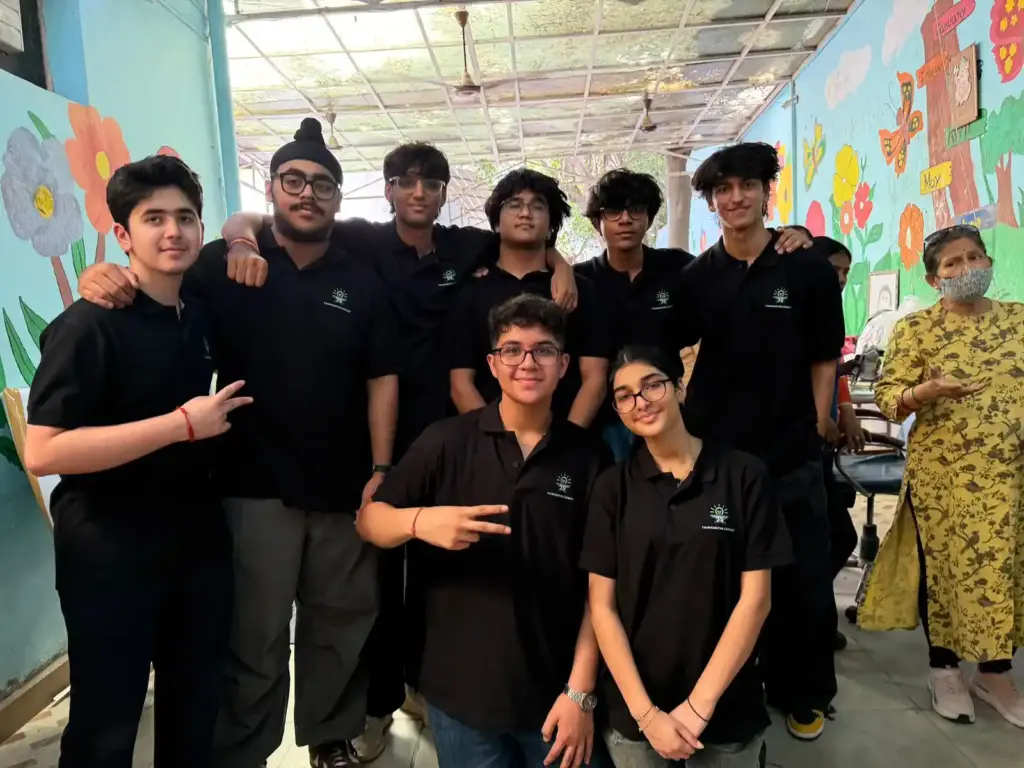
My name is Arnav Goel. Last year, I founded ThinkSmiths Catalyst, a student-led engineering education initiative built on a simple idea: a sixteen-year-old can learn more from getting a build wrong than from studying a diagram that is always right.
It is not an air-purifier project. The purifier is our flagship build, but it is part of a broader programme designed around hands-on science and engineering.
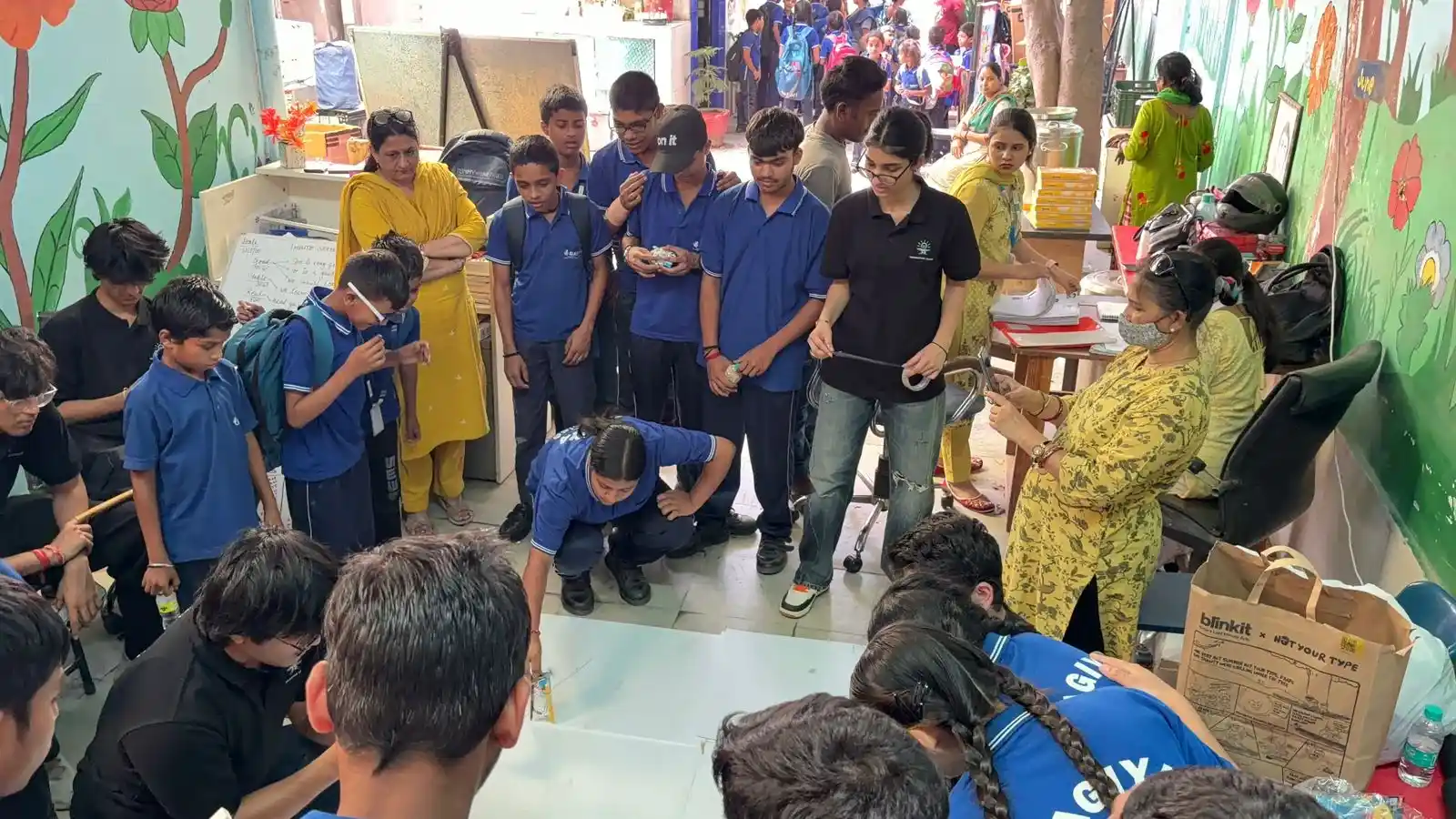
We have run one complete workshop so far: two days, forty students. Day one opened with demonstrations, not lectures: a small wind turbine that turns motion into electricity, a matka cooler and a wet-cloth bottle that turn evaporation into a lesson on heat transfer, a solar oven that melts chocolate using sunlight and foil, and a robot that turns an unbalanced motor into a drawing machine. Before the day ended, each student also built a water-bottle insulation sleeve using layers of foil, paper and bubble wrap, and took it home.
On day two, before building anything, we taught students to use AI tools well: not to outsource their thinking, but to challenge assumptions, improve explanations and expose weaknesses in an early idea. Then they worked through a real problem and built towards a practical response: the air purifier.
Our first workshop, a small pilot batch, ran with support from the Sanshil Foundation. ThinkSmiths Catalyst now operates as a student-led initiative under the Muskaan Care Foundation. Their support gives us the credibility and fundraising structure needed to grow, while our team continues to design the curriculum, develop the kits and conduct the workshops.
Forty students went through that first batch. The next one may look different; we are still working out the format. But the core stays fixed: put a real problem in front of students and ask how they think it could be solved before handing out a single instruction.
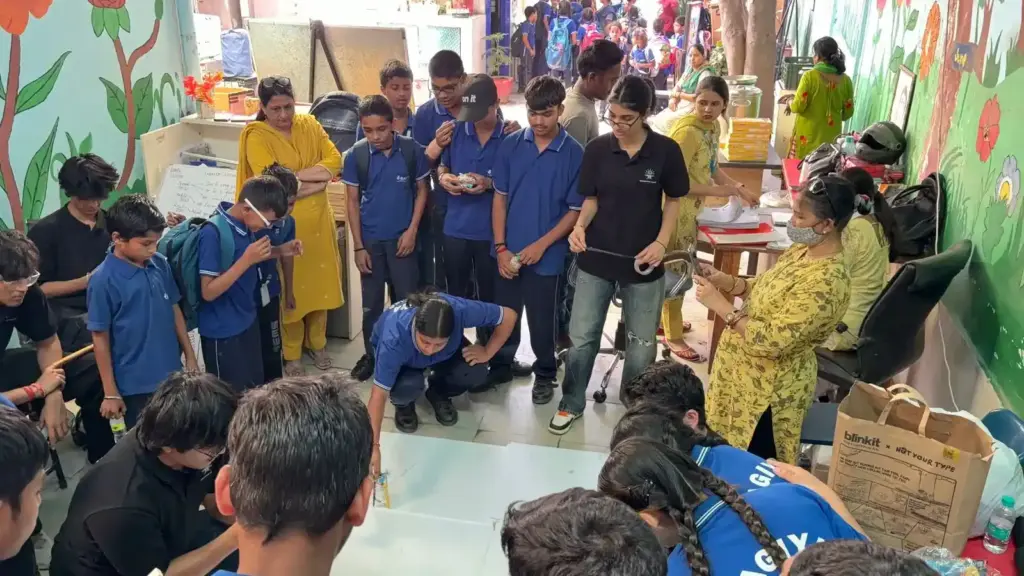
Students guess, get it wrong, argue with one another and only then start building, while we explain what each component does and why. They are encouraged to question the design and troubleshoot their own mistakes rather than follow a manual we have written for them.
What has stayed with me is not the workshop itself, but what happened afterward.
All forty students went home with two things they had built with their own hands: the insulated bottle sleeve from day one and the air purifier from day two. I received photographs from many of the families: bottles still wrapped and purifiers still switched on, sitting in bedrooms and living rooms weeks after the workshop ended.
That matters in two directions at once. The families received devices that could keep water cooler and make the air a little cleaner, not demonstrations, but things they could actually use. The students received proof that they were capable of building something that worked.
A student who watches their own purifier running weeks later does not think of themselves only as someone who assembled a kit. They think of themselves as someone who built something.
That shift, from consumer to builder, is the whole point.
The hope is that the purifier will not be the last major build in the programme. Future batches may eventually tackle other practical engineering problems. For now, the plan is simpler: run this workshop again, reach more families and improve it before adding anything new.
None of this is an argument against textbooks or examinations. India needs both, and no country has produced good engineers by discarding theory. But the balance in Indian classrooms is off.
Hands-on building is often treated as something that begins in the third year of an engineering degree, inside a college laboratory, rather than something a curious twelve-year-old could begin with a breadboard, a fan and an afternoon. Students should start building much earlier, while curiosity is still instinctive, and failed attempts should be treated as a normal part of learning rather than as marks against a student’s record.
A ₹400 air purifier and an insulated bottle sleeve will not fix Indian education on their own, and ThinkSmiths Catalyst does not claim they will. Forty families in Gurugram are small beside an education system that still judges millions of students largely by how well they reproduce information.
But they are evidence of something the system keeps forgetting: a student handed a real problem, a limited budget and no answer key will usually rise to it. The rising is where the actual learning happens, not in the mark afterward, but in the guessing and arguing before anyone picks up a tool.
If India wants more young people to become engineers, inventors and problem-solvers, students need more opportunities to build before they are expected to choose what they want to become. That change does not require every school to have an advanced STEM lab. It begins by making experimentation, reasoning and problem-solving a normal part of the classroom.
The fastest way to teach a student what an engineer actually does is still, stubbornly, to hand them the parts and get out of the way.