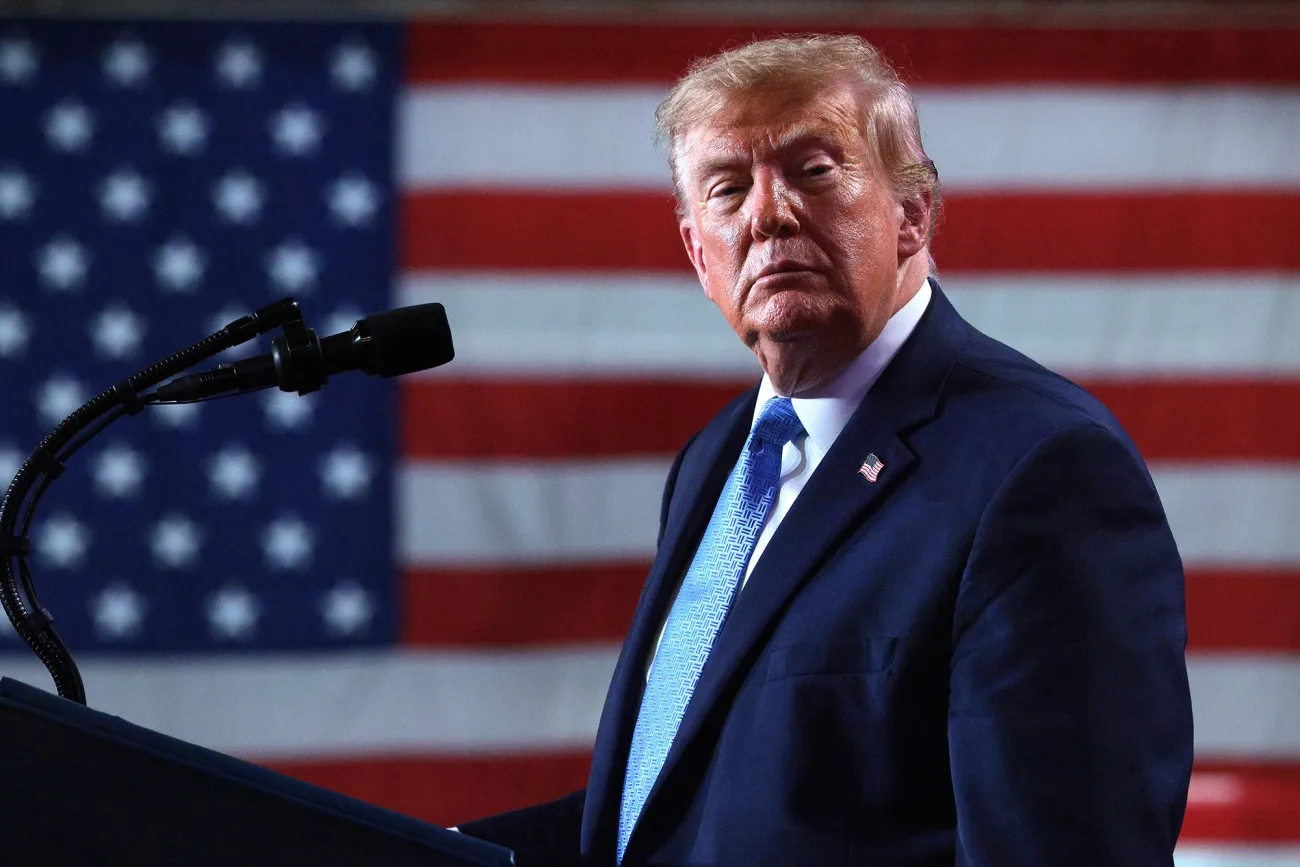
The Democratic victory in the 2026 US midterm elections will complicate President Donald Trump’s final two years in office. For India, the challenge is to sustain a productive relationship with the White House while strengthening its political constituency in a Congress now controlled by Democrats.
The Democrats have captured both the House of Representatives and the Senate, ending Republican control of Congress. For Trump, this is a substantial setback. It would, however, be premature to interpret the result as a wholesale rejection of his political philosophy or of every objective he has pursued in foreign policy.
The more important question is what the new political balance will mean for American international engagement. Trump remains in the White House, with considerable authority over diplomacy and national security. Congress, meanwhile, is now in Democratic hands. India will have to work with both.
What the voters were saying
Economic dissatisfaction was central to the Democratic victory. The rising cost of living, housing, healthcare and fuel continued to weigh on American households. The administration’s promise of economic revival had not translated into sufficiently visible improvements in the everyday lives of ordinary citizens. Concerns about governance, transparency and the state of American democracy also figured prominently.
Trump’s tariff policy added to the discontent. Its underlying rationale—to revive US manufacturing, correct trade imbalances and reduce dependence on vulnerable overseas supply chains, is understandable. A country concerned about the erosion of its industrial base and its dependence on strategic competitors has legitimate reasons to reconsider its trade policy. The difficulty for the administration was that the costs of tariffs were felt immediately by businesses and consumers, while the promised benefits remained largely unrealised.
The war with Iran brought foreign policy directly into the electoral debate. Its economic consequences, particularly the pressure on energy prices and the cost of financing a distant conflict, were difficult for voters to ignore. Immigration and deportation policies also became electoral issues.
The Democrats, in turn, should not assume that victory amounts to an endorsement of their entire programme. Voters have given them control of Congress; they will now expect them to demonstrate that they can address the economic and social concerns that shaped the election.
A President constrained, but still in command
Democratic control gives the opposition considerable influence. Committee chairs can initiate investigations, summon officials and scrutinise executive decisions. Congress controls appropriations for defence, foreign assistance and the State Department. The Senate also has an important role in confirming senior diplomatic and national security appointments.
But the President retains substantial authority over foreign policy, military deployments and international negotiations. Democrats cannot simply replace the administration’s preferences with their own. Without the numbers to override a presidential veto, their ability to impose binding changes will remain limited. The more likely consequence is greater scrutiny, political contestation and occasional legislative obstruction, rather than an abrupt change in policy direction.
For India, this distinction is important. A weakened Republican position in Congress does not mean a diminished presidency. Trump remains the principal decision-maker in the executive branch, and New Delhi will have to work with him for the remainder of his term. Speculation about impeachment should not drive Indian diplomatic calculations. Impeachment by the House alone does not remove a President; conviction by a two-thirds majority in the Senate is also required. India should plan for the full remaining term, while remaining alert to political uncertainty.
India’s diplomatic balancing act
India’s immediate task is to ensure that it does not become collateral in the political contest between the White House and Capitol Hill. It must maintain the confidence of the President without losing the confidence of Congress. This is not political opportunism. It is a practical recognition of how the American constitutional system works.
New Delhi should continue to engage Trump and his administration directly. There is considerable common ground in defence cooperation, energy security, technology, manufacturing and the restructuring of global supply chains. Differences over tariffs, market access and immigration will need patient negotiation. There is little to be gained from public confrontation, just as India should avoid giving the impression that it is distancing itself from the administration because of the Republican electoral setback.
At the same time, the Democratic leadership in Congress can no longer be treated as a secondary constituency. The incoming House and Senate leadership, the foreign affairs, defence, commerce and appropriations committees, and influential legislators from both parties should figure prominently in India’s diplomatic outreach. Much will depend on relationships with individual lawmakers, not simply with party leadership.
This engagement should go beyond courtesy calls. Visits by US legislators to India, parliamentary exchanges, policy dialogues and regular interaction with think tanks, universities, businesses and the Indian-American community can help build support beyond the executive branch. India must also be prepared for difficult conversations on trade barriers, immigration, human rights and democratic institutions. Disagreements on these issues need not prevent cooperation in other areas.
Nor should New Delhi assume that India will remain insulated from American domestic politics. Trade practices, H-1B immigration, technology restrictions, human rights and India’s relations with Russia can all attract political attention. The strategic partnership does not place these subjects beyond scrutiny. Indian positions will need to be explained clearly, and channels of communication kept open even when differences arise.
China, alliances and the changing international order
The future of US-China relations is perhaps the most consequential strategic question for India. Washington’s competition with Beijing is rooted in concerns about technological leadership, military capabilities, trade, critical minerals, supply chains and the balance of power in the Indo-Pacific. These concerns have considerable bipartisan support in Congress.
Yet Trump may prefer direct engagement with President Xi Jinping and seek selective arrangements to stabilise relations or secure economic gains. India should be prepared for that possibility. A more predictable relationship between the world’s two largest economies could benefit global trade and reduce the risk of confrontation. But an understanding that compromises the wider Asian strategic balance, particularly over Taiwan, the South China Sea, technology or the security interests of other regional countries, would be a matter of serious concern. India’s interests cannot be assumed to coincide automatically with those of Washington, even when the two countries share concerns about China.
A similar realism is needed in assessing America’s alliances. Trump’s demand that European and Asian partners shoulder greater responsibility for their own security is not an entirely new debate. It predates his presidency and is unlikely to disappear. Allies may face continuing pressure to increase defence expenditure, even if Democrats seek to restore greater predictability to US commitments.
The Russia-Ukraine conflict and the Iran war will also test relations between the President and Congress. Differences over sanctions, military assistance and negotiations could produce competing signals from Washington. For India, the implications are immediate: energy security, defence supplies, stability in the Gulf, the safety of its diaspora and connectivity through Chabahar and the wider IMEC framework.
Congressional action on Russia deserves particular attention. New sanctions or restrictions on waivers could have unintended consequences for countries purchasing Russian oil or defence equipment, including India. New Delhi will need to make its interests understood before such measures acquire legislative momentum. It cannot afford to discover the implications of American legislation only after it has been enacted.
The Quad remains an important pillar of India’s Indo-Pacific engagement, but it is not the entirety of India’s regional vision. New Delhi will continue to emphasise ASEAN centrality, inclusive cooperation, maritime security and freedom of navigation. India’s objective is a stable, inclusive and open Indo-Pacific, not the consolidation of competing blocs.
Economic statecraft and India’s choices
Trade and technology will remain consequential areas of bilateral engagement. Democratic control of Congress may bring greater scrutiny of the economic costs of tariffs, but the underlying American concerns about industrial competitiveness and supply-chain vulnerability are unlikely to disappear with a change in political balance.
India has an opportunity to position itself as a credible partner in this restructuring. Semiconductors, critical minerals, pharmaceuticals, electronics, artificial intelligence and advanced manufacturing offer considerable scope for cooperation. Turning this potential into durable partnerships will require sustained engagement with Congress as well as the administration. India should address concerns over market access, technology protection and regulatory standards, while seeking to move beyond a buyer-seller relationship towards co-development, investment and resilient supply chains.
India’s strategic compass
India should not mistake its strategic convergence with the United States for a permanent identity of interests. Washington’s priorities will inevitably shift with domestic politics and its assessment of China. India’s geographical realities, neighbourhood and long-term interests are rather less amenable to change.
The relationship must therefore be built on institutions and shared interests, not personal equations. India needs to work effectively with the Trump administration while cultivating political relationships across the American political spectrum. This is a long-term investment, not a response to one midterm election.
Strategic autonomy is not equidistance between competing powers. It is the capacity to make independent choices while building partnerships that advance national interests. The test of Indian diplomacy will be whether it can navigate competing centres of American political power without allowing its own priorities to be defined by them.
Washington’s political balance has changed. India’s strategic compass should not.