All eyes on Iran. Since February this year, the whole world has been focused on events in and around Iran. The Strait of Hormuz, the exact whereabouts of which were previously unknown to many, suddenly became front-page news. But hidden behind this conflict are some worrying developments in the same neighbourhood. Hidden, maybe, but very relevant nevertheless.
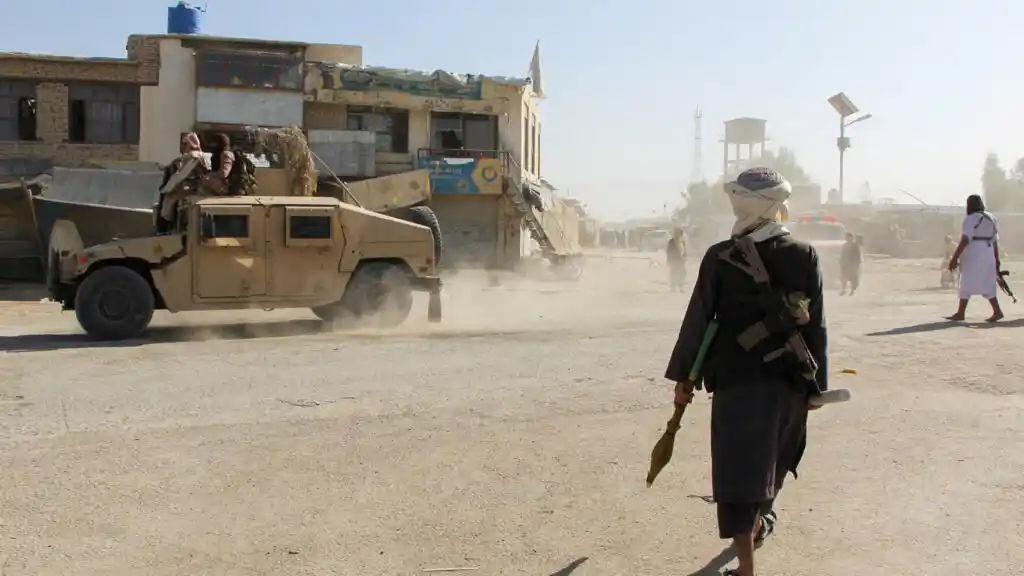
On the 10th of June, Pakistan launched attacks on terrorist outfits of an organisation known as TTP (Tehrik-i-Taliban Pakistan) in Afghanistan. The Pakistani government declared that the operations on June 10th were carried out in response to a series of recent attacks on Pakistani soil. These include a strike on June 9th, a suicide attack on June 2nd, and a suicide bombing on May 9th. The frequency of TTP attacks is high. The Pakistani government felt that `enough is enough`. Time to send a message. The Pakistanis claim that 26 terrorists have been killed in this recent operation.
This `incident` fits in a series of clashes between Pakistan and Afghanistan that started around 2022 when TTP ended a ceasefire with the Pakistani government and began ramping up its attacks along the border called the Durand Line. A contested border between Afghanistan and Pakistan. Tensions escalated when Pakistan deported millions of Afghan refugees in 2023. This deportation was perceived as a continuation of the large-scale anti-TTP campaign in Pakistan that the US supported in the second decade of this century.
The TTP is a terrorist organisation listed as such by the UN since 2011. It is considered to be part of the Al Qaeda family. Originally, it was far from a small outfit. In 2011, when the UN decided to list the TTP, it was estimated to have some 30,000 active members[1]. Since 2011, Pakistani forces have effectively reduced the capacities and the influence of TTP. The organisation lost its leadership, fragmented, and had to find refuge in Afghanistan, where it joined the Afghan Taliban in their fight against the international forces and the Afghan National Army (ANA). This is why the Council on Foreign Relations (CFR)[2] writes that `the TTP shares deep ideological, historical and fraternal ties with the Afghan Taliban`. Obviously, relations changed from 2021 when ISAF and the US left Afghanistan, and the Taliban came back to power in Kabul. The ties that the CFR describes explain why the Afghan Taliban has provided the TTP with sanctuary and operational freedom inside Afghanistan to launch attacks against Pakistan ever since 2021.
It doesn’t take much imagination to see the striking similarities between what happens in Afghanistan and Pakistan on the western front and in Pakistan and India on the opposite side of the country. A terrorist outfit, supported by a neighbor, attacks from the neighbor’s side onto your side of the border, making victims, destabilizing a nation, spoiling bilateral relations. Pakistan considers Afghanistan as the bad guy, and India considers Pakistan as the wicked actor. And all of that over a surprisingly similar issue. The fact that India is actively seeking to intensify its bilateral relations with Afghanistan is not necessarily helpful, given these similarities and complexities.
Agreed, there are clearly also differences between the existing tensions in the AfPak region and those between Pakistan and India. Pakistan and India have historically much more in common. The two were one single nation until partition. But then again, Pakistan and Afghanistan share a religious value system and the bonding history of jointly fighting the Russian occupation in the 80ties of the last century. Culturally and historically, there should be sufficient basis for mutual respect and constructive cooperation. With Pakistan in the middle, the historic friendship of Islamabad with the Taliban and current friendly relations between India and Afghanistan, constructive peace should be feasible. Even across the whole region.
So what is keeping us? Why are spoilers like TTP and LeT (Lashkar-e-Taiba) allowed to frustrate potentially good regional and international relations? The spoilers are effectively jeopardizing progress and prosperity through a series of destabilizing attacks in the region. And this is exactly who is keeping the region far from stability. The spoilers.
But the spoilers are not alone or isolated. A part of Pakistan supports the LeT, and a part of Pakistan supports the TTP. A part of Pakistan supported the US in its fight against terrorism when it mattered. That part was fighting the terrorist forces that were assisting and hiding the Al Qaeda-affiliated groups and individuals. And a part of Pakistan was doing the very opposite. Hiding and helping the spoilers. And the same goes for the LeT. It is like a mirror. And the reflection exposes the same system. The internal division in Pakistan is the real enemy. Part of Pakistan is fighting terrorism, and part of it is supporting it. It is almost schizophrenic in nature.
So the question is, is there a solution? First and foremost, it helps to be aware of the similarities. What Pakistan struggles with is, in a way, similar to what India faces. We call it state-sponsored terrorism. Isn’t that a basis for an interesting conversation? The mind-cracker is clear: “How does a nation deal with such a threat?` Can the right forces be mobilized? India has asked the question many times. Today it almost appears to be a shared challenge. Acknowledging this may very well open a new window of opportunity. The Pakistani population and the security services in the border region with Afghanistan know what is at stake. They live the challenge. Can they be turned into a partner? Can the divide be jumped? Can a fruitful conversation take place once the window opens and these shared concerns can be looked in the eye? Or is it a bridge too far? Do doubts and distrust continue to occupy the front row seats?
It obviously takes courage and determination to overcome existing obstacles and believe in a positive outcome. It is definitely not a walk in the park to deal with a deeply internally divided nation. It is a rocky road, so `choosing your friends wisely` must be the motto. When the going gets rough the tough get going. Come prepared, armed with strong arguments and goodwill. A proper partnership may develop. Let spoilers try what they want. We, the peacebuilders, are stronger than them.
[1] https://main.un.org/securitycouncil/en/sanctions/1267/aq_sanctions_list/summaries/entity/tehrik-e-taliban-pakistan-%28ttp%29
[2] https://www.cfr.org/articles/why-are-the-afghan-taliban-and-pakistan-in-an-open-war