
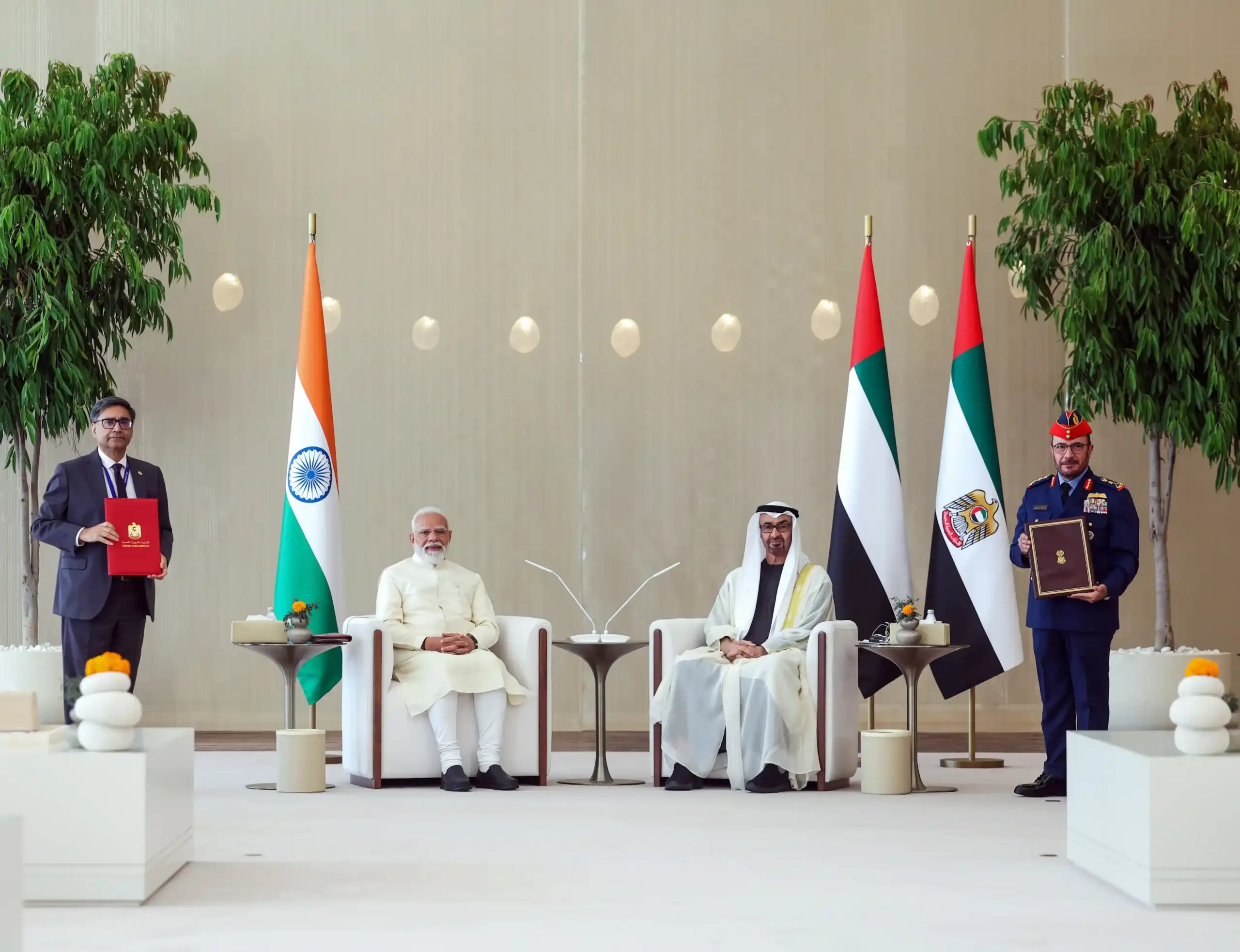
PM Modi’s UAE visit was more than a diplomatic courtesy call. It was a clear signal that India wants to turn one of its most important Gulf relationships into a deeper strategic partnership built on energy security, defence cooperation, investment, and technology.
The visit mattered because it came at a time when West Asia remains unstable and India needs reliable partners to protect its economic and security interests. The strongest outcome was not rhetoric but substance: the two sides announced a framework that expands cooperation across defence, energy, trade, and innovation. That is the sort of diplomacy that actually changes how states work together.
Energy was central to the trip’s success. India and the UAE agreed to deepen cooperation on strategic petroleum reserves and explore expanded gas storage arrangements, a move that strengthens India’s cushion against global supply shocks. In a world where wars, shipping disruptions, and price spikes can quickly hit Indian households and industry, that kind of energy insurance is not a luxury; it is a necessity.
The defence dimension was equally important. The new framework for strategic defence partnership points to cooperation in maritime security, cyber defence, advanced technology, training, and defence industrial links. That is significant because it moves the relationship beyond symbolism and into practical cooperation. For India, the UAE is no longer just a commercial hub; it is becoming a serious security partner in a region that affects India’s own stability.
Then there is the money. The UAE’s reported USD 5 billion investment commitment gives the visit immediate economic weight. More importantly, the investments target areas that matter for long-term growth: banking, infrastructure, and capital deployment. In other words, the visit was not only about balancing geopolitical risk. It was also about attracting the kind of capital that can help India’s economy scale faster.
Technology cooperation also deserves attention. Reports around the visit pointed to collaboration in advanced computing, digital systems, and ship repair, showing that the relationship is widening into the future-facing sectors that will shape both countries’ competitiveness. That is crucial, because the India-UAE partnership is no longer only about oil and migration. It is becoming a platform for building capability.
Still, the real question is execution. India and the UAE have announced major frameworks before, and the challenge has always been turning good intentions into measurable outcomes. Trade ties have already grown strongly under CEPA, but growth alone is not the same as transformation. The new agreements will only matter if they produce storage capacity, capital flows, defence production, and institutional follow-through.
That is why PM Modi’s UAE visit should be seen as strategically smart, economically useful, and diplomatically timely. It strengthens India’s resilience at a moment when the world is less predictable and the Gulf matters more, not less. The visit’s lasting value will depend on whether both sides treat these announcements as the beginning of a deeper partnership, rather than the end of the story.
This was not just another foreign trip. It was a worthy reminder that India’s future security and prosperity will increasingly depend on smart partnerships in the Gulf.

