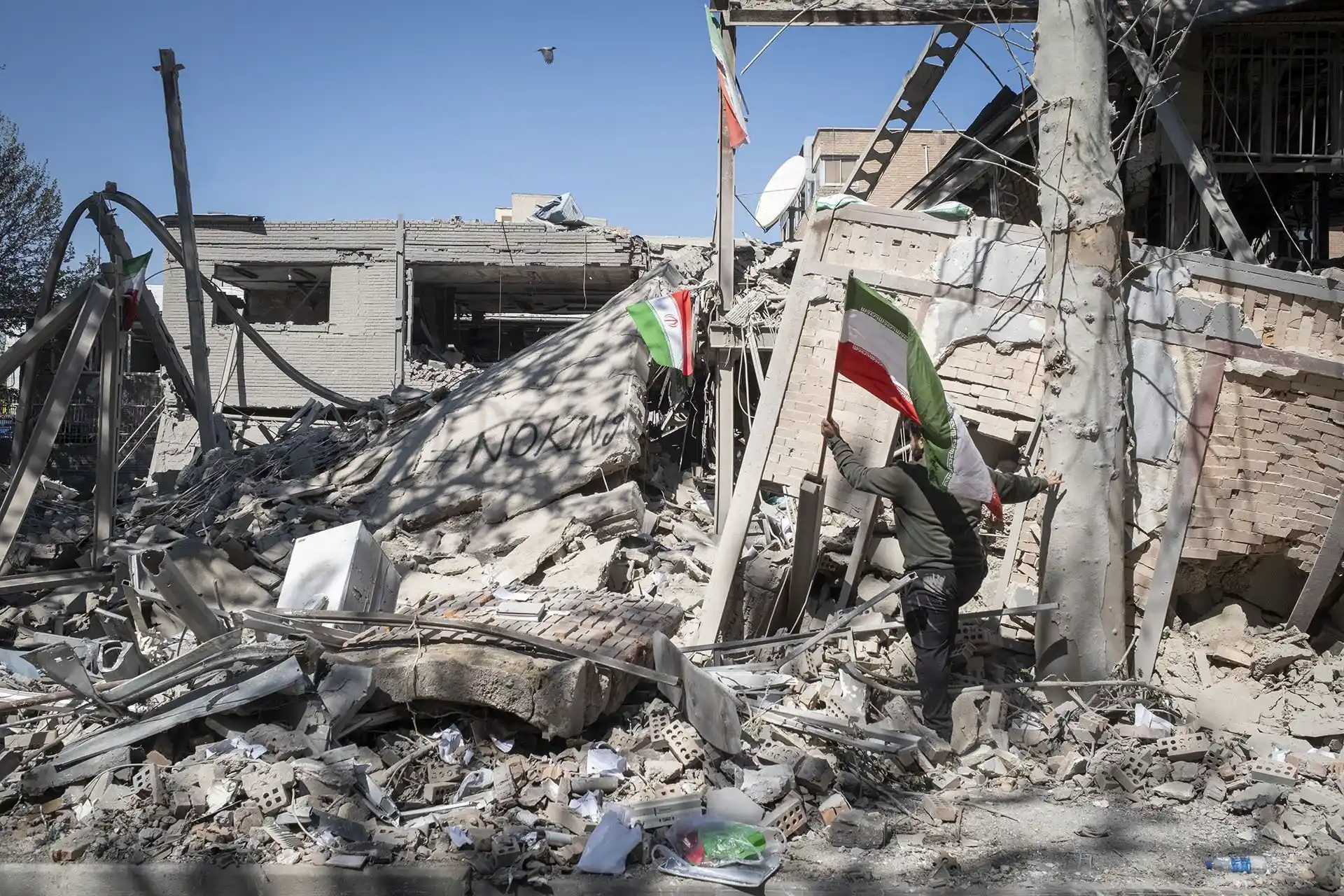
The US has locked itself into a trap by unleashing a war on Iran. It has the power to batter Iran militarily, which it has done. Iran’s top political and military leadership has been physically eliminated. But this has not broken Iran’s will and compelled it to accept US terms for ending the war.
The US has tried to win the war with air power and intimidation but that has not proved enough for victory. It wants to avoid land operations as that would entail losing American lives, and that would be politically costly for Trump, as America is divided over this war, and this includes his MAGA base.
This war is clearly illegal. It violates the UN Charter. This is not to say that US and Israeli grievances against Iran’s policies and actions in the region have no basis at all, but the rights and wrongs in this regard have a long history and there is shared culpability.
This war is causing severe stresses in the region and well beyond. It is difficult to comprehend why the US did not anticipate the regional and global consequences of this war.
Iran is a dominant power in the region by virtue of its size, both physical and demographic, its highly educated population, its military capacities, its status as a Shia power, and other civilisational attributes. The US policy makers would have surely factored in all this elements before planning this war.
To believe that the easy US success in Venezuela could be replicated in Iran was an obvious error of judgment. Ignoring the failure of US military interventions and regime change efforts in Iraq, Afghanistan, Libya and Syria was worse. This indicates deep flaws in institutional processes and policy making in the US system of governance.
That Trump treats a conflict with such major global repercussions as a social media spectacle of sorts is bewildering. He is constantly using social media posts and press conferences to make pronouncements on the war that are disjointed, contradictory, counterfactual, overstated, menacing, lacking civility, and even outlandish.
He has threatened to destroy the Iranian civilisation, bomb Iran back to the stone age, to wipe Iran off the face of the earth. He seeks Iran’s total surrender and as well a role in deciding who its new leaders should be. He says all this while the US is engaged in negotiations with Iran.
No thought is evidently being given to the reaction of the Iranian side to such statements. Already, there is an absence of trust between the two sides, and such outpourings from Trump can only deepen the mistrust. Even if the Iranian side were to discount some of these excesses as part of Trump’s personality and “deal-making” style, it cannot ignore them beyond a point, as Trump holds power, is fascinated by military strength and its use, and is obsessed with being triumphant.
Trump claims that the Iranian leadership is talking to him directly, on the telephone, on top of that, even as he says that there is no leader to talk to, as the US has eliminated the first and second rung leadership, and no one now wants to be Iran’s leader. He talks of division amongst the various power centres in Iran as an explanation for the delay in reaching an agreement, which, according to him, Iran desperately wants. This seems to be not imaginative diplomacy needed to end the war but diplomacy of imagination.
Iran is engaging very effectively in asymmetrical warfare against the US by blocking the Strait of Hormuz. Trump has wavered on a US response, claiming at first that the US was not affected by this step, and those affected should act to open the Strait. He then asked for NATO’s help, later said he did not need it and subsequently chided NATO for not showing solidarity. He then announced a US blockade of the Strait, attempted to use naval force to open it, retreated in the face of Iranian resistance, and to cap it all, appealed to the UN to pressure Iran into opening it as the closure was hurting the international community. The irony is that Trump himself and his administration have been bypassing the UN while undertaking military interventions, including against Iran twice, and generally trashing the utility of the UN and both reducing and holding back its contributions to its budget.
The Iran war has disrupted the security architecture in West Asia with unpredictable consequences. The Gulf countries had relied on the US for their security all these years, with US bases on their soil and equipping themselves with expensive US weaponry. Iran has successfully attacked these bases, and US air defense systems have not provided protection as expected. The Gulf countries have the grievance that the US has given priority to Israel’s security over that of the GCC (Gulf Cooperation Council) countries.
The GCC countries cannot henceforth protect themselves on their own from Iran, given that Iran has not collapsed with the onslaught of US and Israeli power against it, and should emerge from this conflict stronger as a regional power. Israel may want Iranian power to be durably destroyed, but for this, a ground invasion of Iran by the US would be needed, which the US will balk at for political and military reasons.
Russia and China can give political and diplomatic support to the GCC, but both have friendly relations with Iran, too. President Putin has publicly admitted that Russia is in a tough position because of friendly ties with both sides.
On top of this, to counter Iran, the GCC countries need to be united. But that unity is being fractured more openly with the UAE’s decision to quit OPEC, which is essentially a challenge to Saudi leadership of OPEC. The rivalry between President Sheik bin Zayed Al Nahyan (MBZ) and Saudi Crown Prince Mohammed bin Salman (MBS) is well known and is reflected in the two countries supporting opposing factions in Yemen, Sudan, and Somalia. The UAE’s decision has been welcomed by the US and should open more space for Israel in the inevitable re-ordering of West Asia’s geopolitical, security and economic landscape that will follow the current developments. The UAE has established close diplomatic ties with Israel, and there are reports that Israel is currently involved in developing an “Iron Dome defense” for the UAE against Iran.
The UAE has historically served as a critical financial and logistical hub for Iran to bypass Western sanctions. Dubai, in particular, has operated as a base for Iranian shell companies and informal banking networks to move money, sell oil, and procure technology despite sanctions. About 500,000 to 600,000 Iranians reside in the UAE, largely in Dubai and Sharjah. The UAE’s decision to strike out on its own strategically could therefore potentially create strains in the UAE’s internal unity, as reports suggest.
The situation in West Asia remains fluid. Iran is unlikely to go much beyond the concessions on the nuclear question that it had made in 2015 as part of the nuclear deal and some additional concessions offered during the mediation by Oman. Since then, the Iranian position has hardened and Tehran is now proposing that an agreement on the opening of the Strait and a durable ceasefire should be first addressed and the nuclear issue can be addressed later. But Trump has given such centrality to the nuclear issue that giving it secondary importance would expose him to succumbing to Iran’s negotiating strategy.
It is not clear how the current impasse will be broken. Reports appearing about the proposals made by the US and those made by Iran seem irreconcilable in many respects. The US side projects progress in talks even while Trump issues coercive threats. He has called the latest Iranian proposals as “garbage” and says that the ceasefire is on life-support. The Iranian side projects self-confidence, a willingness to negotiate, but firmness on its basic positions. It plays down narratives in the Western press about the actual state of negotiations. On the Hormuz Strait, Iran seems determined to control commercial shipping and prevent the passage of naval vessels. The European plan to secure commercial shipping with naval escorts is conditioned on a permanent ceasefire, which, if it is achieved, will obviate the need for any such deployments and, as such, amounts to posturing.
Iranian Foreign Minister Aragchi has visited Moscow and China, obviously to get support for Iranian proposals for a solution. Putin says that the basis of a solution is available and Russia is willing to assist. During Trump’s current visit to China, the Hormuz Strait issue would no doubt be discussed, with Trump seeking China’s support to pressure Iran to open the Strait. China would want the Strait to be opened, which would also require the US to lift its blockade. China is aware that the US seeks control of the global oil trade with a view to constraining China’s access to energy. China is hardly likely to cooperate with the US on US terms in dealing with the issue. Let us see what course Trump follows after his China visit- resume some form of military pressure or accept a compromise to extract himself from the trap he has created for himself.