
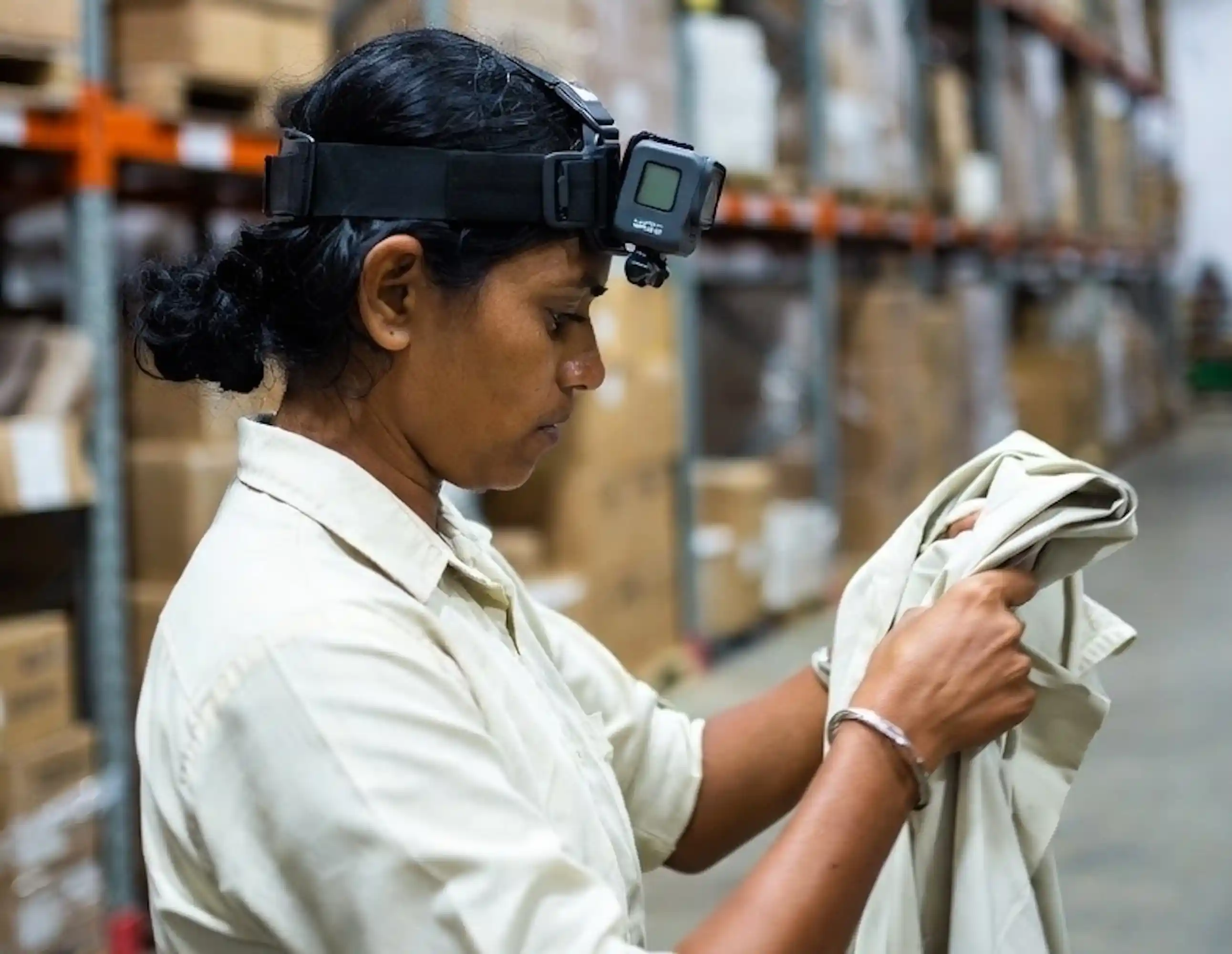
Innovation rarely looks the way we expect. Not all revolutions are forged in gleaming labs filled with robotic arms and blinking servers. Sometimes, they begin in modest rooms where young workers, cameras strapped to their foreheads, fold towels with extraordinary precision. At first glance, this might seem mundane, even repetitive. But look closer, and you’ll see something remarkable: the quiet, human foundation of the global robotics revolution.
These so-called “hand movement farms” or data capture labs represent one of the most fascinating intersections of human effort and artificial intelligence. Far from being a symbol of exploitation or monotony alone, they are evidence of how emerging economies like India are shaping the future of advanced technology in deeply meaningful ways.
At the heart of this ecosystem are companies like Objectways, founded by young entrepreneur Dev Mandal. His insight was simple yet profound: while the world dreams of humanoid robots capable of performing everyday tasks, those machines must first learn what “everyday” looks like. And there is no better teacher than the human hand.
Every fold of fabric, every grip on a utensil, every subtle adjustment when an object slips—these are things humans perform instinctively. For robots, however, they are immensely complex. By capturing these movements in detail, Indian workers are effectively teaching machines how to interact with the physical world. This is not just data entry; it is embodied intelligence being translated into digital form.
The process itself is surprisingly sophisticated. Workers follow carefully designed scripts: folding towels in specific ways, stacking objects under time constraints, or simulating real-world tasks like plugging in cables. Each action is recorded from a first-person perspective, ensuring that AI systems can learn not just what to do, but how it feels to do it. This data is then transmitted to leading global AI firms, including innovators like Scale AI, where it becomes the raw material for training neural networks.
These networks, often built using cutting-edge research from organizations like OpenAI and Google DeepMind, analyze human motion at an extraordinary level of detail. They break down each movement into joint angles, force applications, and micro-adjustments, enabling robots to replicate tasks with increasing fluidity. The result? Machines that can do more than just execute commands—they can adapt, adjust, and behave in ways that feel almost human.
What makes this story especially compelling is India’s central role. For decades, the country has been known as a global hub for IT services and software development. Now, it is becoming equally vital in the training of physical intelligence. In a world where robotics is expected to transform industries from manufacturing to eldercare, India is not just participating—it is enabling progress at scale.
Of course, discussions about compensation and working conditions are important and necessary. But it is equally important to recognize the opportunity embedded within this industry. For many young Indians, particularly those navigating a challenging job market, these roles offer a gateway into the AI economy. They provide exposure to cutting-edge technology, flexible work arrangements, and a stepping stone toward more advanced roles in data science, robotics, and AI oversight.
Moreover, the skills being developed—attention to detail, procedural accuracy, familiarity with AI workflows—are far from trivial. As the industry matures, there is significant potential for upskilling. Today’s motion capture worker could very well become tomorrow’s AI trainer, quality auditor, or robotics technician. With the right investments in training and infrastructure, these “hand farms” could evolve into centers of excellence for human-in-the-loop AI systems.
The global implications are equally exciting. Companies developing humanoid robots—from warehouse assistants to home helpers—depend on vast amounts of real-world data. By contributing to this pipeline, Indian workers are helping accelerate innovations that could improve productivity, enhance safety, and even address labor shortages in aging societies.
Consider the possibilities: robots that assist the elderly with daily tasks, machines that handle dangerous jobs in disaster zones, or automated systems that make supply chains more efficient. Each of these advancements traces back, in part, to the painstaking work of capturing human motion. It is a powerful reminder that even the most advanced technologies are, at their core, deeply human endeavors.
There is also a broader philosophical lesson here. In an age where automation is often framed as a threat to human labor, the rise of motion capture labs tells a different story—one of collaboration rather than replacement. Humans are not being sidelined; they are teaching machines, shaping their capabilities, and guiding their evolution.
As investments in robotics continue to surge—reaching billions of dollars annually—the importance of this human foundation will only grow. By 2030, the market for AI training data is projected to expand dramatically, and India is poised to remain a key player. With thoughtful policies, fair compensation, and a focus on skill development, this sector could become a model for inclusive technological growth.
The image of a worker carefully folding a towel is more than just a snapshot of a job. It is a glimpse into the future—a future where human ingenuity and machine intelligence are intertwined. It is proof that even in the most high-tech revolutions, progress begins with something profoundly simple: the movement of a human hand.

