
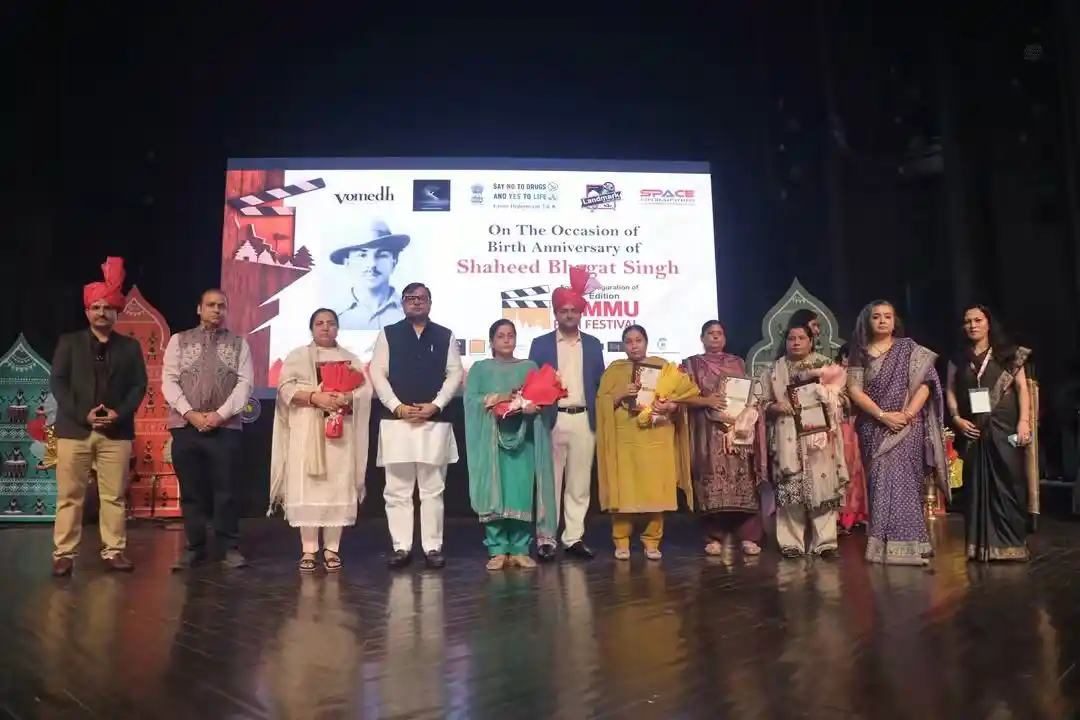
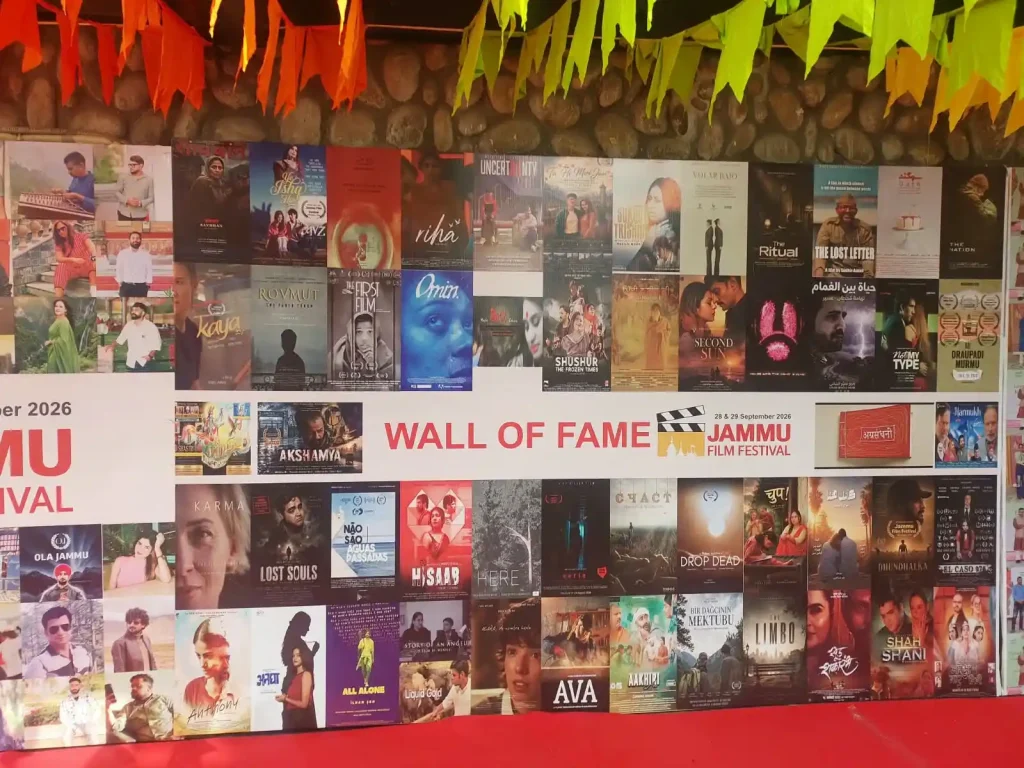
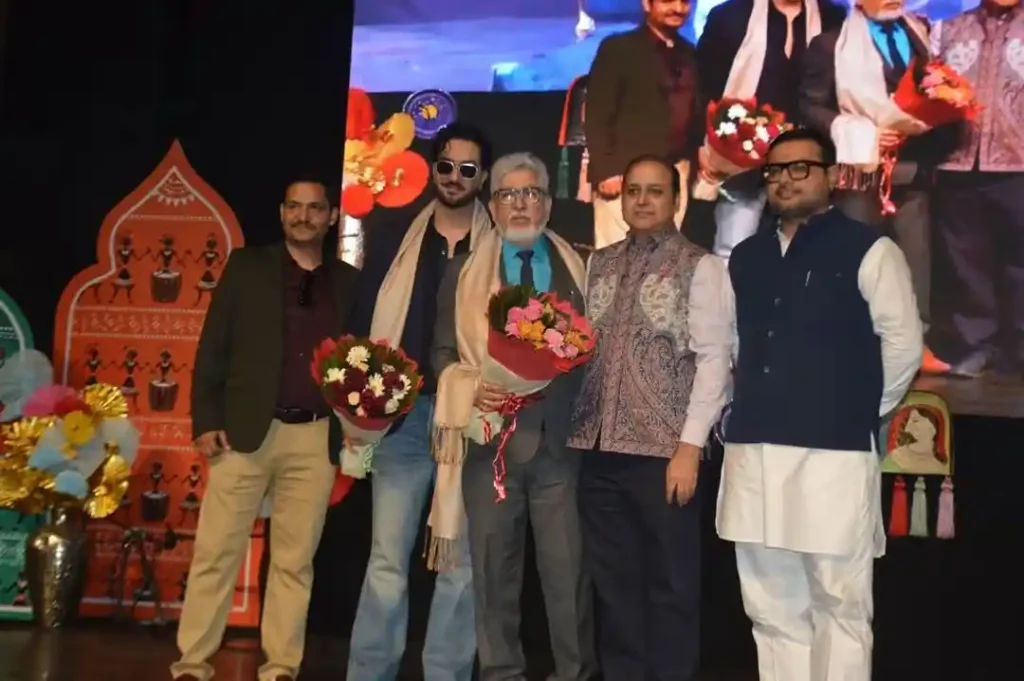
On the last weekend of September, Abhinav Theatre in Jammu filled with filmmakers, students, tabla and rap, and a packed house that organisers put at about 3,000 over two days. The fifth Jammu Film Festival screened 53 films—41 from 16 countries and 12 from Jammu and Kashmir—drew more than 300 local artists, and claimed over 12 million social-media views. A panel on “Three Generations of Storytelling” put Rabiya Nazki on stage with Ravi Kemmu and Danish Iqbal. Awards went to films such as Mi Draupadi Murmu, The First Film, Hisaab and Anagha. The K. L. Saigal honours went to Ved Rahi, Rita Razdan Safaya and Bashir Budgami. Young people from colleges sat in the same hall as visiting producers. That is not a small cultural footnote. It is what a society looks like when it is trying, however imperfectly, to convert security gains into ordinary civic life.
Twenty miles across a militarised line, the same week brought a different kind of international attention. At the UN Human Rights Council in Geneva, activists described deaths, arbitrary arrests, enforced disappearances, communications blackouts and the militarisation of civilian life in Pakistan-occupied Jammu and Kashmir since 5 June. The Human Rights Commission of Pakistan, after its own August fact-finding mission, traced the 2026 crisis to long-standing grievances, institutional distrust and “an increasingly confrontational state response, including the disproportionate use of force.” Amnesty International had already called the designation of the Jammu Kashmir Joint Awami Action Committee as a terrorist organisation “disproportionate, unlawful, and a violation of the right to freedom of association.” UN High Commissioner Volker Türk told the Council that Pakistani authorities had used “excessive lethal force and arbitrary detention to quell protests.” The contrast is not poetic. It is institutional.
The festival in Jammu did not appear from nowhere. After 2019, the Union Territory built a film policy with single-window shooting clearances, production subsidies and extra incentives for work that employs local crew or tells stories about women and children. Chief Minister Omar Abdullah has spent this autumn selling that policy to visiting filmmakers: arrive with a script, find technicians, locations and a subsidy ladder at home. Reports this week put more than 200 productions—regional, Hindi and foreign—on Kashmir locations in the last year alone. That is an industry argument, not a slogan: hotels fill, drivers work, students watch a career path that does not require leaving for Mumbai on the first train. Jammu’s festival is the downstream product of that bet—local films in the same slate as international shorts, a ₹1 lakh prize for best local production, masterclasses on taking regional stories to a global screen.
The wider numbers on the Indian side are not cinema-only. Recognised startups in J&K rose from 69 in 2020 to 1,255 by December 2025, including 434 women-led firms. Investment in the first nine months of FY 2025-26 was put at ₹5,260 crore. Tourist arrivals hit a recorded high of more than 2.3 crore in 2024 before the Pahalgam massacre knocked the sector back; the government is now pushing Jammu as a year-round circuit, with pilgrimage roads, homestays and 153 tourism events in seventeen months. More than 41,000 government jobs were reported created since 2019, and nearly ten lakh people were said to have received self-employment support over four years. Handloom and handicrafts still employ over 3.5 lakh people, almost half of them women. The USBRL rail link finally tied the Valley to the national network in 2025. None of this abolishes unemployment among graduates, or the fear that a single terror attack can empty hotels overnight. It does mean that a young woman in Jammu can walk into a film festival, a startup incubator or a medical college without first asking whether the lights and the internet will survive the week.
Across the Line of Control the grievance list is older and more elemental. PoJK sits on the Mangla reservoir and feeds a large share of Pakistan’s hydropower into the national grid. Residents have spent years demanding power at generation cost and wheat flour they can afford. WAPDA-linked figures cited in reporting put Mangla’s output in the range of five billion units a year; consumers in the territory have at times paid several times the generation cost after fuel adjustments and surcharges. Clean-water access has been reported at little more than half the population. Rural districts have faced cuts of a dozen hours or more. The Joint Awami Action Committee, a coalition of traders, lawyers, transporters and students, turned those kitchen-table demands into a 38-point charter: cheaper flour and power, royalties from local rivers, an end to elite perks, and the abolition of twelve assembly seats reserved for 1947-era refugees who live in Pakistan proper and, protesters say, dilute local representation. A 2025 accord promised relief. By May 2026 talks had collapsed. On 5 June the AJK government banned JAAC under the Anti-Terrorism Act, cut communications, and treated a cost-of-living movement as a security file.
The cases that followed are the ones that make the comparison brutal. Amnesty recorded internet shutdown, mass arrests and the raid on JAAC’s Muzaffarabad office. On 6–7 June, clashes around Combined Military Hospital Rawalakot after the killing of JAAC figure Shahzaib Habib left civilians and police dead; official and activist tallies diverged sharply, as they always do when the lights go out. HRCP later found at least 147 JAAC activists placed on the Fourth Schedule, with the list growing toward 157 and taking in journalists and residents. Movement was restricted. Media needed no-objection certificates. Independent monitors put verified civilian deaths in the high dozens over the summer; some local tallies climbed higher still. Banking, hospitals and classrooms lost connectivity for weeks. That is not a film-festival problem. It is a state choosing the statute book of terrorism over the politics of electricity bills.
Gilgit-Baltistan, the other half of the territory under Pakistani administration, supplies a rhyme rather than a contrast. Communities there have blocked the Karakoram Highway over winter blackouts stretching toward twenty hours. Women and children have sat in at Nadir Chowk in Gilgit because pumps will not lift water without current. The region generates and transmits power and hosts CPEC traffic; it is excluded from the National Finance Commission award and sees little royalty from the dams that store its rivers. When the grid fails, mobile towers fail with it. A student in Skardu charging a phone on a two-hour window is not living in the same century as a student in Jammu sitting through a masterclass on global distribution.
Women and youth make the fork visible. On the Indian side, women win acting awards, advise festivals, run 434 of the new startups, and form nearly half the handicraft workforce. Property and domicile rules extended after 2019 closed old exclusions. Youth programmes, sports centres and film crews are imperfect substitutes for a tight job market, but they exist in public. In PoJK, HRCP recorded women protesters added to the Fourth Schedule, an anti-terror case against a woman, and the alleged shooting of a woman patient in a Kotli hospital. Young men fill both the sit-ins and the casualty lists. When a movement of lawyers and traders is listed as a terrorist organisation, the next generation learns that asking for flour at a fair price is a security offence.
The deeper comparison is about what a state does when its own people complain. In Jammu this week the complaint, if there was one, was that two days were not enough for 53 films. In Muzaffarabad and Rawalakot the complaint was that hydropower leaves at night and comes back as a bill. One administration answered with a festival, a film policy and a startup count. The other answered with a ban, a Fourth Schedule and a communications dark. International cinema in Jammu will not settle the Kashmir dispute. It does, however, make a simple empirical point that propaganda on either side has spent decades trying to blur: the young people who can host the world are not the young people being told that dissent is terrorism. Stories without borders, the festival’s closing line, only travel from places that still allow people to tell them.

