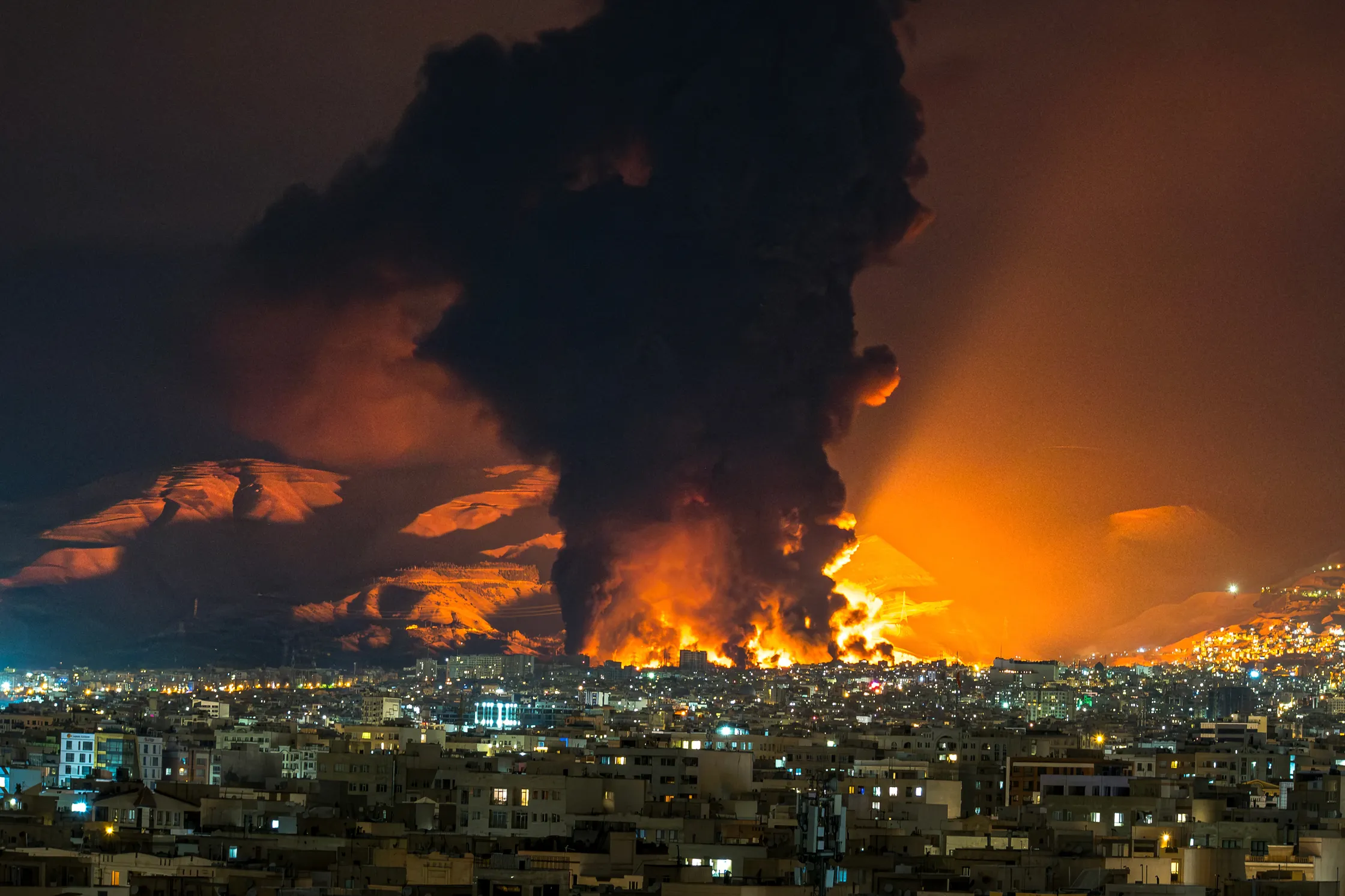
For India, the disruption of Gulf energy infrastructure is an immediate strategic and economic concern. India’s proximity to the Gulf, its dependence on imported hydrocarbons and its expanding energy requirements make developments around the Strait of Hormuz and the wider West Asian region directly relevant to India’s economic stability. The ongoing crisis in the West Asian region has laid bare both India’s vulnerabilities and the need for diversification in its energy strategy. Before the current crisis, substantial volumes of India’s crude, LNG and LPG imports were connected to the Gulf region and the Strait of Hormuz. Approximately 60 percent of India’s crude oil and LNG imports and around 85 percent of LPG imports were dependent on trade routes through the Strait of Hormuz.
In this discussion, the LPG dimension is particularly important. LPG is directly connected to household consumption, so, disruption to Gulf LPG supplies has a more immediate social impact than fluctuations in some industrial energy commodities. India’s experience during the crisis has nevertheless demonstrated an important degree of adaptability. Gulf suppliers account for almost 88 percent of India’s LPG imports, but this declined substantially by May 2026 as India increased sourcing from alternative suppliers, including the United States. The LNG experience is another example of India’s ability to adjust. Qatar had historically been an important LNG supplier to India, but disruptions to Gulf exports forced Indian buyers to seek supplies from countries such as the United States, Oman, Nigeria, Trinidad and Angola. India’s LNG imports declined much less than the global disruption might have suggested, indicating the value of diversified sourcing. Crude oil presents a distinct challenge due to India’s huge refining system requires large and continuous supplies. Russia has emerged as a significant alternative for India. This diversification helps India with a supply cushion, but it also shows how geopolitical crises can rapidly reshape India’s hydrocarbon import geography.
The most immediate economic consequence of the instability in the Gulf region is the oil price effect. When energy infrastructure is attacked, prices fluctuate due to actual losses and the possibility of future disruption. For India, higher oil prices can inflate the import bill, place pressure on the current account, and increase the burden on the rupee. Higher transportation and energy costs can also feed into inflation. Therefore, the impact of this can be felt in sectors beyond oil and gas like transportation, aviation, logistics, petrochemicals, manufacturing and agriculture. A prolonged increase in crude prices can lead to second-order effects throughout the Indian economy.
Yet this crisis has also provided India with an opportunity to reassess its energy security architecture. The first priority is supplier diversification. India cannot afford excessive dependence on any single geographical region, even when that region offers commercially viable oil and gas supplies. Long-term contracts with Gulf producers are significant, but they need to be complemented by stronger relationships with other oil and gas producing countries. Secondly, India needs greater route diversification. Alternative ports, pipelines, storage facilities and maritime corridors can reduce exposure to any single chokepoint. The crisis has demonstrated that diversification of suppliers without diversification of routes may still leave India vulnerable. Thirdly, strategic reserves become increasingly important. Strategic petroleum reserves can provide temporary protection against sudden disruptions and give policymakers additional time to secure alternative supplies. India’s existing reserve capacity therefore needs to be viewed not merely as an emergency stockpile but as an instrument of national economic security. Fourthly, the crisis strengthens the case for India’s renewable energy transition. Solar, wind, nuclear power, electric mobility and green hydrogen cannot immediately eliminate India’s dependence on hydrocarbons, but they can gradually reduce the country’s exposure to external energy shocks. Energy transition, therefore, is not only an environmental policy; it is also a component of strategic autonomy. Finally, India must recognize that energy security and maritime security are inseparable. India’s growing engagement in the Indian Ocean, its relationships with Gulf states and its naval presence in critical sea lanes are increasingly connected to the protection of commercial energy flows. The Gulf crisis reinforces the importance of India’s role as a net security provider and maritime stakeholder in the wider Indian Ocean region. The larger lesson for New Delhi is that energy security cannot be reduced to securing sufficient quantities of oil and gas. India must secure suppliers, routes, infrastructure, storage, maritime access and alternative energy sources simultaneously. The Gulf will remain indispensable to India’s energy architecture for decades, but the present crisis demonstrates why dependence must increasingly be managed through diversification and resilience. For India, therefore, the Gulf’s energy lifelines being under fire should not be viewed merely as an external crisis but as a warning about the vulnerabilities built into India’s own economic system—and an opportunity to accelerate the transition from energy dependence towards energy resilience.