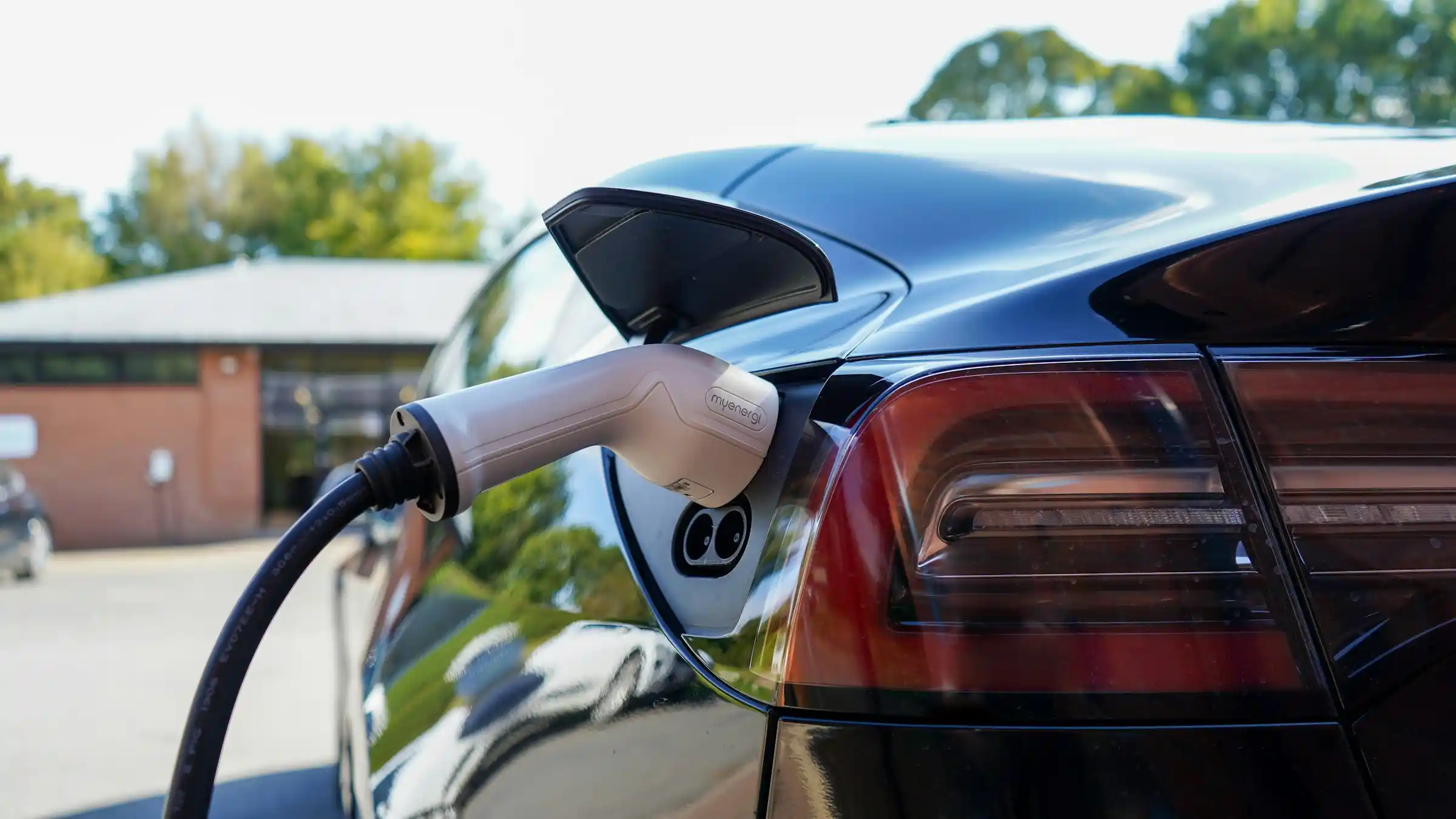
The global shift in the security set-up has metamorphosed from kinetic to intangible digital domains. This vital shift has forced societies to reorient their horizons towards cybersecurity. No sector has been left untouched by this digital revolution. It has become a part of day-to-day life, with devices ranging from mobiles and cars to domestic and office equipment forming part of the Internet of Things (IoT). In the globalised world, cybersecurity has become non-negotiable, and even the slightest compromise can have immense consequences. The Indian government’s move to enforce stringent compliance measures against Chinese CCTVs, such as those from Hikvision and Dahua , has once again drawn attention to all other areas where the Chinese presence is significant. Chinese EVs, therefore, need special attention from the Government of India.
Chinese EVs and Global Risks
China is a country that smartly turns the tide in its favour. Its vision for future technology is competitive. It has the capacity to sense future market forces and an equally fervent government mechanism that initiates steps with equal zeal to equip China for the changing technological world. The unique feature of China is its spirit to dominate the world and nothing short of that. This means the long-term planning that China enforces is aimed at dominating future forces rather than merely becoming a cog in the wheel. This quality makes China a powerful player in any segment whose time has not even come. Chinese EVs are also not an exception to this. China is well aware that the highest business opportunity lies in the problems faced by people. If the problem is radical in nature and affects the whole of humanity, then the market is not limited to the geographical boundaries of any specific nation, and business opportunities become global. Global warming is a global issue, and therefore the entire humanity is engaged in finding ecological solutions to tame the impending future disaster. Electric Vehicles have therefore been welcomed in global markets, and various government measures are incentivising their citizens to buy more and more EVs. China has quickly responded to this call and started permeating global EV markets. However, the noteworthy point in the case of China is its quest to rule. It is pertinent to highlight that in this interconnected world, data becomes a fuel, and that same data is required for spreading tentacles into other segments. Keeping this in mind, Chinese leadership laid out a plan as early as the beginning of this century to promote EVs worldwide. It is reportedly stated that when it comes to EVs, China is 10 years ahead and 10 times better than any other country. China’s BYD rules the global EV market, but it also faces allegations of data breaches and cybersecurity threats. Contemporary Amperex Technology Co Ltd, or CATL, the world’s largest battery manufacturer, which enjoys almost 40% of the world’s electric vehicle market share, recently shook hands with Honda. Honda is about to launch its first electric car in India in 2027 and will use battery cells manufactured in CATL’s Indonesia facility. The alarming fact, however, which has not attracted much attention, is that this same CATL has been added by the Pentagon to the list of Chinese military Companies with alleged ties to the Chinese military. It is alleged that its battery management system is connected to the CATL cloud. The question is: what if this cloud is located outside the country where the Electric Vehicle is in use? Would this expose countries to data theft? Could these batteries be used as an axe to grind by external foreign intelligence agencies? Would these be controlled by forces outside the country and put domestic infrastructure at stake and in peril of abuse? Could these be made to explode as and when required, as happened in the case of Hezbollah’s remotely triggered pagers and walkie-talkies in 2024? Answers to these questions would not be easy.
Israel has prohibited the use of Chinese electric vehicles due to concerns over data collection via embedded communication systems and sensors. This ban is a result of a slew of warnings from cyber experts emphasising the need to address espionage risks. The risk of sharing data such as audio, video, geolocation, and biometric data, and transmitting the same to remote servers, caused much furore among Israel’s security experts. Poland’s armed forces have also banned Chinese EVs considering the threat they pose to security. The new policy also bans all government and military officials from connecting their mobile phones to vehicle infotainment systems in Chinese-made cars.
Why China is a Potential Threat
China is a nation that has a rich civilisation, vast territory at its disposal, and a fire in its belly to dominate the world. Its military strategist Sun Tzu said, “The supreme art of war is to subdue the enemy without war.” In an interconnected world where technology is driving everything, following Sun Tzu’s counsel has become much easier by controlling technology — not only to protect national interests but also as a Thucydidean trap for rivals. China’s ambition to establish itself as an omnipotent power by 2049, when it completes 100 years of the People’s Republic of China, is impossible without pulling the strings on the technology front. China’s quest to dismantle Western kaleidoscopic standards and replace them with Chinese ones requires control over the flow of data. China is defeating the Western world in its own game of technology with the help of other global players such as Russia. Other countries are looking at China as an alternative to the US for trade and technology. This very strategy has encouraged many African, Latin American, and European nations to rely on China. This, in turn, has provided China with necessary funds and data, which it is capitalising on for its further growth and expansion. China has cleverly used labour and technology as and when the world required it. This strategic foresight converted China into a major supplier of labour and now of technology. This slowly evolved into an empowered Chinese diaspora that further fuelled growth in technology. On one hand, a weakened and bellicose USA, engaging itself in global policing and adopting trade and economic sanctions with the hollow hope that it will turn the tide in its favour, is slowly being replaced by China creating its parallel world of nations ready to take on the USA and exacerbate the situation further. This rise of China is worrisome for countries like India, which, as per Kautilya’s Arthashastra, is a natural enemy of China.
India Should Have a Multilayered Approach
The Government’s focus on Digital India and its commitment to decoupling itself from heavy dependence on oil and natural gas imports — which constitute 85% of its crude oil and nearly half of its natural gas — has led to a systematic shift towards renewable and alternate energy resources. In this journey, electric vehicles are a cornerstone to phase out dependence on crude oil. The country has set an ambitious target to elevate EV sales to 30% of private cars, 70% of commercial vehicles, 40% of buses, and 80% of two- and three-wheelers by 2030, translating to approximately 80 million EVs on Indian roads. Though India is pushing for indigenous production of EVs under its Make in India drive, the fact remains that EVs in India are heavily dependent upon Chinese imports. It is reported that only 13% of electric vehicles are eligible for the Production-Linked Incentive scheme due to failure to meet the domestic value-addition threshold. The remaining 87% are ineligible due to high imported content, largely sourced from China. Chinese brands such as SAIC Motor have successfully established a joint venture with the JSW Group under the brand JSW MG Motor India, which aims to sell one million units of passenger EVs by 2030.
India should strengthen PLI thresholds for domestic value addition in batteries, semiconductors, and software. It should introduce security vetting for foreign suppliers in strategic components, similar to the restrictions applied in the CCTV sector.
All EVs sold or manufactured in India must connect critical systems — especially battery management and telematics — exclusively to approved Indian servers or platforms. India should accelerate and expand the MeghRaj national cloud initiative to support secure hosting for automotive and industrial data, extending its principles to key manufacturing sectors.
India needs to invest in indigenous battery technology, semiconductor fabs, and cybersecurity R&D. There should be a “Protect in India” mission to complement “Make in India”, focusing on resilient supply chains and rapid indigenisation.
As India accelerates its EV transition to achieve energy security and environmental goals, it must avoid creating new strategic dependencies. A proactive, whole-of-government framework that combines technological indigenisation, data sovereignty, rigorous cybersecurity standards, and supply chain diversification is essential. By anticipating risks rather than reacting to them, India can safeguard its digital and physical infrastructure while advancing its developmental priorities in a competitive global landscape.