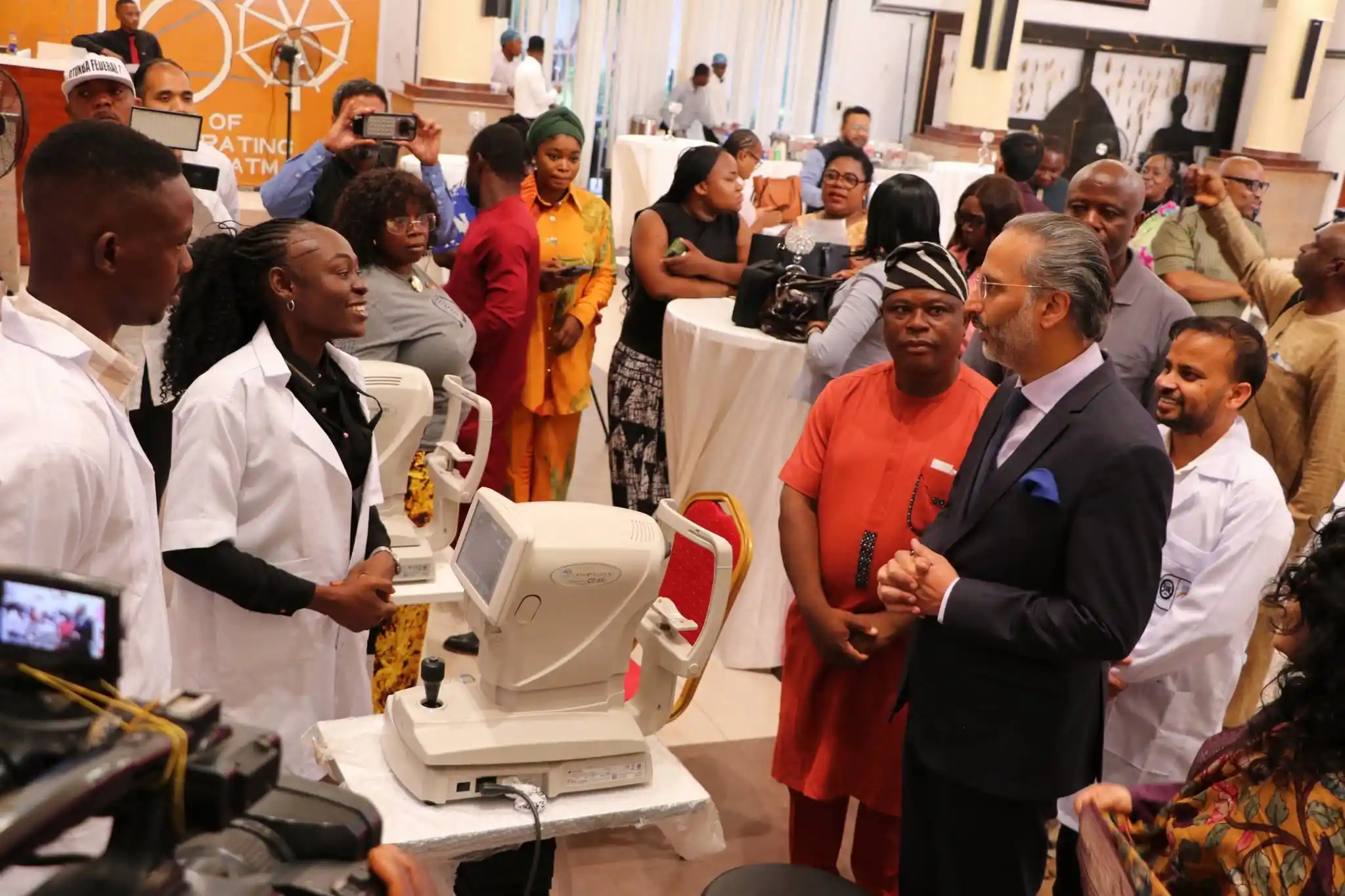
When Nigerians think of India, many do not think first of diplomacy, trade figures or official communiqués. They think of the Indian teachers who shaped their classrooms, the doctors who treated their families, the Indian shops in their neighbourhoods, the Bollywood films that found a loyal audience in northern Nigeria, and the Indians who have lived, worked and raised families in cities across the country. That is the real foundation of India-Nigeria relations: people-to-people contact that has grown steadily over decades and remains one of the strongest links between both countries.
This relationship is often discussed in the language of oil, defence and business, but that misses the bigger story. The India-Nigeria connection is also a cultural one, and in many ways that is the more durable tie. It lives in shared meals, shared screens, shared schools and shared city spaces. It is visible in the everyday interactions between Nigerians and Indians, and in the growing number of students, entrepreneurs, professionals and artists moving between both countries.
India’s presence in Nigeria is not new. It dates back to the period before Nigerian independence, when Indian professionals were already contributing to institution-building and public life. Indian teachers and doctors became part of the fabric of many communities, especially in the north and east, where their work left a lasting impression on generations of Nigerians.
That legacy still matters. Many Nigerians who grew up in that era remember Indian educators not as foreigners, but as trusted public servants. They remember Indian-made fabrics, Indian medicines and Indian trade networks that were part of daily life. In that sense, India is not a distant cultural reference point for many Nigerians; it is already embedded in memory and experience.
Indians in Nigeria, Nigerians in India
The Indian community in Nigeria has become an important part of the country’s social and economic life. Indians are present in retail, manufacturing, education, healthcare and hospitality, and in many cases they employ local workers, contribute to local economies and participate in community life. Their presence is most visible in Lagos, Abuja and other major commercial centres, where Indian schools, temples, cultural associations and businesses form part of the urban landscape.
At the same time, a growing number of Nigerians are travelling to India for education, business and professional opportunities. For many young Nigerians, India offers a combination of affordable tuition, English-language instruction and access to medical, technical and management training. Thousands of Nigerians have studied in Indian universities over the years, and many have returned home to contribute in medicine, engineering, business and public service.
That movement has created a mirror image of cultural exchange. Nigerians in India bring their own music, language, fashion and social energy into Indian cities. They create communities, associations and support networks that help them navigate life abroad while also introducing Indian society to Nigerian culture.
Culture travels faster than policy
If official relations move through embassies and ministry corridors, culture moves much faster. Bollywood has long enjoyed a strong following in Nigeria, especially in the north, where Indian films became familiar to audiences decades ago. The emotional intensity, musical storytelling and family themes of Indian cinema resonated with Nigerian viewers, and over time that influence has touched local film culture as well.
Today, the relationship has become more reciprocal. Nollywood and Bollywood are no longer strangers to each other. There is growing interest in collaboration between the two industries, and that matters because film is one of the most powerful ways people understand one another. When actors, directors, musicians and producers begin to work across both countries, the relationship becomes less abstract and more human.
Food also plays a surprisingly important role. Jollof rice and biryani may sit on different sides of the culinary map, but they belong to the same language of hospitality, identity and memory. Shared meals create shared curiosity. Festivals, weddings and community events do the same. These small exchanges matter because they help ordinary people build familiarity, and familiarity is often the first step toward trust.
Why this matters now
Nigeria and India are both large, youthful democracies in the Global South, and both are navigating the pressures of development, inequality, migration and global competition. That is why the people-to-people dimension of the relationship matters so much. It gives the partnership a social foundation that can outlast political cycles and economic volatility.
This is also why recent cultural agreements between both countries should be seen as more than ceremonial. They offer an opportunity to deepen exchanges in education, the creative industries, tourism and youth engagement. But agreements alone do not create understanding. Understanding has to be built through institutions, communities and repeated human contact.
There is also a hard truth both countries must face: people-to-people links are strongest when they are protected, not when they are taken for granted. Nigerians in India and Indians in Nigeria should be seen not only as communities that contribute economically, but also as communities that deserve safety, dignity and inclusion. Any serious cultural relationship must deal honestly with racism, stereotyping and social exclusion.
The India-Nigeria story is not just about two countries trading goods. It is about two peoples who have been interacting for decades, often quietly and without fanfare. It is about teachers, students, traders, doctors, filmmakers, worshippers and migrants who have built bridges far stronger than formal language sometimes suggests.
For Nigeria, this relationship offers an important lesson: diplomacy is not only what governments sign, but what people live. For India, it is a reminder that its influence in Africa is strongest when it is rooted in respect, service and shared culture rather than transactional interest alone.
At its best, the India-Nigeria relationship is not a tale of one country projecting power onto another. It is a story of mutual recognition. And that is what makes it worth writing about — not as a diplomatic slogan, but as a lived reality in classrooms, markets, film sets and neighbourhoods across both countries.