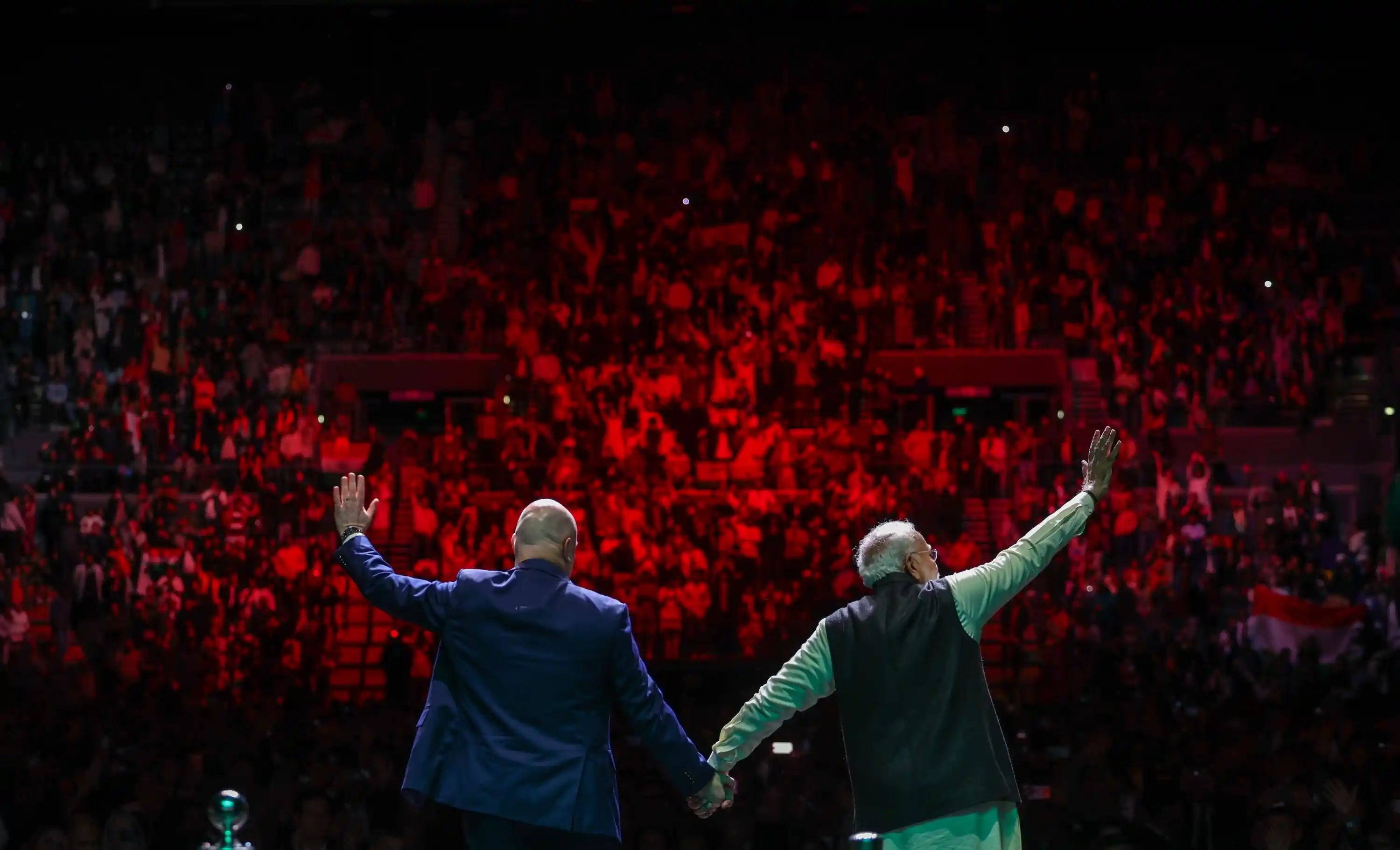
Prime Minister Narendra Modi’s visit to New Zealand (10-11 July 2026) – the first by an Indian prime minister in four decades – resulted in a formal elevation of bilateral ties to a “strategic partnership.” The outcome was an 18-point package, with a defence logistics arrangement that brings Wellington into a security architecture India has so far reserved for a small set of Indo-Pacific partners. The visit was the final leg of a three-country tour that also took PM Modi to Indonesia and Australia, and should be read as part of a broader, deliberate widening of India’s footprint across the South Pacific and maritime Southeast Asia. This brief sets out the key outcomes, assesses their significance, and identifies five trends likely to shape India’s Indo-Pacific engagement going forward.
The visit followed a Free Trade Agreement concluded in December 2025 and signed in New Delhi in April 2026, which will eliminate or reduce tariffs on roughly 95 per cent of New Zealand’s exports to India. It also built on New Zealand Prime Minister Christopher Luxon’s visit to India in March 2025. The visit was framed by both governments as a step forward in a relationship that, by most measures, has lagged behind India’s ties with other Pacific partners such as Australia and Japan.
Key Outcomes
Strategic Partnership and Roadmap to 2030: India and New Zealand have agreed to elevate their bilateral relationship to a strategic partnership and endorsed the “India–New Zealand Strategic Partnership: Roadmap to 2030,” a seven-pillar framework spanning political and diplomatic engagement, defence and security, trade and economic cooperation, technology, education, tourism and sport, and people-to-people ties. Eighteen outcomes were recorded in total, including ten formal agreements.
The two sides set a target of doubling bilateral trade in goods and services by 2030. Currently, India is the 11th largest trading partner of New Zealand, with total trade worth NZ $3.9 billion as of the year ended March 2026. The export basket has been dominated by education-related travel services, which is set to diversify with the implementation and expected utilisation of the tariff preferences under the FTA. These are subject to product-specific rules of origin that New Zealand SMEs will have to navigate. Outreach and business literacy regarding this FTA, through coordination with government agencies and business organisations in both countries, will be crucial to ensure that the potential of this agreement is utilised to its maximum. The investment opportunities as part of this strategic partnership, particularly in the areas of agri-business, tourism, defence and sports for New Zealand in India, need to be actively tapped.
Defence and Maritime Security: The most consequential outcomes were in the security domain. India and New Zealand signed a Mutual Logistics Support Arrangement between the Indian Navy and the New Zealand Defence Force, a Maritime Cooperation Arrangement, and agreed to establish an annual Maritime Security Dialogue between India’s Ministry of External Affairs and New Zealand’s Ministry of Foreign Affairs and Trade. The defence pillar explicitly prioritises maritime domain awareness, joint naval exercises, counterterrorism, and cyber defence. This represents a notable shift for a country that has historically maintained a lower defence profile in Indo-Pacific security arrangements than with partners such as Australia.
Joint Statement Positioning: The joint statement extended well beyond the bilateral agenda. Both leaders called for freedom of navigation and overflight under international law, with specific reference to the 1982 United Nations Convention on the Law of the Sea (UNCLOS); expressed concern over escalation in West Asia and called for the protection of shipping through the Strait of Hormuz; registered concern over the war in Ukraine; backed reform and expansion of the UN Security Council; and condemned cross-border terrorism, with a joint commitment to disrupt terror financing networks.
New Zealand was the third and final stop on a tour that began in Indonesia, where fourteen agreements were signed covering critical minerals, maritime security, and other strategic sectors, and continued in Australia with summit-level talks between PM Modi and Prime Minister Anthony Albanese. Taken together, the three legs constitute less a series of discrete bilateral visits than a coordinated sweep through parts of the Indo-Pacific where India’s presence has historically been thin relative to its stated ambitions. PM Modi tied the tour explicitly to India’s Act East Policy and its MAHASAGAR vision (Mutual and Holistic Advancement for Security and Growth Across Regions), locating the New Zealand visit within a broader regional recalibration rather than treating it as an isolated gesture to a smaller Pacific partner.
Emerging Trends in India’s Indo-Pacific Engagement
Five patterns are worth tracking as this relationship and India’s wider regional strategy develop:
- Trade and security are being bundled, not sequenced. The FTA and the strategic partnership were announced as a single package rather than as successive stages. India’s upgraded Indo-Pacific relationships increasingly combine trade liberalisation with defence cooperation from the outset, with maritime security dialogues becoming a standard institutional feature.
- Smaller Pacific states are being drawn into India’s maritime security architecture. The Maritime Cooperation Arrangement and Mutual Logistics Support Arrangement extend to New Zealand instruments India has previously reserved for partners such as Australia, the United States, and France. This suggests an intent to broaden the network of logistics and interoperability partners beyond the core Quad-adjacent grouping.
- Headline economic commitments face real domestic political constraints. The dispute in Wellington over the investment “commitment” clause indicates that ambitious bilateral targets remain subject to coalition politics and public scrutiny over asymmetric benefit, a dynamic likely to recur as India concludes similar agreements with other mid-sized Indo-Pacific economies.
- Diaspora engagement functions as diplomatic infrastructure. PM Modi’s community event during this visit in Auckland, and the visible mobilisation of diaspora leaders point to a pattern in which India’s outreach in the Pacific is built in part on pre-existing community networks, which governments are treating as an active diplomatic asset rather than a peripheral consideration. It is notable that 6% of New Zealand’s population is now of Indian descent. The New Zealand Prime Minister referred to people of Indian descent as a “living bridge” between the two nations that will drive the future dynamics of this bilateral relationship.
- Strategic language is becoming more explicit. The joint statement’s emphasis on freedom of navigation, UNCLOS, and the “rules-based international order” indicates both governments are increasingly comfortable naming the strategic context of their partnership, even without naming any specific country.
Future Outlook
The durability of this visit’s outcomes will depend on implementation rather than on announcement. Three indicators merit particular attention: whether the doubled trade target is met by 2030 and New Zealand invests proactively in India’s growth story; whether the Maritime Security Dialogue generates substantive naval cooperation rather than remaining a purely consultative forum; and whether New Zealand’s coalition dynamics allow the FTA and roadmap to proceed and be actively utilised without further domestic contestation. Evidence of tangible progress on these outcomes over the next five years is crucial for this historic visit to be remembered for its substance.
What is already evident is that India’s Indo-Pacific strategy is expanding geographically into the South Pacific for the first time in four decades, while applying the same trade-plus-security template it has developed with Australia and Japan. New Zealand’s inclusion in that template, however modest in scale relative to India’s larger regional partnerships, is a useful indicator of how far India’s regional ambitions have extended.
The copyright of this article remains with the Politeia Research Foundation ©️PRF.