India has earned Afghanistan’s trust not through military intervention or ideological influence, but through decades of humanitarian assistance, development partnerships, and genuine people-to-people engagement. This goodwill has transformed India into one of the Afghan people’s most trusted and respected partners.
Recently, when Afghanistan’s Minister of Agriculture, Irrigation, and Livestock, Mawlawi Attaullah Omari, visited India in July 2026, overwhelmed by the hospitality, warmth, and respect he received, he said: “This is my first trip to India. From the very first day I landed in India, I received a warm welcome from the Indian government, the Minister of External Affairs, and everyone I met. It feels as if I am among my own people… It feels like our own country, and as you mentioned, our DNA is one, so that is the idea. ” Especially, his statement that “we both share the same DNA”—delivered during high-profile business sessions was surprising for everyone, particularly coming from a senior Taliban minister. However, this shows the level of trust and bonhomie that have developed between the two countries over time. This was the fourth visit of an Afghan minister to New Delhi within nine months, reflecting the rapidly growing ties, expanding trade corridors, and shared regional strategies. Who could have imagined in 2021, when the Taliban took power, that things would turn out in such a way? Today, Afghans and the Taliban see India as an important and reliable partner.
Winning Hearts Through Development, Not Domination
When Indian visitors and vloggers travel to Afghanistan and ask ordinary Afghans what they think of India, they are often greeted with the response, “Hindustan hamara dost hai” (“India is our friend”). The level of respect they show towards Indians is truly unprecedented. Their eyes literally light up when they see someone from India visiting their country, and in many cases, when Indians buy something, they refuse to accept any money from them. Afghans, already known for their hospitality, extend a warm welcome and great respect to Indian guests. Recently, when an Indian biker was travelling through Afghanistan, a Taliban guard at a checkpoint stopped him to verify his identity. However, when the visitor said he was Indian, the Taliban guard did not carry out any further checks, did not inspect his documents, and let him go, declaring that India and Afghanistan are brothers. There are many other such stories on social media that reflect the unprecedented goodwill, affection, and respect that Afghans have for Indians.
Afghans truly love India. Most often, they trace this relationship back to centuries, saying, “Hindustan aur Afghanistan ka hazaron salon ka purana rishta hai” (“India and Afghanistan share a relationship that goes back thousands of years”). They also frequently refer to India as their second home. But the question is: why is there so much goodwill, love, and respect towards India, and unprecedented hatred towards Pakistan?
The answer lies in India’s humanitarian approach and its development-oriented engagement with Afghanistan. Its approach has always been non-dominating and people-centred. India has never viewed Afghanistan through the lens of a third party or as a source of strategic depth, and has pursued independent relations with it from the very beginning. Unlike Pakistan, it has never provided weapons or engaged in ideological indoctrination. Instead, its focus has been on capacity building and on implementing High-Impact Community Development Projects (HICDPs) across all 34 provinces, which directly benefit the people. India’s contribution has helped shape the lives of ordinary Afghans by building schools, electricity transmission lines, roads such as the vital 218-km Zaranj–Delaram Highway, major dams like the $300 million Salma Dam (Afghan-India Friendship Dam), and the iconic $90 million Parliament building in Kabul. In Afghanistan, the Indira Gandhi Children’s Hospital (IGICH) in Kabul—the country’s largest paediatric healthcare institution—was originally founded with Indian funding and later upgraded to include vital specialised units, such as an artificial limb centre using Indian “Jaipur Foot” technology, which caters to thousands of children every day. Similarly, many other public facilities built by India continue to serve the Afghan people. India’s focus has always been on promoting people-centred development initiatives that can change lives and bring happiness to the public.
A Reliable Partner in Times of Crisis
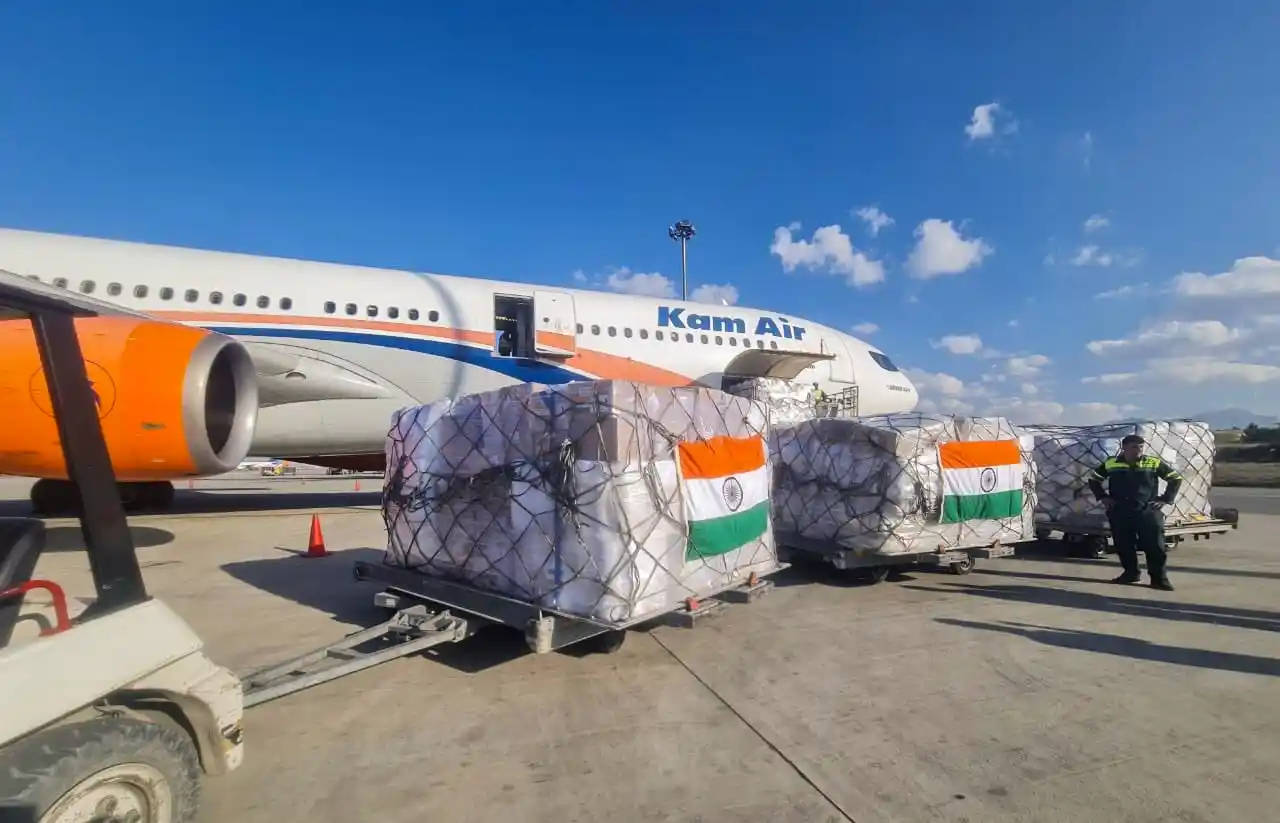
Similarly, whenever Afghanistan faces a crisis or disaster, India is always among the first to provide assistance and support, without boasting about it. For example, when a devastating 5.9-magnitude earthquake struck eastern Afghanistan, followed by another powerful series of tremors in early 2026, India swiftly dispatched tonnes of emergency Humanitarian Assistance and Disaster Relief (HADR) materials. This emergency aid included family-sized tents, sleeping bags, blankets, hygiene kits, and essential medicines. During the peak of the COVID-19 pandemic, India demonstrated solidarity by supplying life-saving medical supplies and half a million doses of Made-in-India vaccines. More recently, when catastrophic flash floods struck the north-eastern Nuristan province, killing dozens and sweeping away livelihoods, India again stepped up as a reliable first responder, handing over significant consignments of food supplies and family tents directly to Afghanistan’s National Disaster Management Authority. Whenever Afghanistan faces a problem, India extends its support. Recently, as Pakistan continues its mass deportation policy and pushes hundreds of thousands of Afghan refugees out of its territory, India has been actively providing humanitarian assistance. The Indian Ministry of External Affairs handed over large consignments of heavy-duty family tents and essential food packages to the Afghan Ministry of Refugees and Repatriation to ensure displaced families have emergency shelter and basic sustenance upon arrival. India has consistently supported the Afghan people, which is why there is such unprecedented goodwill towards India.
During the recent visit by Afghanistan’s Minister, the focus was again on economic cooperation, agricultural development, livestock, and related sectors. The two sides discussed cooperation in these areas, with a particular emphasis on improving Afghanistan’s agriculture and enhancing the lives of its people, given the country’s steep dependence on agriculture—with 80% of its population relying directly on farming and animal husbandry—and the severe food shortages it faces. Given these challenges, India is uniquely positioned to support Afghanistan’s agricultural transformation. No country is perhaps better placed than India to share its expertise in these fields. India has advanced technology, dryland farming techniques, improved seed systems, and climate-resilient, bio-fortified crop varieties that it can share with Afghanistan to help manage its severe water scarcity. Furthermore, the Afghan delegation actively sought Indian commercial partnerships in fertilisers, agricultural chemicals, and veterinary medicines to move away from low-yield traditional farming. Thus, India’s focus has once again been on development that benefits the Afghan people.
Cricket and People-to-People Bonds
Cricket is an equally important aspect of the growing relationship. Afghan people often speak of India’s support for the development of cricket in their country. Recently, Afghanistan successfully hosted the Shpageeza Cricket League at the Khost Cricket Stadium, with India providing vital support for the tournament. The entire technical team responsible for broadcasting—including professional commentators, production staff, and other technical personnel—was from India, ensuring high-quality coverage for fans worldwide. The league was so successful that the entire stadium was packed with spectators, with huge crowds gathering outside as well. There is unprecedented love for cricket in Afghanistan, and the people are deeply passionate about the sport. This is also one of the strongest factors uniting the two countries. To express their gratitude for India’s unwavering support, some spectators at the Khost stadium proudly displayed a large photograph of Jay Shah in appreciation of the institutional assistance provided to Afghan cricket. People in Afghanistan often admire the Indian cricket team and stars such as Virat Kohli and Rohit Sharma. Whenever India plays against Pakistan or any other country, Afghan cricket fans can often be seen cheering for India. This also reflects their deep affection for India. India has provided tremendous support to Afghan cricket. Afghan cricketers frequently feature in the IPL, and India has also provided its world-class grounds in Greater Noida, Dehradun, and Lucknow as home venues for the Afghan national cricket team. India is also assisting in the development of sports facilities in Afghanistan.
This relationship exemplifies the strength of people-to-people ties. Whatever the circumstances in Afghanistan, the goodwill and affection that India’s actions have generated among the Afghan people will endure, making this relationship resilient and shock-proof. However, more needs to be done to further strengthen these ties by improving connectivity, easing visa procedures, and creating greater opportunities for Afghans in India, particularly in education, healthcare, business, and other economic sectors. India should also continue to share its strengths, best practices, and expertise in areas such as agriculture, healthcare, education, digital governance, and skills development. Such initiatives will further deepen this unique partnership and ensure that India–Afghanistan relations continue to grow stronger in the years ahead.
The copyright of this article remains with the Politeia Research Foundation ©️PRF.
References
[1] “‘DNA Is One’: Afghan Minister Lauds India’s Hospitality, Says Received Warm Welcome from Government,” Firstpost, June 2026, https://www.firstpost.com/world/dna-is-one-afghan-minister-lauds-indias-hospitality-says-received-warm-welcome-from-govt-ws-e-14030566.html
[1] “Taliban Agriculture Minister Visits India,” Afghanistan International, July 7, 2026, https://www.afintl.com/en/202607078414
[1] “‘Hindustan Is Very Good’: Afghan Vendor’s Hospitality Towards Indian Traveller Melts Internet; Video Goes Viral,” Times Now, December 2, 2025, https://www.timesnownews.com/viral/hindustan-is-very-good-afghan-vendors-hospitality-towards-indian-traveller-melts-internet-video-article-153235315
[1] NDTV News Desk, “‘India, Afghanistan Are Like Brothers’: Security Personnel’s Heartwarming Gesture for Indian Tourist Goes Viral,” NDTV, October 9, 2025, https://www.ndtv.com/offbeat/india-afghanistan-are-like-brothers-security-personnels-heartwarming-gesture-for-indian-tourist-goes-viral-9422786
[1] Rajiv Bhatia, “India and Afghanistan: Building on Civilizational Bonds,” Indian Council of World Affairs, July 8, 2025, https://www.icwa.in/show_content.php?lang=1&level=1&ls_id=14390&lid=8807
[1] Chayanika Saxena, “India’s Developmental Partnership in Afghanistan: Here to Stay or to Go?” Observer Research Foundation, October 7, 2021, https://www.orfonline.org/expert-speak/indias-developmental-partnership-in-afghanistan-here-to-stay-or-to-go
[1] Vishal Chandra, Afghans in Need: Positing India’s Continued Engagement With Afghanistan, Monograph No. 88 (New Delhi: Manohar Parrikar Institute for Defence Studies and Analyses, October 2024), https://idsa.in/publisher/system/files/page/2015/monograph-88.pdf
[1] ANI, “India Delivers Aid to Flood- and Earthquake-Hit Afghanistan,” ANI News, April 6, 2026, https://www.aninews.in/news/world/asia/india-delivers-aid-to-flood-and-earthquake-hit-afghanistan20260406033356/
[1] “India Sends Relief Material to Afghanistan in Wake of Floods in Nuristan,” The Tribune, July 22, 2026, https://www.tribuneindia.com/news/world/india-sends-relief-material-to-afghanistan-in-wake-of-floods-in-nuristan
[1] “India and Afghanistan Strengthen Economic Cooperation Through New Trade Initiatives,” The Kabul Tribune, July 2026, https://thekabultribune.com/en/0010135
[1] “Visit of Minister of Agriculture, Irrigation and Livestock of Afghanistan to India (July 07–12, 2026),” Ministry of External Affairs, Government of India, Press Release, July 12, 2026, https://www.mea.gov.in/press-releases?dtl/41458/Visit_of_Minister_of_Agriculture_Irrigation_and_Livestock_of_Afghanistan_to_India_July_07__12_2026
[1] Suhasini Haidar, “India Discusses Agricultural Collaboration with Taliban Government of Afghanistan,” The Hindu, July 13, 2026, https://www.thehindu.com/news/national/india-discusses-agricultural-collaboration-with-taliban-governement-of-afghanistan/article71214284.ece
[1] Embassy of India, Kabul (@indiainafghanistan), “Instagram post,” Embassy of India, Kabul Instagram, November 19, 2024, https://www.instagram.com/p/DaXrfXfM1yH/
[1] Sounak Mukhopadhyay, “How India’s Guiding Hand Helped Lift Up Afghanistan Cricket, England Shocker Is Latest Example,” ThePrint, October 17, 2023, https://theprint.in/sport/how-indias-guiding-hand-helped-lift-up-afghanistan-cricket-england-shocker-is-latest-example/1810731