
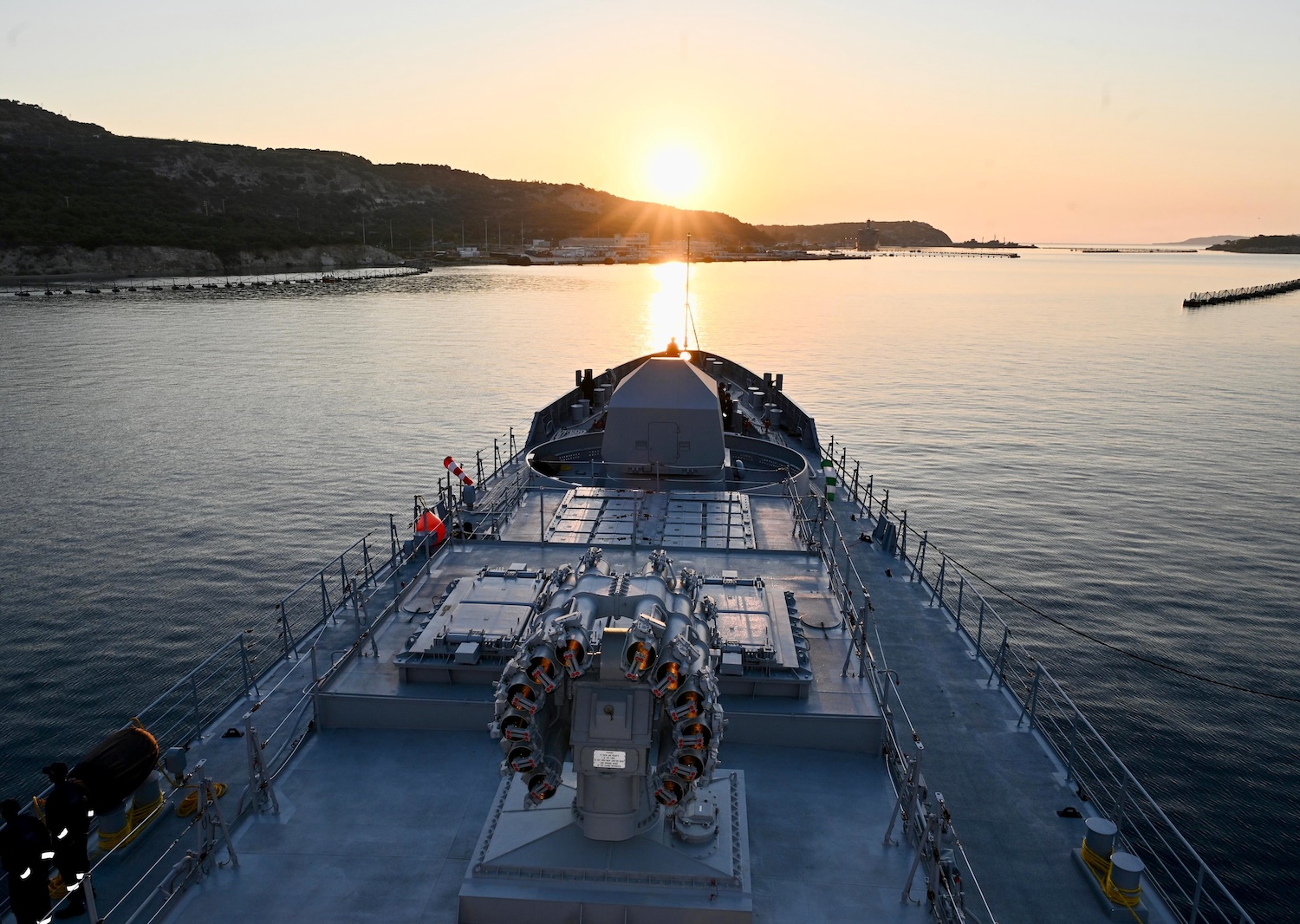
The Indian Navy’s participation in the multinational exercise ‘Pacific Reach 2025’ in the South China Sea marks a significant development in both regional security cooperation and India’s global maritime posture.
Event Overview
India joined over 40 nations, including the US, Japan, South Korea, and Singapore, for Exercise Pacific Reach 2025 in the contested South China Sea, focusing on submarine rescue and safety operations. India deployed its newly commissioned vessel, INS Nistar, equipped for deep submergence rescue missions. The week-long exercise includes both harbour and sea phases, featuring operational drills, medical symposiums, and knowledge exchange.
Why This Is Significant for India
- Strategic Signaling: India’s active participation, especially with leading powers like the US and Japan, signals a commitment to a free, open, and inclusive Indo-Pacific. It reflects India’s alignment with international norms challenging unilateral maritime claims, such as those posed by China in the South China Sea.
- Naval Capability Display: Sending INS Nistar demonstrates India’s advanced submarine rescue capabilities and technological progress. This vessel, equipped to operate DSRVs up to 650 meters, elevates India’s standing in undersea operations and partnership readiness.
- Multilateral Defense Diplomacy: Being part of such a large multinational drill enhances India’s interoperability with global navies, builds operational trust, and deepens defense relationships beyond bilateral and trilateral formats.
- Regional Stability Contribution: By participating alongside regional nations and maintaining open channels with observer countries (including China), India strengthens mechanisms for crisis management, accident response, and mutual support in contested waters.
- Geopolitical Positioning: India’s presence asserts its role as a responsible stakeholder in maritime security. The South China Sea’s strategic significance as a global trade artery and area of frequent disputes makes India’s engagement crucial for regional balance.
Broader Perspectives
- China’s Role: Notably, China attended as an observer, highlighting the complex diplomatic environment. India’s approach avoids direct confrontation while promoting peaceful cooperation and international best practices.
- Alliance Building: The exercise builds momentum for collective security and could complement other regional engagements, like India’s recent bilateral drills with the Philippines in the South China Sea.
Key Takeaways
- India’s participation shows commitment to peace, stability, and safety in the Indo-Pacific.
- Enhances operational readiness and diplomatic clout by engaging with a wide spectrum of global navies.
- Supports rules-based order, balancing assertive actions and unilateral claims in one of the world’s busiest waterways.
India’s role in Pacific Reach 2025 cements its rising influence as a maritime power dedicated to security, cooperation, and the global commons.

