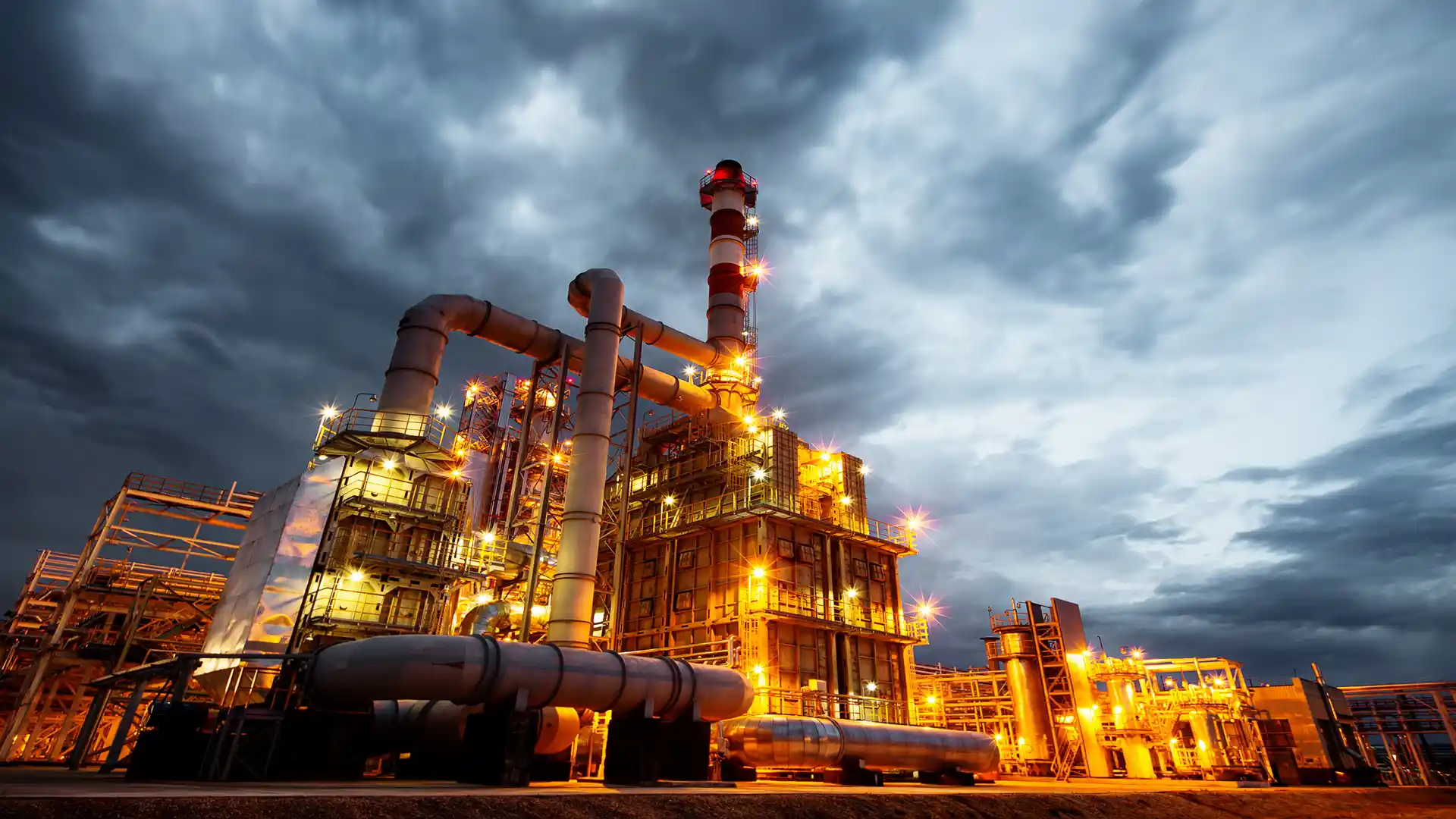
Russia was the world’s second-largest crude oil exporter as recently as 2023, trailing only Saudi Arabia (EIA 2025). In July 2026 it also became, for the first time in its war on Ukraine, a buyer of petrol. Reuters reported on July 1 that at least 60,000 metric tons of Indian gasoline were already at sea, carried by two tankers, with Russian buyers planning to import roughly 400,000 tons a month from India and other suppliers (Reuters 2026a). Within a day the story acquired a sharper edge: India’s oil minister, Hardeep Singh Puri, denied that Indian companies sell fuel to Russia directly, while conceding it was “possible” that Indian-origin fuel reaches Russia through traders (Reuters 2026b). The refiner reportedly involved, Nayara Energy, is not a neutral bystander: Russia’s Rosneft owns 49 percent of it, alongside a further stake held by a Russian-linked investment consortium (Al Jazeera 2026).
That detail sharpens the analysis rather than complicating it. The European Union sanctioned Nayara’s Vadinar refinery in July 2025 precisely because of its Rosneft ownership, barring EU purchases of fuel refined from Russian crude through the plant and unsettling Western shipping and insurance (S&P Global 2025; Bloomberg 2025). Cut off from alternative crude and wary Western counterparties, Vadinar has since run overwhelmingly on Russian oil—72 percent of its intake this year (S&P Global 2025)—and leans on trader intermediaries for both crude imports and fuel exports, even as it operates at reduced run rates (Al Jazeera 2026; Bloomberg 2025). A sanctions regime built to squeeze Rosneft’s earnings instead produced a refinery structurally dependent on Russian crude and commercially adapted to opaque trade routes—now reportedly carrying Indian-refined gasoline back toward the country that supplied the crude. One tanker, Agni, loaded with Vadinar gasoline, was manifested for Fujairah on June 20; tracking data instead placed it in the Suez Canal, headed north (Al Jazeera 2026). This is less India opportunistically reselling Russian crude than Russian capital using its own Indian refining stake to convert Russian oil into a product Russia’s domestic refineries can no longer supply.
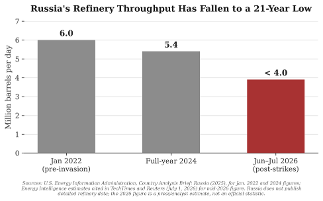
None of this would be necessary if Russia still had the refining capacity it had before February 2022. It does not. Ukrainian drones, which spent the war’s first two years hitting depots and rail junctions near the border, shifted from 2025 toward refineries deep inside the country. The Atlantic Council estimated strikes had disabled roughly a tenth of national refining capacity by early 2025 (Atlantic Council 2025); the pace then accelerated sharply, with sixteen refineries struck in May 2026 alone and at least six more in June (Caspian News 2026). By July 2026, Reuters and Energy Intelligence estimates put throughput below four million barrels a day—a twenty-one-year low, down from just under six million before the invasion, with close to a third of capacity offline (EIA 2025; TechTimes 2026). Vladimir Putin, who had spent four years insisting the strikes changed nothing at the front, admitted on state television in late June to a “certain deficit” of fuel (PBS NewsHour 2026). More than fifty of Russia’s eighty-three regions were rationing gasoline; Crimea suspended sales outright; Moscow’s Kapotnya refinery, source of roughly forty percent of the capital’s fuel, was hit twice in June and will not reopen before 2027 (BBC 2026; Vakulenko 2026). Russia’s central bank has linked its softer 2026 growth forecast to a fuel sector “operating below full capacity” (CNBC 2026). Crude production barely moved. Russia is exporting more of it than at any point since the invasion, precisely because less of it can be refined at home (IEA 2026).
Consider the 2019 attack on Saudi Aramco’s Abqaiq facility, which knocked out a comparable share of output overnight yet recovered within weeks, because global spare capacity could backstop a single damaged node (CRS 2019). Russia’s refining base has no equivalent cushion: refining infrastructure is concentrated, fixed, and slow to rebuild in a way crude extraction is not—a lesson drones have applied to war economies since Azerbaijan’s 2020 campaign in Nagorno-Karabakh (Khalilzada 2022).
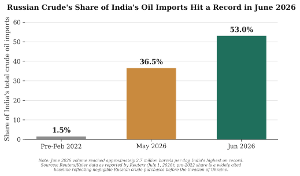
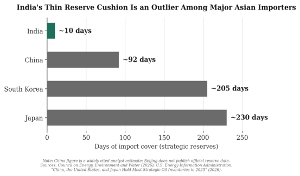
India’s position looks paradoxical only in isolation. It imports close to ninety percent of its crude and holds barely ten days of strategic reserves, among the thinnest cushions of any large economy (CEEW 2026). What it has instead is processing sophistication and scale: Reliance’s Jamnagar complex alone runs at a Nelson Complexity Index of 21.1, the highest of any refinery on record (RIL 2026), while Indian refiners collectively exported roughly three-tenths of their petrol and half their jet fuel in 2023–24 to some 160 countries (Miller 2026). That imported-crude dependence is precisely why India’s own June purchases from Russia hit a record 2.7 million barrels a day, more than half its total crude intake: refiners were simultaneously replacing Gulf barrels squeezed by the Strait of Hormuz closure and taking advantage of a temporary American waiver on sanctioned Russian cargoes already at sea (Reuters 2026a; IEA 2026).
Set against its peers, refining flexibility—not reserve size—is the real point of comparison. Japan and South Korea each hold reserves covering roughly two hundred days of imports, a buffer built to be drawn down slowly rather than replenished quickly; China’s holdings are the largest in absolute terms, though Beijing does not publish the figure (EIA 2026).
Reserves are only half the picture, though: China refines 18.5 million barrels a day against India’s 5.2 million—more than triple—yet exports comparatively little of what it processes; the United States refines a similar 18.4 million barrels a day but consumes nearly all of it domestically (Energy Institute 2025). Saudi Arabia’s cushion is spare crude-production capacity, not storage or refining. Russia, until this year, had assumed its reserves in the ground made all of this irrelevant. One sustained drone campaign showed otherwise.
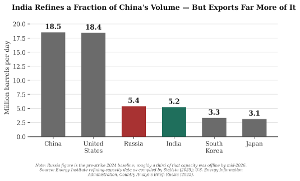
The reversal, then, is not simply that Russia now imports fuel from a country it exports crude to. It is that ownership of a resource and control over its conversion into usable energy have become distinct forms of power—and that India, through Jamnagar, and now apparently through a Russian-owned refinery on its own soil, sits closer to the second than anyone anticipated eighteen months ago. Twentieth-century energy geopolitics rewarded whoever controlled the wells. What this episode exposes, more than any single tanker or ministerial denial, is that in a war economy the more valuable asset is the capacity to finish what the wells produce.
References
Al Jazeera. 2026. “What Is Nayara, the Indian Firm Russia Is Reportedly Importing Oil From?” July 3.
Atlantic Council. 2025. “Ukrainian Drones Reportedly Knock Out 10 Percent of Russian Refining Capacity.” UkraineAlert, February 13.
BBC News. 2026. “Putin Makes Rare Admission of Fuel Shortages Caused by Ukrainian Strikes.” June 29.
Bloomberg. 2025. “India’s Nayara Cuts Oil Refinery Run Rate After EU Sanctions.” July 29.
Caspian News. 2026. “Fuel Crisis Forces Russia to Seek Gasoline Imports from India.” June 24.
CEEW (Council on Energy, Environment and Water). 2026. Cited in “India’s Strategic Oil Reserves Cover Only 9–10 Days of Crude Imports: Report.” Outlook Business, June.
CNBC. 2026. “Putin Says Russia Faces Fuel Shortages after Ukraine Strikes.” June 29.
CRS (Congressional Research Service). 2019. Attacks on Saudi Oil Facilities: Effects and Responses. IN11173. Washington, DC: CRS, October 1.
EIA (U.S. Energy Information Administration). 2025. Country Analysis Brief: Russia. Washington, DC: EIA, July 24.
EIA (U.S. Energy Information Administration). 2026. “China, the United States, and Japan Hold Most Strategic Oil Inventories in 2025.” Today in Energy, April 20.
Energy Institute. 2025. “Crude Oil Refinery Capacity Worldwide in 2010 and 2024, by Major Country.” Statista, June 25.
IEA (International Energy Agency). 2026. Oil Market Report – May 2026. Paris: IEA.
Khalilzada, Javadbay. 2022. “The Proliferation of Combat Drones in Civil and Interstate Conflicts: The Case of Türkiye and Azerbaijan.” Insight Turkey, October 3.
Miller, Manjari Chatterjee. 2026. “Oil Energy, India-U.S. Relations, and the Russia Conundrum.” Council on Foreign Relations, February 17.
PBS NewsHour. 2026. “Ukraine’s Drone Set Another Russian Oil Refinery Ablaze, as Putin Admits Fuel Shortages.” Associated Press, June 29.
Reuters. 2026a. “Russia Buys Gasoline from India to Tackle Shortages, Sources Say.” July 1.
Reuters. 2026b. “India Refiner Nayara’s Gasoline Sold to Russia via Traders, Sources Say.” July 2.
RIL (Reliance Industries Limited). 2026. “Petroleum Refining & Marketing: The Jamnagar Jewel.” Accessed July 3.
S&P Global. 2025. “EU Sanctions on India’s Vadinar Refinery Raise Questions on Crude Tracking Enforcement.” July 21.
TechTimes. 2026. “Ukraine Drone Blitz Burns Moscow Refinery: One-Third of Russian Refining Goes Offline.” June 29.
Vakulenko, Sergei. 2026. “Russian Oil Sector Battered but Not Broken by Ukrainian Air Attacks.” Carnegie Russia Eurasia Center, Carnegie Endowment for International Peace, June 28.