The face of the city has changed almost beyond recognition since the days when the princely painter Ravi Varma from Kerala recreated the landscape of Shehar Jeypore on his easel.
Founded by a visionary ruler, Sawai Jaisingh, truly a renaissance man- an astronomer, benevolent ruler, statesman, and patron of the arts- it was a lovingly planned city. Gifted Bengali Architect Vidyadhar transformed the dream of his patron into reality.
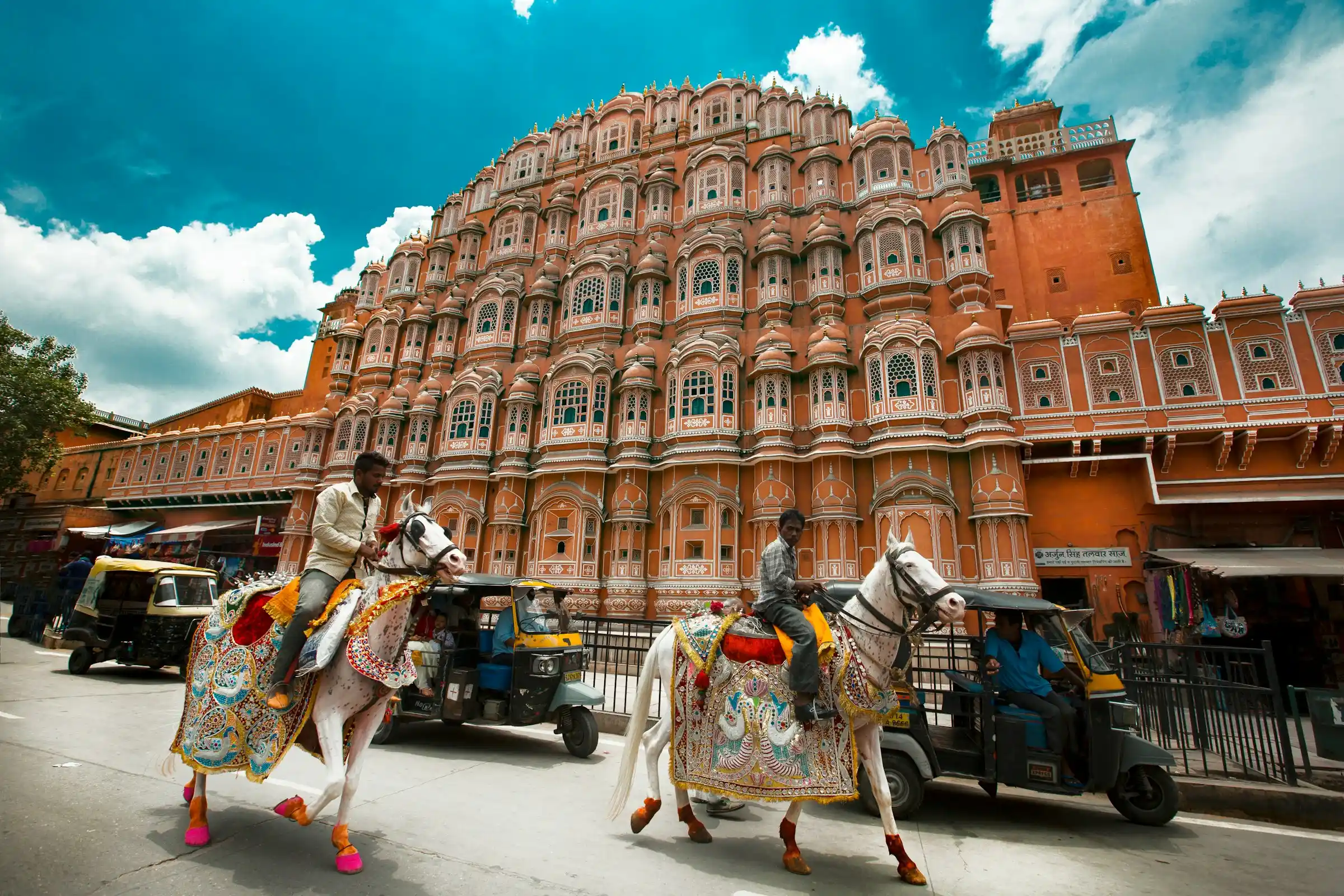
The fortified palaces are magnificently awe-inspiring – some perched atop a hill like Amer, or situated at steep inclines like Ajai Garh and Nahargarh, or Jal Mahal set like a sparkling gem in a ring with a small lake holding a mirror to it. Hawa Mahal, the picture-postcard-perfect landmark, is actually not a palace but just the facade- a screen that served as a stone veil for ladies of noble birth to watch the colorful processions on the street pass by, remaining unseen themselves.
The city wasn’t always pink. It was tinted in this hue to welcome the consort of Empress Victoria during his visit. The Victoria and Albert Museum, a beautiful building in classical Western style, also commemorates the occasion.
There are many other princely residences scattered all over- built in modern times, sprawling or petite, converted into heritage hotels like the Diggi Palace, the venue famous globally as the original venue of the JLF. Ram Bag Palace full of memories of the era of opulence and feudal etiquette.
Memories linger of the glamorous royal couple ‘Bubbles’ (Sawai Maharaj Mansingh II) and Maharani Gayatri Devi, who hosted Jaqueline Kennedy, Crown Prince Charles and Princess D, and Bianca Jagger at different times. The spectacular entertainment organized included Elephant Polo, or the pachyderms playing Holi, spewing coloured water from their trunks.
The spread for the celebrity guests used to be eclectic, ranging from robust Rajasthani fare to continental haute cuisine. The tradition is proudly maintained by their blue-blooded descendants at Baradari, the elegant multi-cuisine fine-dining eatery.
The praja (subjects) in the prosperous and peaceful city ate well. Musafirkhana, a serai opposite Motif Dungri, serves myriad meaty delights to travellers that go beyond Lal and Jungli Maas. On MI Road stands Niro’s, an immensely popular restaurant established by a Punjabi in the late 1940s, specializing in Lahori, Peshawari, and Pindi recipes and heirloom Anglo Indian dishes. LMB (Lakshmi Mishthann Bhandar) is the first choice of lovers of vegetarian delicacies. Ranga Rangilo (colourful) Rajasthan has imbibed the colours of diverse cuisines redolent with seductive aromas.
Sanganer, where the airport is, was once a small village on the outskirts famous for hand-block printing of textiles with non- polluting vegetable dyes. These designs adorn featherlight Jaipuri Razai (quilts). Amazingly warm with just 100 grams of cotton. The city’s johari (jewelers) are reckoned among the best in the world for their unmatched assessing and diamond-cutting talent. The intricacy of Kundan ka jadau kaam and Meenakari is unmatched. Lac bangles are inexpensive luxuries even budget tourists can indulge in.
Parts of the congested old city are like living museums of crafts like marble stone carving. Statues installed in many temples in northern India are born here.
Jaipur is associated with not one but two gharanas (styles) of Hindustani classical Music – Atrauli and Kirana. The artistes belonging to these lineages are known for filigree-like, delicate ornamentation of musical notes in delineation of a Raag (melodic mode). The Jaipur style of Kathak is distinct from the Lucknow or Banaras styles. The dancers evoke the devotional mood rather than the erotic. The choreography is based on poems of saint poets Surdas, Mira and Tulsidas depicting the childhood or Sri Ram and Sri Krishna. The dizzying pirouettes and flamenco-like footwork leave the audience spellbound.
As the city prepares to celebrate its 300th birthday, the princely past and corporate future confluence in the pulsating present moment. The metro glides past towering shopping malls with glass walls creating surrealistic reflections. Food habits are changing. Old mansions are giving way to ultra-modern apartments. The city is no longer pink, nor are there any signs of slowing down in its burgeoning. The city, bursting at the seams, is fast swallowing the surrounding countryside. Much is lost, according to old Jaipurias, in expansion.
What hasn’t changed is the joi de vivre. The original inhabitants and the recent ‘settlers’ strive to live in harmony with nature. The younger generation is learning to eat seasonally. Many wear perfumes like khus, jasmine, and mitti in summer months, and in the monsoon, shifting to gulab, musk, and oud in winter. Chandan helps anchor lighter evanescent floral and citrus notes. In the vicinity of Purani Chaupad, there are attars (perfumers) who blend fragrances for discerning clients- wearable and edible from natural ingredients that give you a whiff of the sublime. May Heavens be praised!