Noted 19th-century American naval officer and strategist Alfred Thayer Mahan is acclaimed for theorising the historical significance of naval power, arguing that control of the seas and maritime trade were critical factors determining the rise and fall of global superpowers. More than a hundred years after the publication of his much-acclaimed book, The Influence of Sea Power upon History, 1660–1783, in 1890, which advocated the augmentation of offensive naval prowess to dominate the seas, 21st-century geopolitics appears to be predicated on a cohesive approach to maritime power to promote global influence, especially among emerging powers with robust economic performance.
As states develop interdependence for growth and prosperity, the augmentation of maritime infrastructure, such as ports, becomes critical. Investing in maritime power to promote widespread access to maritime resources for economic growth, thereby guaranteeing a state a significant position in its power relations, is becoming increasingly important for emerging powers like India.
At the same time, augmenting maritime power gives a state an opportunity to foster cohesion and cooperation among countries pursuing similar objectives. India, with its advantageous geographical position as a dominant subcontinental power, offers the Global South and beyond an opportunity to promote maritime cohesion and cooperation.
The recent productive dialogues on maritime cooperation with Saudi Arabia, Belgium and Bhutan, representing three distinct geographical regions, highlight India’s efforts to promote maritime cooperation as a leading Global South power. Focused mainly on port connectivity and development, the dialogues have boosted India’s efforts to transform its maritime potential into maritime performance, as emphasised by Union Minister of Ports, Shipping and Waterways Sarbananda Sonowal.
The discussions with Saudi Arabia, Belgium and Bhutan, whose representatives attended Sagarmanthan: Great Oceans Dialogue 2026 in New Delhi in early October, although differing in their focus, were aimed at developing India’s maritime potential.
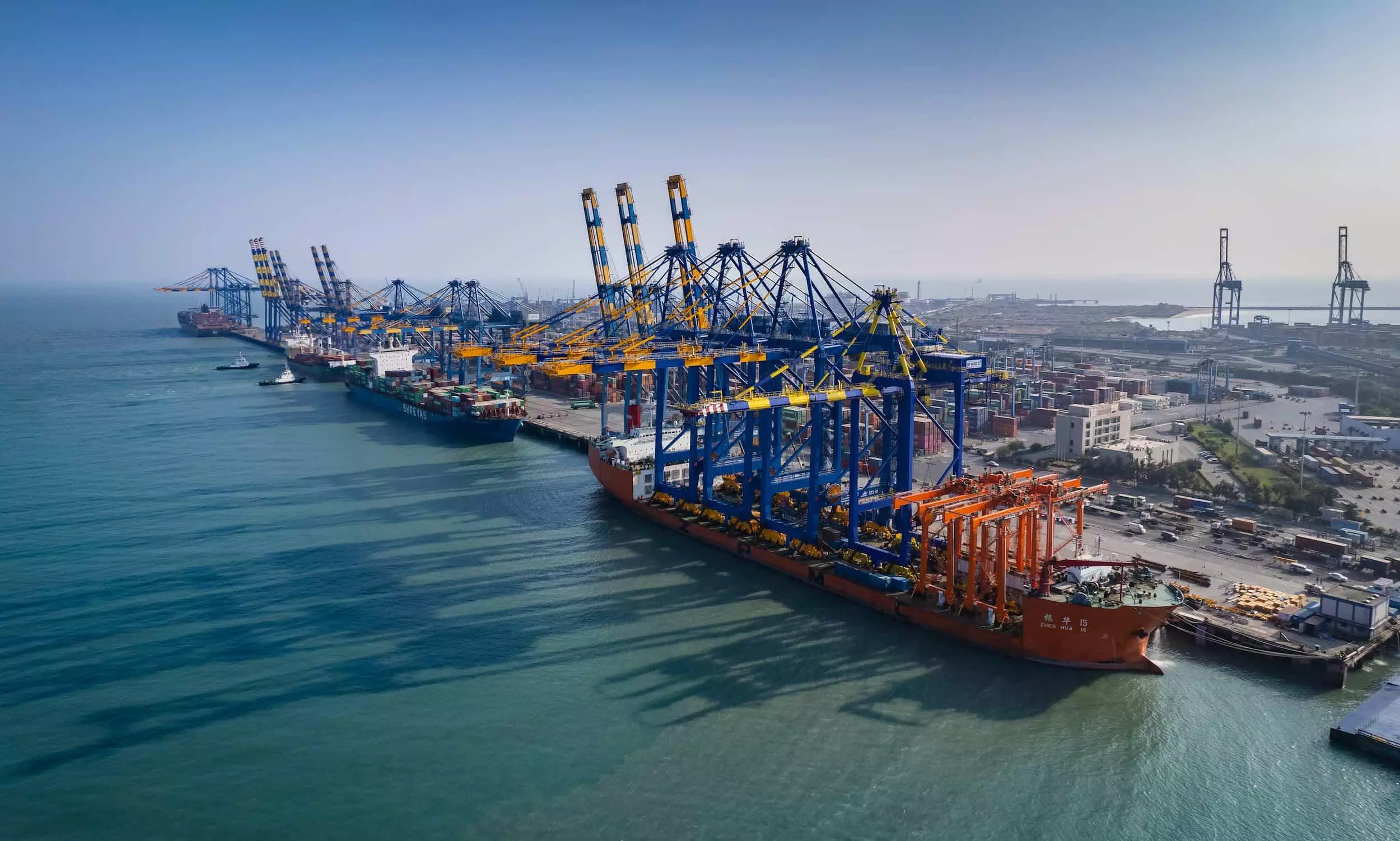
With Saudi Arabia, India discussed port infrastructure development. India is currently investing in port development initiatives. A total of 182 infrastructure development and port connectivity projects under the Ministry of Ports, Shipping and Waterways, worth Rs 1,09,018 crore, have been identified under the PM Gati Shakti Master Plan.
Besides, to harness India’s 11,099-km-long coastline, 14,500 km of potentially navigable waterways and strategic location along key international maritime trade routes, the Union Government has unveiled the ambitious Sagarmala Programme, which aims to promote port-led development.
The Maritime Amrit Kaal Vision 2047, Maritime India Vision 2030 and Sagarmala Programme envisage investments exceeding $1 trillion by 2047 to improve port infrastructure, enhance shipbuilding and ship repair, and encourage inland waterways and coastal shipping, along with associated operational efficiencies.
As part of this mission, India has permitted 100 per cent FDI in ports and shipping, as announced by Prime Minister Narendra Modi in 2025. Against this backdrop, Saudi Arabia, with its experience in boosting supply chain resilience and the security of maritime passages, has expressed interest in investing in Indian port projects at Vadhavan in Maharashtra and Galathea Bay in Greater Nicobar Island, as well as in the Maritime Development Fund.
India also prioritises the promotion of green shipping lanes. Shipping Minister Sonowal has highlighted efforts towards rapid decarbonisation and asserted India’s potential to lead the global green maritime transition, a vision that was appreciated by Prime Minister Modi.
The Deendayal Port Authority, Kandla, has said that it is positioning Kandla as an emerging hub for green fuels, green shipping, shipbuilding and maritime decarbonisation.
It is worth mentioning that India and the European Union are working on green shipping corridors to decarbonise the maritime sector and reduce emissions from ships by encouraging the use of cleaner fuels.
The shipping industry accounts for around three per cent of global greenhouse gas emissions and is also responsible for occasional oil discharges and contributes to ocean acidification, harming marine ecosystems.
Against this backdrop, Minister Sonowal proposed to his Belgian counterpart, Annick De Ridder, who attended the Sagarmanthan event in New Delhi, the exploration of a green shipping corridor linking Indian ports with Antwerp-Bruges, Europe’s second-largest seaport. The two sides also discussed green fuels, smart port technology and dredging.
With neighbouring Bhutan, India is exploring trade connectivity through waterways to help its landlocked neighbour access global markets. Ports Minister Sonowal held discussions with Lyonpo Chandra Bahadur Gurung, Bhutan’s Minister of Infrastructure and Transport, and highlighted National Waterway-2 and the Jogighopa terminal as potential gateways for Bhutan to global trade.
The two ministers also discussed the potential of the Manas and Sankosh rivers and their connectivity with the national waterways to improve cargo movement.
The discussion is significant in the context of India’s mission to expand inland waterways as an alternative and sustainable mode of freight transportation. Improved river-based connectivity through Assam would provide Bhutan with greater access to global markets beyond its immediate neighbourhood.
India also intends to provide Bhutanese youth with maritime and inland waterway training opportunities at the Centre of Excellence in Dibrugarh, Assam.
As the maritime domain becomes increasingly significant, not only in terms of commercial connectivity but also as a means of enhancing maritime power, India is attempting to seize the opportunity. Sea-based commerce has necessitated the development of maritime shipping, while globalisation has accelerated the integration of trade, services, markets and economies.
Since the global economic system is predominantly based on maritime trade, as has historically been the case, it offers emerging powers like India an opportunity to augment their maritime strength and assume a leading position among Global South countries seeking to integrate into the emerging international system, particularly as the dominance of the post-World War II order is perceived to be waning.
India understands the significance of the commercial strength that once elevated colonial powers to dominant positions, which they subsequently maintained through aggressive naval strength. It therefore seeks to foster a non-aggressive and cooperative approach.
India also recognises the need for external expertise and finance for port development, as well as the importance of reducing climate-harming practices through the promotion of green maritime corridors.
Furthermore, India recognises the difficulties faced by landlocked neighbours seeking to connect with global markets and is extending assistance to facilitate their connectivity.
India is therefore on a mission to enhance its maritime prowess by promoting collaborative mechanisms among the Global South and beyond, acting as a bridge to encourage commercial engagement and assistance without resorting to aggressive or militaristic approaches.
India’s efforts are significant in the context of growing practices of economic blackmail and aggressive posturing, often targeting Global South countries and issuing peremptory demands for compliance.
In an increasingly dominant geopolitical environment that disregards the ethos of multilateralism, India’s cooperative approach underscores its leadership potential in helping affected countries, many of them from the Global South, navigate and counter these challenges.