Rabindranath Tagore, the myriad-minded man, had, in the wake of the Partition of Bengal in 1905, launched a visionary campaign—a mass Raksha Bandhan—with Hindus and Muslims tying rakhis on each other’s wrists, taking a pledge to protect their brethren and not let the colonial masters succeed in dividing them by spreading communal strife. Almost a century and a quarter have passed, but the challenge persists painfully.
This isn’t the only instance when not women but men tied rakhis promising protection. According to folklore, Krishna once tied a thread on Draupadi’s wrist, promising protection from harm. (Another legend recounts how Radha, an aunt older than Krishna, had tied a rakhi on his wrist.)
Raksha Bandhan falls on a full moon day when orthodox Hindus change their sacred thread. This custom has created the misunderstanding that this is a festival primarily of Savarna Hindus. Nor should one jump to the conclusion that it reinforces a patriarchal mindset, with ‘strong’ brothers protecting ‘weak’ sisters from harm. In many regions of India, daughters tie a rakhi on a father’s, grandfather’s or uncle’s wrist.
And it’s not always sisters who sought out brothers to come to their rescue or wished for their safety. The legendary ruler of Kerala celebrated in myths, Mahabali, granted Laxmi’s wish for her consort Vishnu’s release from the bondage he had willingly accepted. According to this tale, Bali had requested Vishnu Bhagwan to act as dwarpaal (gatekeeper), protecting his realm. Impressed by his philanthropy, Vishnu agreed. His absence from Vaikunth made Laxmi disconsolate. That’s when she decided to tie a rakhi on Bali’s wrist and ask for a return gift. This incident is commemorated to this day in the mantra: Yen baddho Bali raja danvendro mahabali, ten twamham badhnami, rakshe machal machal! (I tie you with the same thread that bound the most powerful Bali, who surpassed all in generosity and compassion. May it provide you with steadfast protection!)
Almost every schoolchild in Hindustan has heard of how Humayun, the Mogul emperor, was sent to defend Mewar from invaders sent by the Sultan of Gujarat because he had accepted the rakhi sent by the besieged Hindu princess. Lesser known is the story of Rana Jung Bahadur Shah of Nepal, a rakhi-bandh bhai of Rani Jindan, the widow of Maharaja Ranjeet Singh, offering her asylum in a royal palace in Kathmandu, resisting British pressure not to do so.
The ritual followed for tying a rakhi, transcending sectarian divides, is very similar to the ganda-bandhan in classical music and dance when the guru accepts a new disciple. Both promise not to violate the pledge that binds them in an enduring relationship. A piece of sweet is shared and a gift offered to the teacher—the head of the musical family (gharana). Matriarchs Girija Devi, Annapurna Devi, Siddheshwari and Begum Akhtar all followed this practice.
While rakhi is absent in classical compositions, film songs seem to more than make up for it. Abke baras bhej bhaiyya ko babul, deejo sandesho bhijay re! in Bimal Roy’s Hindi film Bandini is based on a folk song of eastern UP, carrying distant echoes of the poignant notes of Bhairavi. One can almost hear the silent lament of the young woman separated from her brother and other dear ones in her maternal home! Another Bollywood hit, Hare Rama Hare Krishna, released in 1971 and remembered for the cult classic ‘Dum Maro Dum Mit Jaye Gum’, also had the evergreen Phulon ka Taron ka Sabka Kehna Hai, Hazaron Mein Ek Meri Behna Hai! Lata Mangeshkar’s incomparably melodious rendering Bhaiya Mere Rakhi ke Bandhan ko Nibhana! in Chhoti Behen has aged better than any vintage wine.
The celebration of Raksha Bandhan is unimaginable without the contribution of countless invisible Muslim craftspersons—karigars—in Benaras, Surat, Murshidabad, Kolkata and Hyderabad, toiling for months to embellish rakhis with zardozi (silver and gold thread embroidery), fresh river pearls and flakes of sweet-smelling sandalwood.
The day provides a great photo-op for politicians to display their love for children. Chacha Nehru happily accepted rakhis from nieces and nephews, while his daughter visited the NGO Bal Sahyog to tie this thread on the wrists of underprivileged kids. The customary practice has changed with the times.
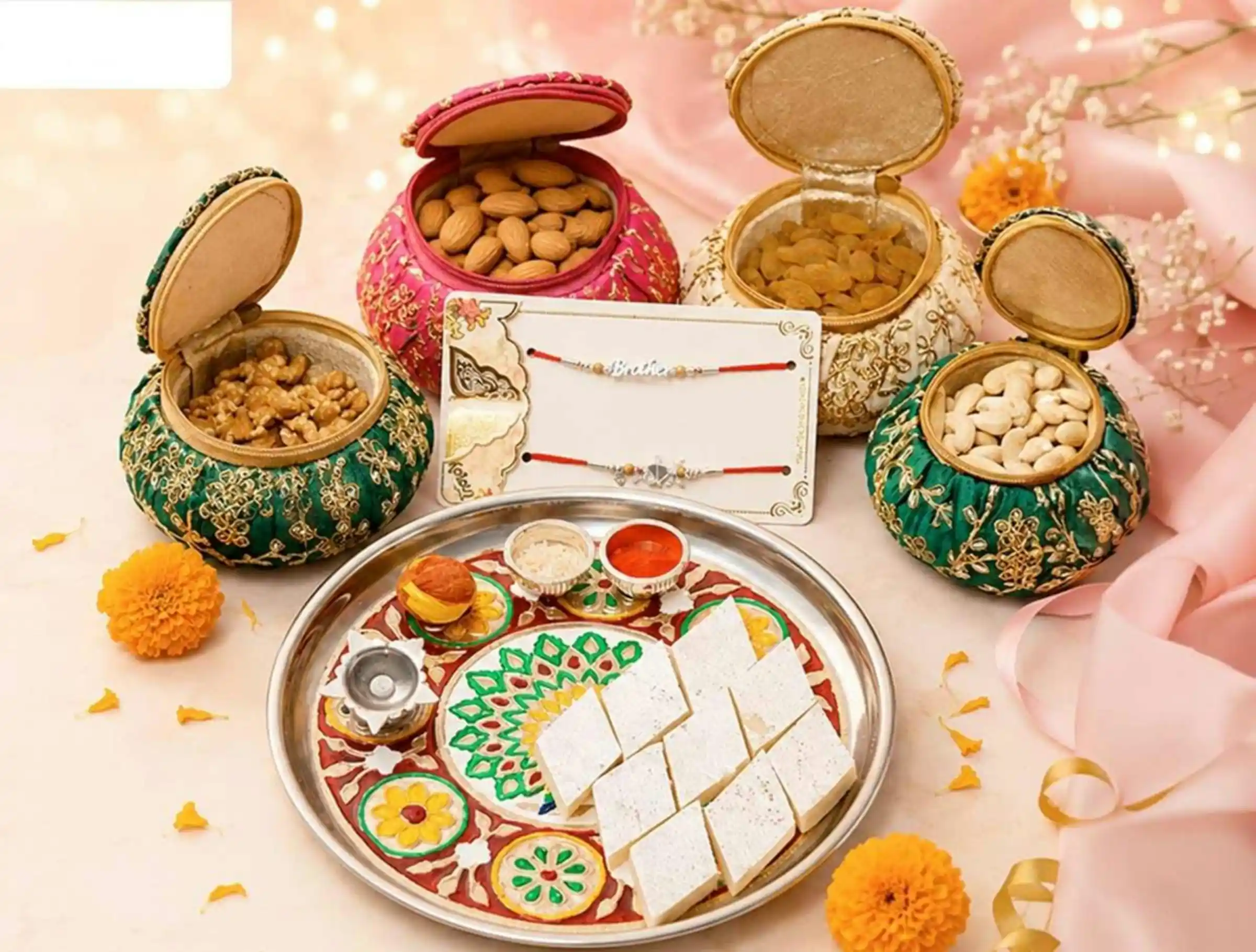
A doting brother with many sisters had to brave many brunches on Rakhi of lovingly made-at-home kheer, laddu, halwa and pitha. The traditional treat is yielding ground to the globalised hamper of imported chocolates and cheeses.
Gone are the days when inexpensive threads of cotton, dyed at home, could make brothers ecstatic, reassuring them that a sibling’s selfless love would guarantee safe passage through dreaded woods and stormy seas. Recently, our eyes caught an ad for a diamond-studded designer rakhi priced at just one rupee short of a million!