The nip in the air with the advent of winter is a reminder to bring out the woollens that envelop us in a warm, protective embrace. There are many kinds of woollens, from rough-hewn, homespun pattu (Indian tweed) to wool obtained from shearing sheep. However, at the pinnacle shines, in solitary splendour, the softest imaginable wool—Cashmere.
Woven into a fabric fit for kings, Cashmere is obtained from pasham, the fleece on the underside of animals that live in Ladakh and the adjacent areas of Tibet, where temperatures plunge below minus 40°C in winter, and ice and frost cover the earth. The shawls woven from this are called Pashmina.
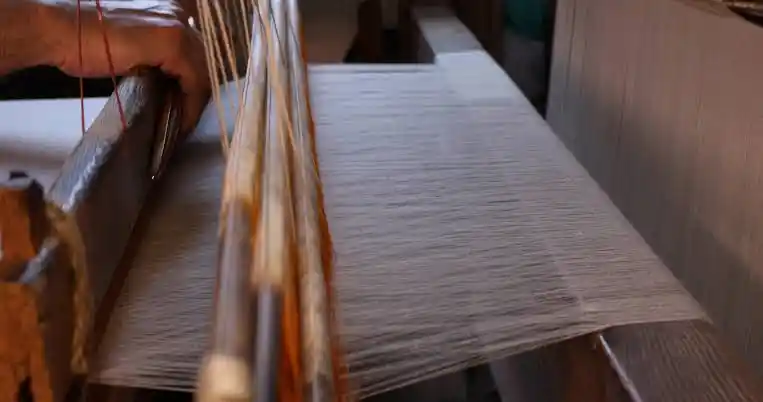
Though the wool is procured in Tibet and Ladakh, it is woven into exquisite fabric on looms in the Valley of Kashmir. The skilled craftsmen engaged in this task are descendants of master weavers who came from Persia via Afghanistan to Kashmir, sometimes referred to as Little Iran.
Few are aware that Pashmina and the even finer Shahtoosh, literally the King of All Wools, reached India via the historic Silk Road. Scholars have documented in detail the story of how the secret of silk-making was smuggled from the Forbidden City to Turkey through a hazardous route in the high Trans-Himalayan region. The tale of the King of All Wools is no less fascinating.
Sometimes, the designs in these shawls are woven in paisley and other colourful abstractions. Other shawls are adorned with delicate embroidery covering the entire surface. These are the Jamavars. The Grand Mughal Akbar fell in love with Jamavars wrought in Shahtoosh and Pashmina.
Today, Shahtoosh is a prohibited item, as the ruthless exploitation of the rare chiru (Tibetan antelope), which inhabits Changthang and is the source of this fleece, has brought the species to the verge of extinction.
The Chinese claim that they collect the fleece ethically, without causing any harm to these animals. Not all such claims are credible.
Shahtoosh remains an extremely rare commodity. The market for contraband Shahtoosh scarves, stoles and shawls is flourishing. These accessories fetch anywhere from $2,000 to $200,000, depending on their size, embroidery or subtly woven designs.
Talking of shawls from Kashmir, soft and thin beyond compare, these unstitched garments can pass through a finger ring, like the fabled muslin of Dhaka. These shawls were not for everyone. They were worn by royalty across the land and in countries beyond India's shores.
There is a small terracotta seal excavated at Harappa that shows a priest-king draped in a shawl-like garment decorated with a three-petalled floral design. Archaeologists have found evidence of lively foreign trade between the people of the Indus Valley and regions as far away as Mesopotamia and Sumer, in present-day Iraq. It was not only Indian spices that were prized in Egypt, Rome and Constantinople, but also other items such as silks, precious gems and woollen textiles.
Cashmere first reached England almost four hundred years ago, when officials of the East India Company took it home. It created a sensation among the upper crust but remained out of reach even for the fairly affluent. The weavers in Paisley, Scotland, using Jacquard looms, were quick to produce these shawls in relatively large numbers. Like the mills in Manchester that crippled the muslin makers of Dhaka, the machines in Paisley dealt a fatal blow to handcrafted, one-of-a-kind masterpieces.
Nowadays, there are few connoisseurs who can distinguish between genuine Shahtoosh (a family heirloom) and pure Pashmina. Most Kashmiri shawls are now made with blended yarns, including silk and even polyester. Though the texture is alluring and the warmth pleasant, the designs and embroidery cannot match the original works of art that they seek to replicate.
Newspaper readers came to know of Shahtoosh and Pashmina shawls when a small incident created a diplomatic flutter, caused by an unintended breach of protocol. Princess Diana, then married to Prince Charles, was visiting India. One evening, she was enjoying an open-air reception at the Indian Prime Minister's residence. It was getting colder with each passing moment, and the Princess of Wales began to shiver. The sarod maestro Amjad Ali Khan noticed this and, without thinking twice, took off his Jamavar shawl and draped it over the shoulders of the princess. She acknowledged the gesture with a graceful nod, and this was enough to send the paparazzi into a tizzy.
Since then, many trendsetting creative designers have caught on to the magic of Shahtoosh and Pashmina. These heirlooms are incorporated into the wedding trousseaus of billionaires and the uber-rich, who like to flaunt a new bauble every evening.
Created for extremely cold climates, these exotic woollens have travelled the world and continue to tempt buyers in Arabia, Europe and the Americas, where the cold weather makes their allure irresistible.