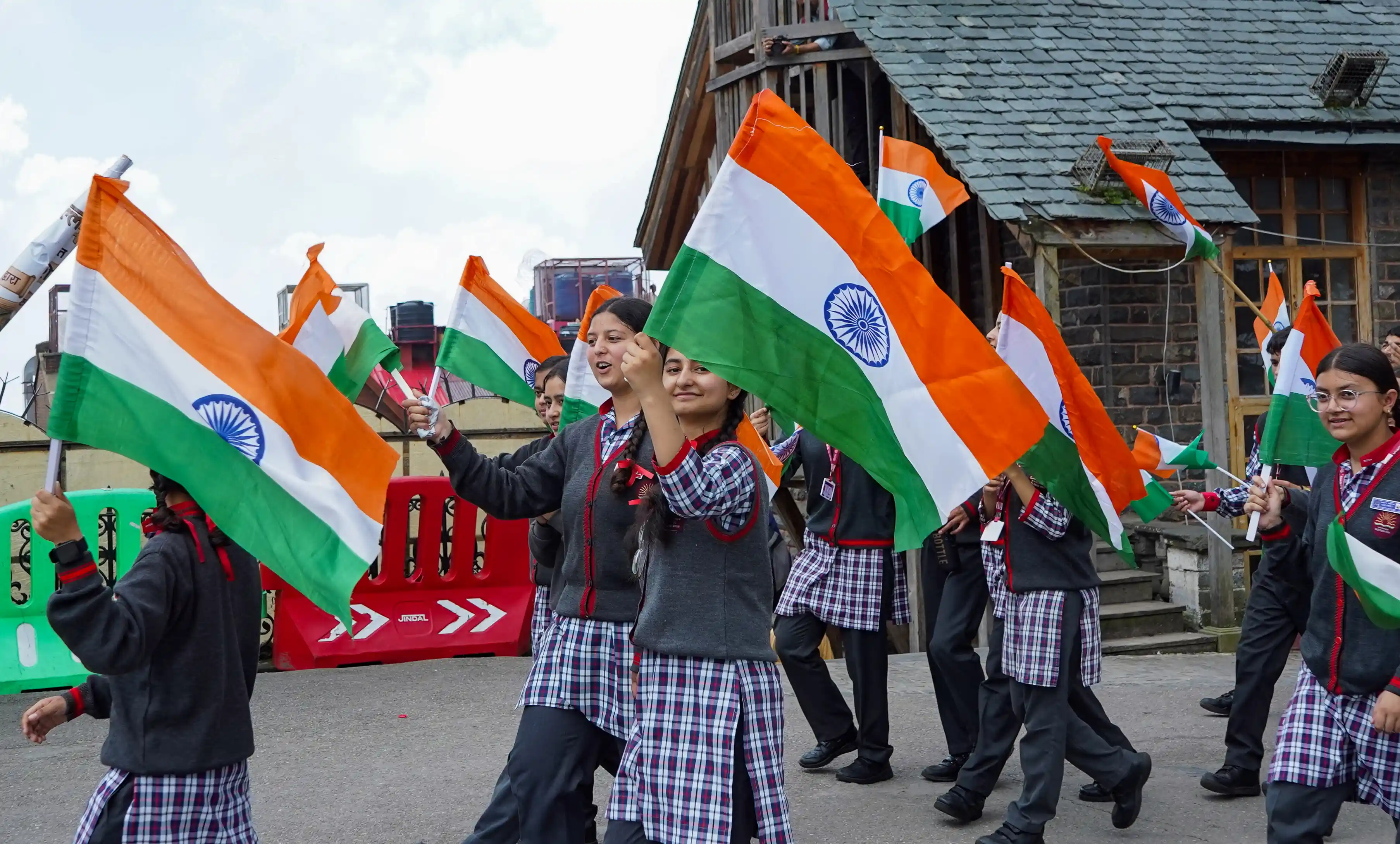
Independence Day is celebrated every year with the unfurling of the tricolor on the ramparts of the Red Fort, and sweets- mostly a couple of bundi laddus- are distributed to school children. There was a time when specially prepared tricolored burfi was part of the treat.
Much before the design of the national flag was finalized, the colors were there- the orange signifying valor, white standing for peace and blending all the colors in the rainbow, underlining unity in diversity, and green suggesting fertility and prosperity. The British banned the tricolor, but patriots found ways to tease the Colonial oppressors.
Sweetmeat makers created Tirangi Burfi with layers of saffron-tinted khoya on top and a green bed of pistachio, sandwiching the white cashew, almond, or plain milk fudge. The clever Halwai who thought of this worked at Sri Ram Bhandar in Varanasi, and the GI tag awarded to this product after independence recognizes his contribution. Other confections were named equally cunningly- Vallabh Paak, Jawahar Laddu (bundi studded with edible gem-like tidbits); how could anyone complain? Interestingly, the first halwai to make Nehru Sondesh was Bhimsen Nag in Kolkata in 1927, when the Indian National Congress was held there. Jawahar Lal hadn’t yet emerged as a popular leader- it was the father who was being honoured!
There were freedom fighters who preferred savouries to sweets. Subhash Chandra Bose, we are told, patronized a teliya/bhaja shop on Elgin Road near his house, run by a Bihari whose successors served bhajiyas free on Netaji’s birthday.
Not all freedom fighters were strictly vegetarian. The revolutionaries who disagreed with Gandhi’s non-violent satyagraha (civil disobedience movement). They adopted many disguises and, at times, worked in eateries specializing in meaty fare. Al Jawahar (next door to Karim in Gali Kebabiyan near Jama Masjid), famous for its ishtoo and qorma, doffed its hat, tongue in cheek, to young Jawaharlal Nehru, whose in-laws resided in Gali Sitaram nearby. According to folklore, Bhagat Singh once duped the CID cops following him by working here.
People have forgotten the food-loving revolutionary Rash Behari Bose, who was one of the conspirators who threw a bomb targeting the Viceroy, Lord Hardinge. A master of disguise, he escaped arrest and finally resurfaced in Japan. He was the man who created the Azad Hind Fauj, which Netaji Subhash Bose later rejuvenated as the INA during the Second World War. The elder Bose married a Japanese lady and spent his last days managing an Indian Curry House, introducing Japan to the authentic taste of India.
The INA stirred Indian souls with its battle marching songs. ‘Qadam Qadam badhaye ja Khushike geet Gaye Ja, Ye zindagi hai qaum ki tu qaum pe lutaye jaa!’ (Sacrifice the life smilingly that belongs to the nation!). Young bandmaster Ram Singh Thakur set the tune for Vande Mataram as well. Vande Mataram traveled well from Bengal to Tamil Nadu. Subrahmanyam Bharati translated it brilliantly, and it inspired many to join the freedom struggle, braving lathis and bullets.
In the early 1930s, Subhadra Kumari Chauhan, a Hindi poetess, wrote “Chamak Uthi Sun sattavan mai wah talwar purani thi,” rekindling memories of the Queen of Jhansi’s brave fight in 1857. Decades before this a patriot friend of Bhagat Singh’s father and his uncle had roused the Sikhs to rebel against unjust colonial laws by his song Pagadi sambal jatta! (Take care of your headgear -save your honour!) Ram Prasad Bismil, awaiting hanging in jail, sang loudly with fellow prisoners: Mai rung de Basanti chola! ( Dye my garb, dear mother, in hue of sacrifice!) Another song very popular with youth during that period was written by another Bismil that dared the British with ‘Dekhna hai jor kitna baju e katil main hai! (let’s test fearlessly how strong the assassin’s sword arm is!)
Mahatma Gandhi led his defiant marches chanting the Ramadhun: Raghupati Raghav Raaja Raam Ishwar Allah Tere Naam, or a 16th-century Vaishnava bhajan composed by Narsi Mehta- Vaishnav Jana to tene kahiye je preet parai jani re! (A true devotee is one who feels the pain of others.)
Youngsters marching in the early morning weren’t deterred by threats. Kids held high the tricolor, singing Jhanda ooncha rahe hamara vijayi vishwa tiranga pyaara!
Patriotic poems and songs were weaponized in many other Indian languages. Film lyricists weren’t to be left behind. Most ironically is the case of the film Roti produced by the British as war propaganda that had the hit song ‘ Dur hato e Duniyawalo Hindustan Hamara Hai!’
Streets and parks turned into battlegrounds. The smells that permeated the atmosphere were a blend of gunpowder, pungent tear gas, blood and sweat. Those who fought for freedom had no time for sweet perfumes. What lingers in memory is the fragrance of faded flower buds that didn’t wait to blossom.