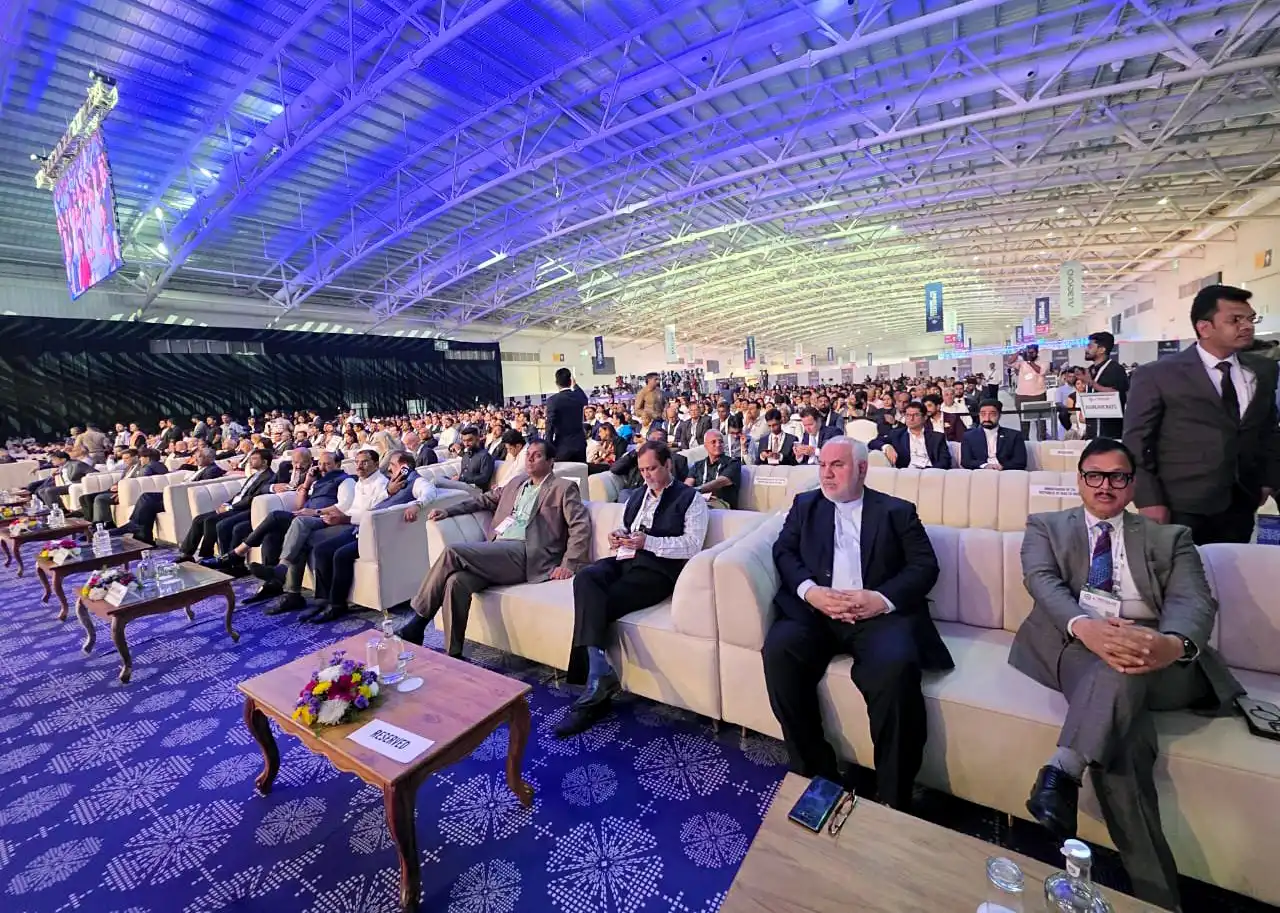
When the 29th Bengaluru Tech Summit opened under the theme “AI & Beyond,” the conversations in the halls of the Bangalore International Exhibition Centre made one thing clear: India is no longer content to remain the world’s back office for software and chip design. Artificial intelligence and semiconductor manufacturing dominated the agenda, signalling a deliberate shift from services-led growth toward building the physical and intellectual foundations of the next technological era.
Karnataka Chief Minister D.K. Shivakumar used the inauguration to position the state as an emerging global hub for AI, deep technology, and semiconductor manufacturing. The numbers he cited were striking. Bengaluru already hosts nearly half of India’s AI and machine-learning talent. The state is home to more than 100 fabless chip companies and accounts for three-fifths of the engineers working in India’s semiconductor capability centres. It contributes roughly one-fifth of the country’s electronics exports. Global companies have committed over ₹23,000 crore in semiconductor research, development, and manufacturing facilities across Bengaluru and Mysuru. Four electronics manufacturing clusters stretching from Dharwad to Mysuru are being prepared to support this expansion.
These are not isolated announcements. They sit alongside concrete institutional steps: plans for India’s first government-driven AI University with a central AI Hub, a Centre of Excellence at IIIT Raichur to extend AI applications into agriculture, healthcare, and small businesses across 13 districts of North Karnataka, the Bengaluru Robotics and AI Innovation Zone (BRAINZ), IISc’s 2D Innovation Hub, and the proposed INFIfab microfabrication centre. Industry sessions reinforced the message. Leaders from the India Electronics and Semiconductor Association, Tata Electronics, and Applied Materials stressed that India must build capabilities across the entire value chain—design, fabrication, equipment, materials, advanced packaging, and testing—rather than relying on any single segment.
Why does this matter so much for India? Semiconductors are the substrate on which modern AI runs. Training large models, deploying inference at scale, powering autonomous systems, and securing critical infrastructure all depend on advanced chips. For decades, India has excelled at chip design and software services while remaining heavily dependent on imports for fabrication and advanced packaging. That model delivered growth and high-value employment, but it left the country exposed to supply-chain disruptions, export controls, and geopolitical leverage. The COVID-era chip shortages and subsequent restrictions on advanced technology transfers to certain countries illustrated the risks of concentration. As AI becomes a general-purpose technology with military, economic, and societal consequences, dependence on foreign fabs is no longer merely a commercial issue; it is a strategic one.
The Bengaluru Tech Summit’s emphasis on manufacturing therefore represents a maturation of India’s technology policy. It aligns with the national push under the India Semiconductor Mission and production-linked incentives, but it is especially significant because Karnataka already possesses the complementary strengths that pure greenfield efforts often lack: a dense cluster of design talent, research institutions such as IISc, a large base of global capability centres, a vibrant startup ecosystem, and established electronics manufacturing infrastructure. Moving design capability into actual fabrication and packaging can create high-multiplier effects—skilled jobs, supplier ecosystems, and the ability to iterate faster on AI-specific hardware such as edge processors, neuromorphic chips, or specialised accelerators.
For the broader economy, success would help rebalance India’s growth story. Software and IT services have been engines of export earnings and middle-class expansion, yet manufacturing has lagged relative to peers. A credible semiconductor and electronics base can absorb more of the country’s engineering graduates, reduce the current-account pressure from electronics imports, and open higher-value export opportunities. It also strengthens the case for India as a preferred “China-plus-one” location at a moment when multinational firms are actively diversifying production.
The signal from Bengaluru is hard to ignore. By placing AI and semiconductor manufacturing at the centre of its flagship technology event, Karnataka is declaring that India’s next phase of technological leadership will be measured not only by the code its engineers write, but by the chips they help produce and the intelligent systems they power. If the investments materialise and the ecosystem deepens, this moment could mark the beginning of a more resilient, strategically autonomous, and higher-value technology economy for India. The world is watching whether the ambition articulated at the summit translates into fabrication lines, trained technicians, and working AI systems built on Indian soil.