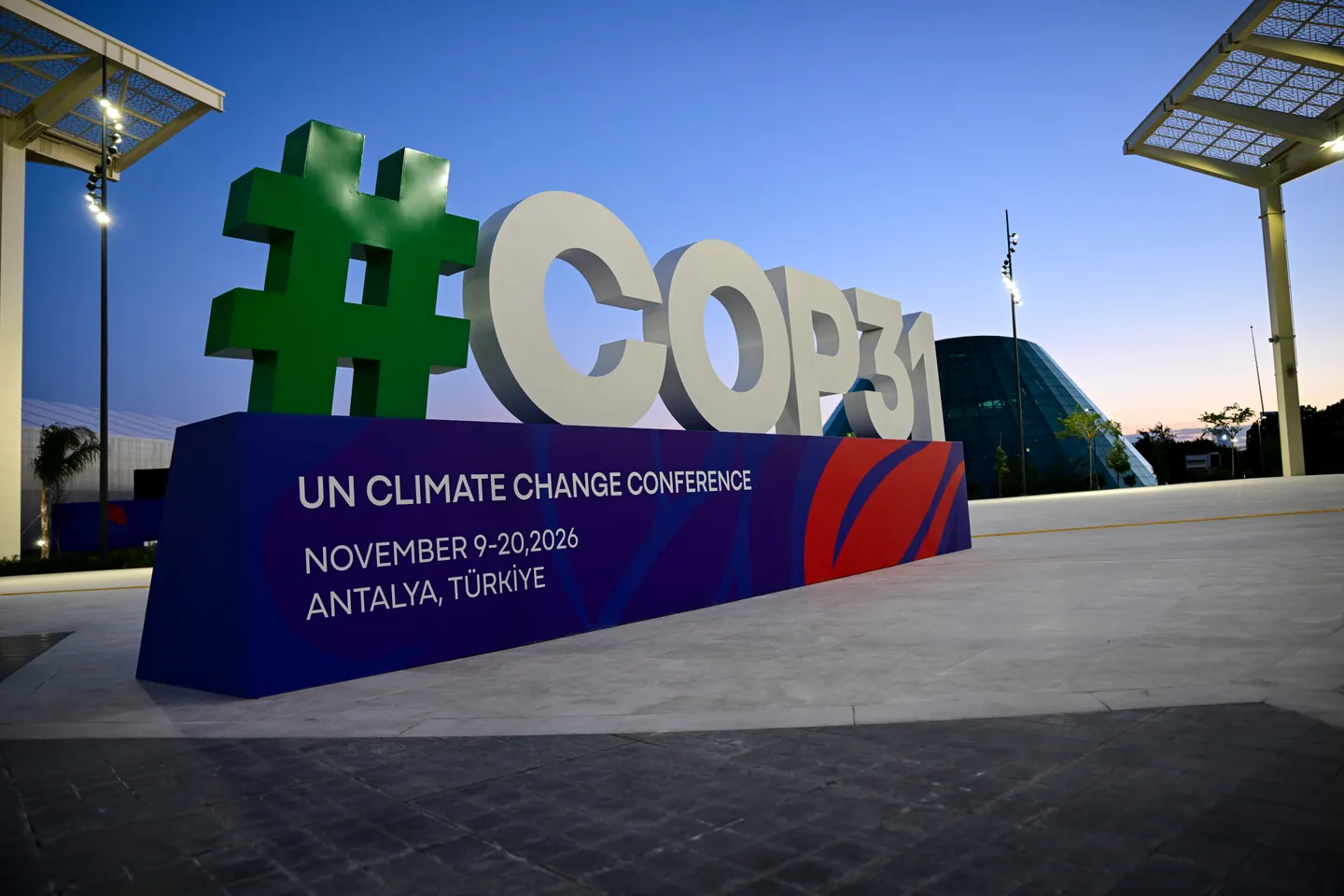
As COP31 opened in Antalya on November 9, the developing countries already had their first result before the plenaries were even over. Putting the Climate Finance Work Programme on the agenda as a standalone item in the opening plenary session, despite objections from the European Union, which stated that Belém created no such track, was precisely what India’s Environment Minister Bhupender Yadav wanted on November 3 in New Delhi. That same plenary session did, however, skip over two proposals from the African Group: one to triple adaptation finance and the other on climate-related trade measures. One week has ended with one win and two losses. The conference concludes on November 20.
But it would be wrong to interpret the agenda to win as a victory. An agenda item is only room for talking. With five negotiating days remaining, India and its G77+China partners should focus less on reiterating principles already laid out in the Paris Agreement and ask for four things that can be included in decisions this week.
The first is the terms of the programme itself. A draft of 104 paragraphs, distributed on November 14, leaves the question of its life with three options: to end in 2027 (COP32), to continue until 2028 (COP33), or to leave the decision for later. The EU, the UK, Canada, Norway and Switzerland believe that the programme’s arrangements were finalised in Belém, and 2027 is the end date. India, representing the Like-Minded Developing Countries, demands fixing of the terms first and a concrete result like an action plan as an end point. The ask should be narrow: the programme should continue until COP33, to ensure the incorporation of its findings in the second Global Stocktake (now launched in Antalya), and should focus on Article 9.1 (public finance provided by developed countries), and not on private capital. Also, the line in the draft on broadening the contributor base should be removed, because this is how the bill will eventually be delivered to Beijing, Riyadh and New Delhi.
The second is a number for adaptation. The agreement in Belém foresaw tripling of adaptation finance by 2035, but without setting the reference level. According to the UN Environment Programme, the need for the developing countries for adaptation financing is about US$305 billion or more per year by 2035, while the current annual international public flows to them amount to US$28-32 billion (for 2024). Three times the 2024 level would not cover even a third of that need. Three times the amount of adaptation finance committed by rich countries in Glasgow for 2025 (roughly US$40 billion) is US$120 billion. The difference between these two baselines is US$25-35 billion per year, which the donors are free to choose from. After nearly 1,500 people died due to a glacial collapse in Nepal in August, the loss and damage fund has so far set aside US$21.6 million to help with recovery. The chair of the African Group has indicated that the demand will now be pushed inside the finance programme. India, having already asked for the reference level, should support making the base year and the dollar figure part of this year’s decision on the Global Goal on Adaptation, and keeping the adaptation indicators voluntary.
The third is trade. The EU’s Carbon Border Adjustment Mechanism entered its definitive phase in January, and Indian exporters of steel and aluminium are already bearing its reporting burden and the pressure on their prices. The fight for inclusion of this item in the agenda is lost for this year; the EU and the UK argue that it belongs in the trade and climate dialogues, which decide nothing. But there is another way in. Parties must define the Just Transition Mechanism agreed in Belém, and all three groups (the African, Arab and LMDCs) have raised unilateral trade measures in those talks. A single paragraph, obliging Mechanism to assess the impact of unilateral trade measures on industries and employment in developing countries, would permanently place the issue within the process. And the same decision should address the proposal of South Africa for creation of a dedicated facility for just transition, which the EU and Japan reject in favour of existing arrangements.
The fourth is harder, because it relates to what the South offers. India has refused a fossil fuel phase-out, has asked to keep out of the negotiated text the pledge of Türkiye to increase the share of electricity in final energy consumption to 35 percent by 2035, and wants adaptation indicators and carbon markets to remain voluntary. All of these positions can be justified. But together they create a delegation which asks for money and refuses everything else. Such delegations go home with sympathy. India has offers to make at almost no cost. In April, India submitted its third Nationally Determined Contribution, promising to cut emissions intensity by 47 percent and to make 60 percent of installed power capacity non-fossil by 2035, and the third phase of the Green Energy Corridor is designed to carry 135 GW of renewable power. Any country building at this pace will achieve most of its electrification goals anyway. It can agree to such language in the cover decision in return for the above finance terms, under the condition of the African Group that the targets should come with means of implementation. Yadav co-chairs with Germany’s Carsten Schneider a ministerial on pre-2030 ambition on November 17, and that’s the table for this trade.
But there is a further reason to bargain. The Global South is not a single bloc in Antalya. More than 80 countriessupported a fossil fuel roadmap in Belém, many of them developing. Nepal and Bhutan have asked for a work programme on mountains, and Solomon Islands pledged US$400,000 to the Green Climate Fund, becoming the first small island developing state to do so. If India is seen as only blocking, it will be easier for the EU to separate the vulnerable states from the large emitters.
No big new sum will come out of this COP. The United States is again not sending its delegation and aid budgets in Europe are shrinking. That’s why the asks should be related to rules: a finance programme that continues until COP33 using public finance only, a reference level and the dollar figure, a paragraph on trade and a facility for just transition. Baku gave the developing world a number, but without the rules, and the past two years showed how little that is worth. Antalya should give the rules.