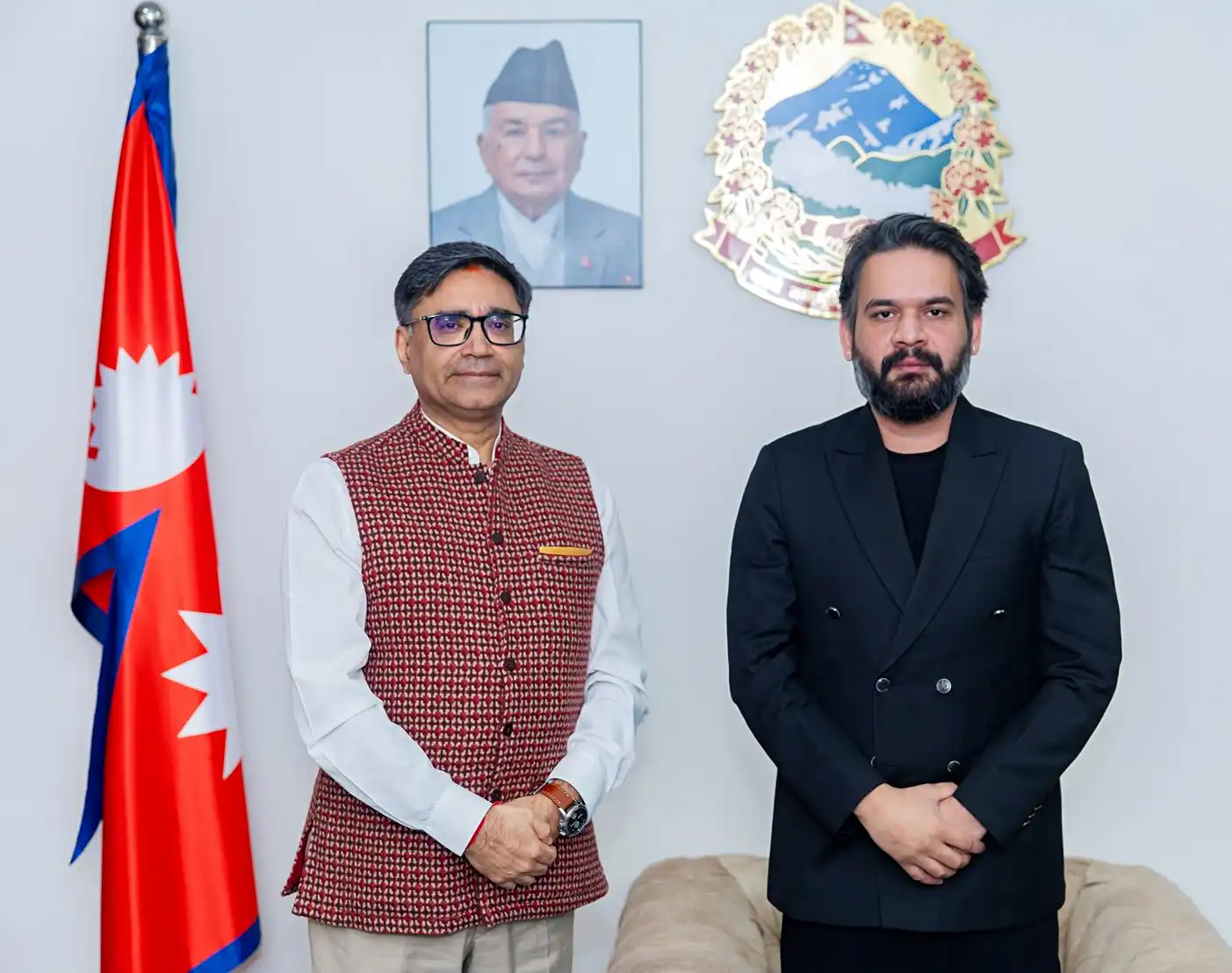
When Nepal’s Prime Minister Balendra “Balen” Shah lands in New Delhi on November 22, 2026, he will not follow the familiar script of Himalayan diplomacy. Previous Nepali prime ministers spent three or four days in India, filling their schedules with ceremonial temple visits, cultural banquets, and broad speeches about age-old ties. Shah, the 35-year-old structural engineer and former Kathmandu mayor who swept into office riding a historic youth-led political wave, has trimmed his maiden bilateral trip down to a brisk, business-like 25 hours.
The message from Kathmandu is clear: the era of ceremonial diplomacy is over. Nepal’s new leadership wants quick, practical results. For New Delhi, this compressed, high-stakes visit is an immediate test of how well India can adapt to a changed neighbourhood- one where old political loyalties have collapsed and a restless, pragmatic generation is now in charge.
The Groundwork: Vikram Misri’s Kathmandu Mission
A trip as tight as 25 hours leaves zero room for last-minute guesswork. Whatever Prime Minister Shah and Prime Minister Narendra Modi announce at Hyderabad House on November 23 had to be negotiated in advance. That is why Indian Foreign Secretary Vikram Misri’s two-day visit to Kathmandu earlier this month, on November 4 and 5, was so crucial.
Misri’s trip was originally supposed to happen in May, but it was delayed due to early friction over diplomatic protocol and lingering unease around the Lipulekh boundary issue. By arriving in Kathmandu two weeks before Shah’s flight to Delhi, Misri broke the ice. His meetings with Nepali officials were focused on clearing roadblocks on stalled Indian-funded projects and hammering out the details of an economic package. In diplomacy, when a prime minister visits for barely a day, the real work happens in the weeks before. Misri’s quiet groundwork ensured that Shah is not coming to Delhi just to talk, but to sign and deliver.
Post-Flood Recovery and the $2 Billion Ask
The most urgent item on Shah’s agenda is written in mud and broken concrete. On August 26 this year, devastating flash floods and landslides tore through the Bhotekoshi and Trishuli river basins, washing away highways, bridges, and vital hydropower infrastructure. Nepali officials estimate that total recovery and reconstruction will cost roughly $4.74 billion.
Ahead of Shah’s arrival, Kathmandu has put forward a proposed $2 billion assistance package from India. This request is split into three parts: $1 billion in soft loans, $500 million in direct grants, and another $500 million specifically earmarked for post-flood reconstruction.
India was quick to respond during the immediate crisis in August, setting up helplines and offering specialized rescue support. Now, Kathmandu wants New Delhi to step up as its primary partner in rebuilding. For India, helping Nepal rebuild its damaged roads and power plants is not just charity; it is self-interest. Many of the damaged highways and river corridors directly link to cross-border trade and hydropower projects that will eventually supply clean electricity to the Indian grid.
Clearing the Skies: The L626 Air Route Trade-Off
Alongside flood recovery, Shah is pushing hard to solve a frustration that has lasted over a decade: international air routes. Nepal has spent massive amounts of money building two new international airports at Bhairahawa and Pokhara. Yet both airports sit largely empty because international flights coming from the West and the Middle East are forced to enter Nepal through a single bottleneck at Simara.
Kathmandu has long asked India to open up cross-border entry points from the west, specifically the Mahendranagar and Bhairahawa corridors, as well as the high-altitude L626 air route. While India previously agreed in principle to low-altitude access on the L626 route, commercial jetliners need higher cruising altitudes to fly safely and save fuel. India has held back due to genuine security concerns around its sensitive air force bases near Gorakhpur.
However, ahead of Shah’s visit, both sides appear to have found a smart, practical middle ground. During recent aviation talks, New Delhi made a counter-offer: India is ready to open up the Bhairahawa route for Nepal if Kathmandu allows international flights heading to and from India’s Bagdogra airport (and near Raxaul) to use eastern Nepali airspace. Kathmandu has signaled it is open to this trade-off. If finalised during Shah’s visit, it will prove that stubborn security deadlocks can be solved through mutual give and take.
Kathmandu’s New Economic Lens: What Nepal Expects Now
To understand how Nepal views India today, one only needs to listen to Nepal’s Finance Minister, Dr. Swarnim Wagle. A Harvard-educated economist, Wagle has been the intellectual driving force behind the new government’s push to turn Nepal into a $100 billion economy.
In his recent statements and visits to New Delhi, Wagle has consistently praised India’s rapid flood rescue assistance, noting that Nepal naturally looks to India first given their geography and deep ties. At the same time, his economic roadmap reveals a sharp shift in how Kathmandu thinks. Nepal is no longer satisfied with surviving on remittances sent home by migrant workers, nor does it want to remain trapped in endless political debates.
Wagle has candidly pointed out that Nepal faces tough challenges- including its graduation from the Least Developed Country (LDC) status this very month, which means losing certain global trade perks. Therefore, Nepal’s new expectation from India is clear: treat us as an economic partner, not a dependent buffer state. Kathmandu wants Indian private investment, smoother cross-border trade without sudden export bans or anti-dumping hurdles, and guaranteed markets for Nepali hydropower. The old habit of playing China against India for political leverage is taking a back seat to cold, hard economic math.
A Trilateral Balancing Act: The Simultaneous China Outreach
At the same time, New Delhi must read the subtle diplomatic signalling happening alongside Shah’s trip. Even as Prime Minister Shah prepares to board his flight to India, a 20-member delegation of lawmakers from his ruling Rastriya Swatantra Party (RSP) led by General Secretary Bipin Kumar Acharya is in China on a 10-day visit at the invitation of the Communist Party of China (CPC). Before their departure on November 15, Shah personally met the departing lawmakers and instructed them to seek clarity from Beijing on stalled infrastructure projects and the reopening of key northern border trade points.
Far from being a hostile move against New Delhi, this parallel outreach reveals how Kathmandu’s new leadership manages its geography. By keeping his own official visit focused on India while sending a party-level team to Beijing, Shah is practicing a transparent, non-aligned balancing act- reassuring China that Nepal remains open to economic cooperation while signalling to India that New Delhi remains his first and foremost diplomatic priority.
Therefore, India should understand this- a confident Nepal that engages with multiple partners is not necessarily a less reliable partner. It may be a more stable and self-respecting one.
Tapping the Youth: Investing in the Next Three Decades
If India wants its relationship with Nepal to remain strong over the next thirty years, it must look beyond government ministries and connect directly with Nepal’s youth. Balen Shah’s rise to power was fueled by “Gen Z” voters, the young Nepalis who are tired of corruption, lack of local jobs, political and economic stagnation.
For decades, Indian diplomacy in Nepal relied on cultivating relationships with a small circle of veteran politicians. Those leaders are now sidelined or out of power. Today’s young Nepalis judge India not by historical speeches, but by real opportunities:
- Digital and Startup Bridges: India’s booming tech and digital payment ecosystem (like UPI, which is already making inroads in Nepal) should be expanded into joint startup incubators, coding bootcamps, and cross-border venture funds for young Nepali entrepreneurs.
- Education and Skill-Building: Instead of just traditional scholarships, India can partner with Nepali institutions to set up vocational training centers in green energy, artificial intelligence, and disaster-resilient engineering.
- Sports and Culture: From cricket to music and cinema, young people across both countries already share a vibrant cultural space. Formalizing youth exchange programs and sports leagues will build trust far faster than diplomatic communiqués.
India’s Imperative: Stabilising the Neighbourhood Practically
Across South Asia, from Dhaka to Colombo and Malé, political turbulence has tested India’s “Neighbourhood First” policy. Having a stable, prosperous, and friendly Nepal is vital for India’s own national security and the economic growth of northern Indian states like Uttar Pradesh and Bihar.
New Delhi does not need grand, expensive slogans to keep the neighbourhood steady. It needs three practical, doable steps:
- Speed Over Size: India’s biggest weakness in Nepal has always been slow project delivery. Completing one highway, one railway link (like the Janakpur–Ayodhya line), or one transmission line on time earns more goodwill than promising ten mega-projects that sit unfinished for a decade.
- Depoliticise Water and Energy: Floods and rivers do not respect borders. India and Nepal need permanent, joint technical teams for early flood warnings and river management so that monsoon disasters stop turning into annual blame games.
- Respect the New Tone: Leaders like Balen Shah and Swarnim Wagle represent a confident, middle-class Nepal. Engaging them as equals and avoiding any hint of “big brother” lecturing will naturally pull Kathmandu closer to New Delhi.
Conclusion
Balen Shah’s 25-hour sprint through New Delhi may be brief on the clock, but it is heavy with consequence. Nepal’s young Prime Minister is arriving with a clear checklist: flood recovery funds, open skies for Nepal’s airports, and friction-free economic growth. If India meets this pragmatic energy with swift, tangible decisions, those 25 hours could reset India-Nepal relations for a generation to come.
India must show generosity and strategic patience. Nepal must show clarity, continuity and a willingness to engage seriously on difficult issues. Both countries should resist the temptation to reduce a complex relationship to slogans, suspicions or short-term political messaging.
The world is becoming more uncertain, more fragmented and more competitive. In such a world, small and medium-sized economies cannot afford isolation. They need dependable partners, open trade routes, resilient infrastructure and regional institutions that work. India and Nepal have the geography, history and institutional foundation to build such a partnership.