
The gatherings in Manila in mid-November 2026 were more than routine diplomatic choreography. Hosting the 49th ASEAN Summit alongside the first Quad leaders’ meeting in over two years, the Philippine capital became a temporary clearing house for the interlocking questions of digital integration, supply-chain resilience, maritime domain awareness and technological trust that now define the wider Indo-Pacific and, by extension, the global economy.
ASEAN’s signature achievement was the signing of the Digital Economy Framework Agreement (DEFA). As the world’s first region-wide, legally binding digital economy pact covering nearly 680 million people, DEFA establishes common rules on cross-border data flows, electronic payments, digital trade facilitation, cybersecurity and artificial intelligence. Officials project that its implementation could help lift the bloc’s digital economy toward $2 trillion by 2030. Complementary declarations on AI-enabled micro, small and medium enterprise growth, forest and climate cooperation, and the region’s first space cooperation framework rounded out a dense package of more than 100 outcome documents. These steps matter far beyond Southeast Asia. In an era when digital rules, data standards and payment systems are becoming instruments of economic statecraft, a coherent ASEAN framework creates a larger, more interoperable market that global firms and investors will have to navigate. It also offers a potential model—or competitive pressure—for other regions still fragmented on digital governance.
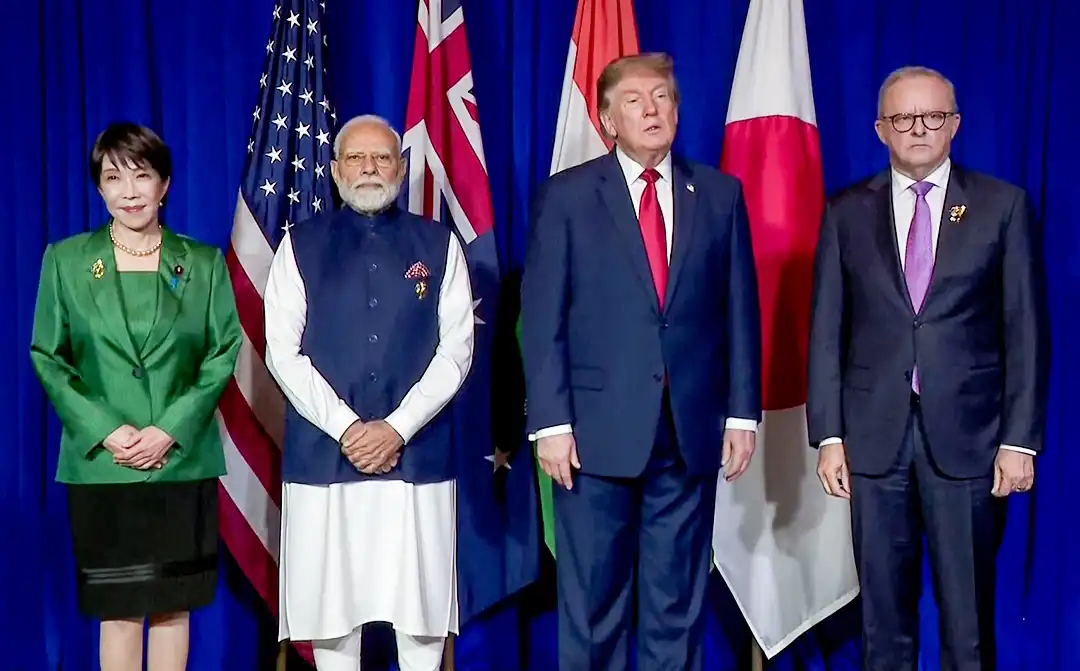
The Quad leaders’ summit, held on the margins, reinforced the security and technology underpinnings of that economic vision. Meeting for the first time under the second Trump administration and on the tenth anniversary of the Free and Open Indo-Pacific concept, the four leaders announced an inaugural Business Leaders’ Forum, an Indo-Pacific Maritime Surveillance Collaboration that will see joint patrol-aircraft exercises in 2027, and a Super Intelligence Accelerator intended to expand trusted access to advanced AI capabilities across the region. They flagged concerns over economic coercion through arbitrary export restrictions and reaffirmed support for ASEAN centrality. These moves sit alongside broader discussions of critical-minerals supply chains and maritime security for commercial shipping—issues that affect energy flows, manufacturing inputs and trade routes linking the Indian Ocean, South China Sea and Western Pacific.
What made the week globally consequential was the simultaneous treatment of economic architecture and strategic hedging. DEFA advances the rules and connectivity needed for deeper trade and investment; the Quad initiatives address the vulnerabilities—disrupted sea lanes, concentrated technology supply chains, contested maritime domains—that can undermine those gains. The timing amplified the signal: the meetings occurred just before a high-profile trilateral engagement involving the United States, China and Russia on the sidelines of APEC, underscoring that major powers are calibrating multiple channels at once.
India’s practical contributions illustrated how a major non-ASEAN partner can help knit these strands together without seeking to rewrite the regional script. At the 23rd ASEAN-India Summit, proposals for free e-tourist visas, a long-term maritime cooperation plan covering connectivity, domain awareness and seafarer safety, and collaboration on critical minerals and mining addressed both the human and material dimensions of trade. Nuclear-energy technical exchanges, cyber-forensics training and a space hackathon pointed to technology and skills partnerships that complement DEFA’s digital ambitions. The decision that India would host the first Quad Business Leaders’ Forum in Mumbai in early 2027 places a major commercial and financial centre at the centre of efforts to translate high-level coordination into concrete private-sector deals across the four economies. Alignment language linking ASEAN’s Community Vision 2045 with India’s Viksit Bharat 2047 further signalled long-term economic complementarity rather than zero-sum competition. These steps—facilitating people movement, securing sea lanes that carry energy and goods, diversifying critical-mineral pathways, and anchoring business dialogue—quietly strengthen the connective tissue of regional trade and investment at a moment when resilience is a shared priority.
Manila did not rewrite the Indo-Pacific order. It did, however, produce tangible instruments—DEFA’s digital framework, maritime collaboration mechanisms, business-to-business platforms and targeted supply-chain initiatives—that will influence how goods, data, capital and technology move for years to come. That combination of economic rule-making and strategic risk mitigation is what made the week more than the sum of its summits.

