
The global scramble for critical minerals has entered a decisive phase, driven by the inescapable demands of the green energy transition and advanced technological manufacturing. As the global economy pivots toward electric vehicles, battery storage systems, and defense innovations, Africa once again finds itself at the structural core of geopolitical competition. Yet, for African policymakers and economic strategists, the historical model of raw resource extraction—shipping raw dirt across oceans to fuel industrial surges elsewhere—is no longer acceptable. In this context, the emerging trilateral investment alignment between India and Japan presents a compelling alternative to single-source dependencies, offering Africa a rare opportunity to dictate the terms of its own industrial transformation.
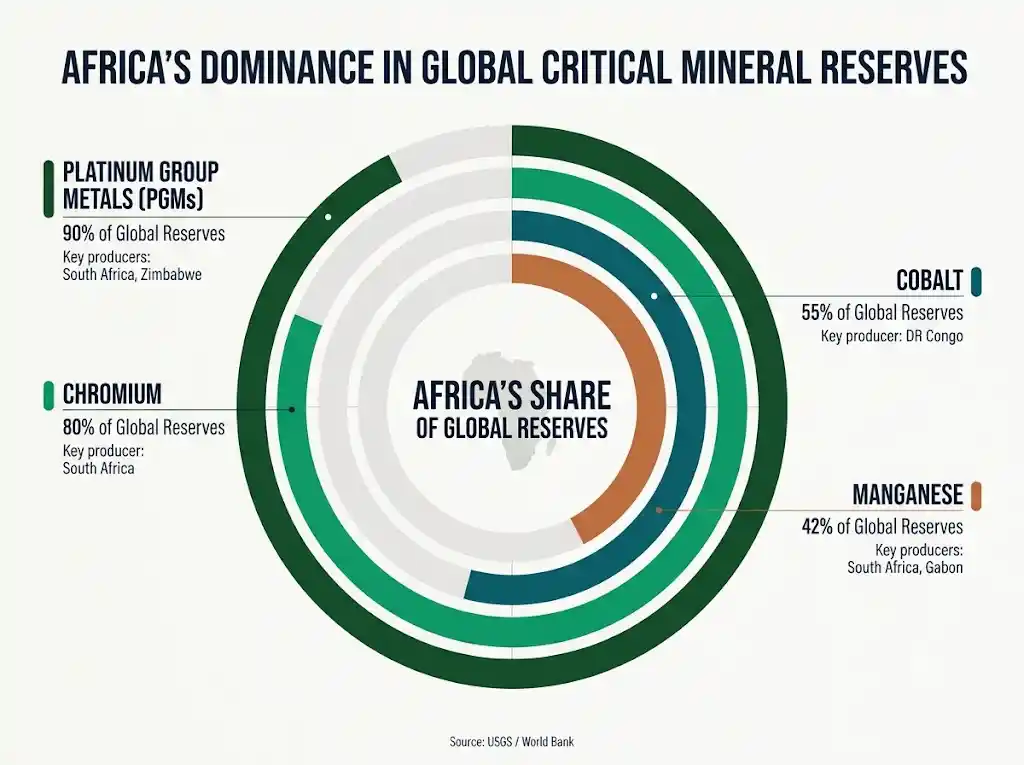
The geological weight of Africa’s subterranean assets is impossible to overstate. The continent holds roughly 30 percent of the world’s critical mineral reserves, including 55 percent of global cobalt supply, 47 percent of its manganese, and over 21 percent of its natural graphite. For decades, these critical commodities flowed outward as unrefined raw materials, leaving behind depleted ecosystems and meager local revenue. However, a strategic convergence between New Delhi and Tokyo is signaling a structural shift. By combining India’s growing industrial capacity and processing ambitions with Japan’s deep capital reserves and cutting-edge technology, this partnership introduces a collaborative investment model aligned with Africa’s modern economic imperatives.
The economic alignment underpinning the India-Japan focus on African minerals is complementary. Japan, operating through key institutions like the Japan Organization for Metals and Energy Security (JOGMEC) and major trading houses, brings world-class metallurgical technology and low-cost capital required for multi-decade infrastructure projects. Meanwhile, India brings massive domestic demand, a rapidly expanding manufacturing base, and strategic programs like Khanij Bidesh India Limited (KABIL), which has earmarked upwards of $4 billion USD in strategic overseas investment capital targeting critical mineral security.
Together, New Delhi and Tokyo are offering a joint framework that creates genuine space for localized value addition in Africa. Unlike traditional resource-seeking investors that prefer importing unrefined ores for domestic processing, the India-Japan paradigm—rooted in joint platforms like the Asia-Africa Growth Corridor—is increasingly structured to support local processing infrastructure. India’s experience in developing scalable, cost-effective industrial setups complements Japan’s risk mitigation strategies, creating a viable path for establishing first-stage beneficiation plants directly at the source.
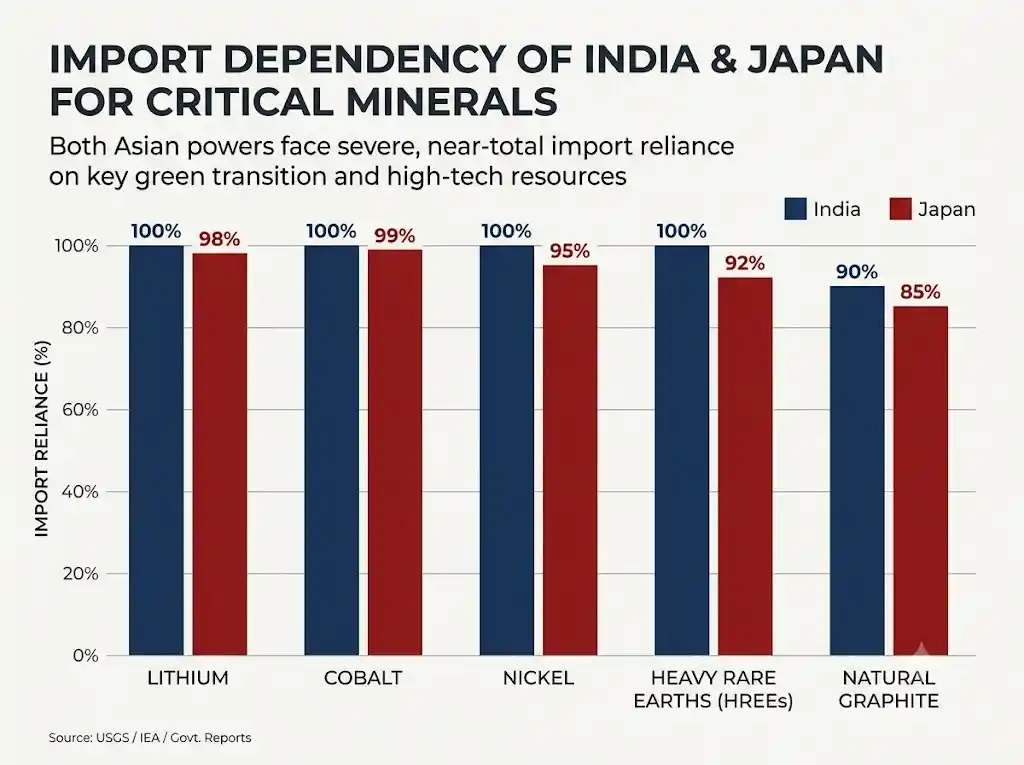
For African nations, this shift is not merely a diplomatic preference; it is an existential economic policy. The era of unhindered raw export is rapidly closing. Major producers across the continent, including the Democratic Republic of Congo, Namibia, and Zimbabwe, have instituted targeted restrictions and outright bans on the export of raw lithium and unprocessed ores. The policy message from African capitals is unambiguous: foreign powers seeking access to critical mineral wealth must invest in local processing and value-chain development.
Furthermore, the joint presence of Indian and Japanese capital provides African governments with critical strategic leverage. By diversifying partnership options, African nations can negotiate more equitable contract terms, avoid opaque debt arrangements, and prevent over-reliance on single foreign actors. However, capital injection alone will not guarantee economic transformation. The ultimate responsibility rests with African leaders to ensure that these trilateral investments are anchored by binding commitments to local capacity building and technology transfer.
To maximize the benefit of this emerging alliance, African governments must ensure that critical mineral investments extend beyond mine-site infrastructure. Deals must mandate investment in clean energy grids, regional transport networks, and local workforce development capable of sustaining downstream manufacturing. The true value lies not merely in capturing the USD export revenue of raw ore, but in capturing the exponentially higher value of localized refining, battery component manufacturing, and industrial integration. India and Japan are committing substantial resources to Africa’s mineral future; African statecraft must now ensure this investment serves as an engine for permanent, self-sustaining economic sovereignty.