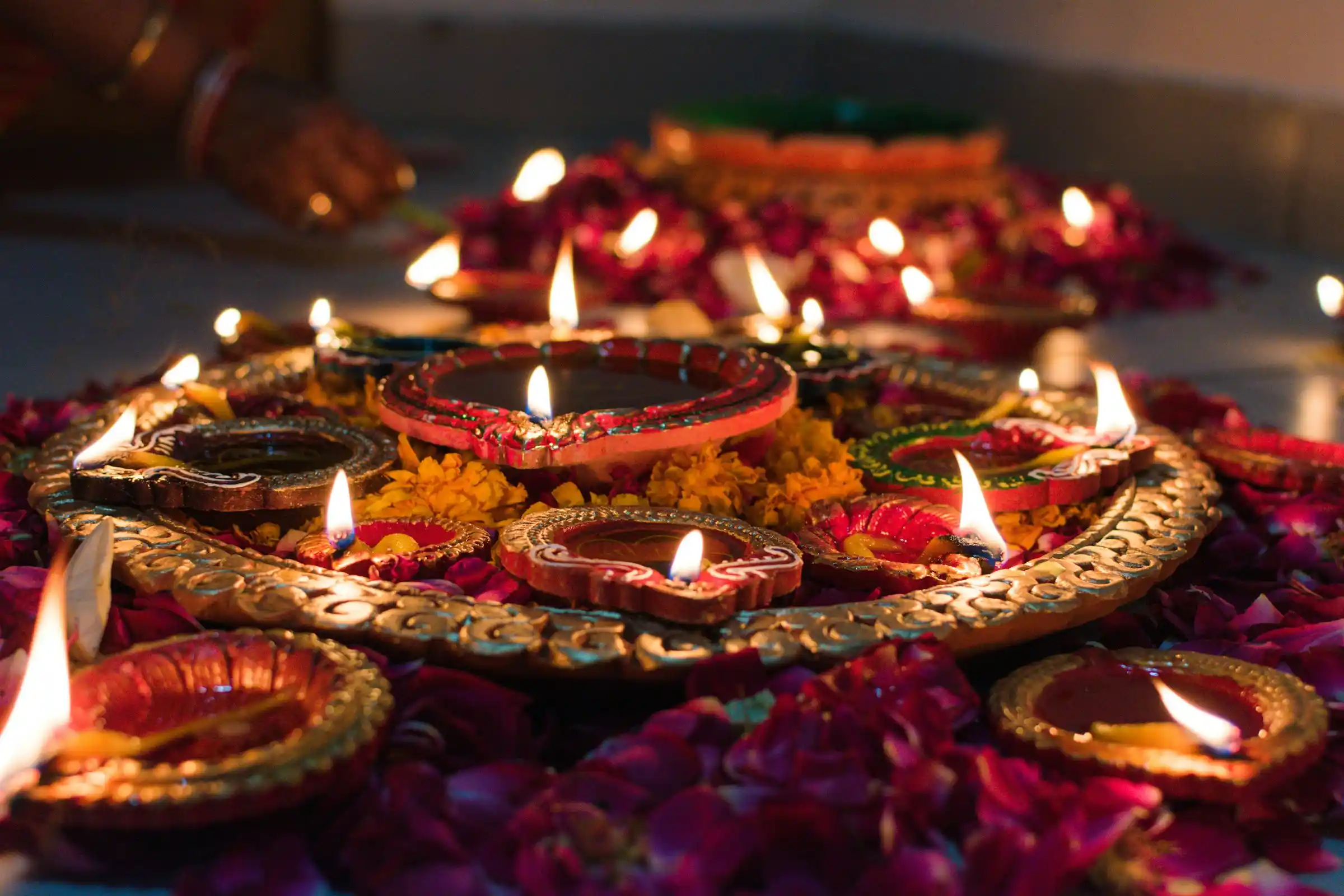
Navaratri literally translates as ‘nine nights’. The word also evokes the spirit of renewal.
In Bengal, the festivities begin on Mahalaya, the first day of Sharadiya Navaratri, with an electrifying invocation saluting the primal energy that brings inert matter (representing the male principle) to life, manifesting itself as the all-powerful Mother Goddess:
“Ya Devi Sarvabhuteshu Shaktirupena Samsthita, Namastasyai Namastasyai Namastasyai Namo Namah!”
The days that follow are dedicated to nine personifications of Devi, each with a distinct attribute corresponding to the sattvik, rajasik and tamasik orientations—the dominant traits displayed by individuals and inherent properties of substances. These are not in conflict but complement one another.
Navaratri is marked in the Hindu calendar as Durga Puja (Pujo), which has been recognised by UNESCO as an Intangible Cultural Heritage of Humanity.
During this time, the city of Kolkata is abuzz with infectious excitement. Brightly painted pandals (stage platforms), fabricated with bamboo poles, jute drapes, clay and other materials, create a fairytale landscape. Craftspersons compete with their peers to replicate famous landmarks—national and international. Some create three-dimensional replicas of a screenshot from a hit film or a technological marvel.
Revellers indulge in leisurely pandal-hopping, savouring the traditional bhog of khichuri and labda (mixed vegetables), along with a mind-boggling spread of street foods—savoury and sweet—like kobiraji cutlets, kathi rolls, luchi-alur dom, sondesh and roshogolla. Not all the fare is vegetarian. Waves of sandalwood, camphor, jasmine and khus linger long after those wearing the perfumes have moved on.
In Gujarat, this is the time for Garba and Dandiya Raas. Both are vibrant forms of folk dance performed by colourfully attired youngsters. Dancers form a large circle around a brilliantly painted clay pot that symbolises the womb (garbh). The atmosphere is permeated with myriad fragrances—rose, sandalwood and jasmine—wafting with the thin lines of smoke rising from burning agarbattis (incense sticks).
Dandiya derives its name from the colourful small sticks that are rhythmically struck in beautifully choreographed performances. It is a joyous re-enactment of the frolics of adolescent Krishna with his cowherd and milkmaid playmates. It is sad that this innocent, inclusive merrymaking has come under the perverted glare of moral policemen. Puritanical elders disapprove of improvisations like Disco Dandiya, while vigilantes lurk, threatening non-Hindu ‘intruders’.
Gujarat has a very large vegetarian population, so snacking before and after the fun and games revolves around dhokla, khandvi, ganthia, sev, fafda-jalebi and ice cream.
In Karnataka—the erstwhile princely state of Mysore in southern India—Navaratri commemorates the nine-day-long battle that the fierce Goddess Chandi waged to vanquish the demon Mahishasura. Beautiful compositions in Raga Adana narrate her valorous feat:
“Khappar Kar Dharini, Asur Sanharini, Mata Kalike!”
In Uttar Pradesh and Bihar, Navaratri has, for countless generations, been the time to perform Ramlila—the dramatic retelling of the story of Sri Ram, the prince of Ayodhya, who gladly accepted exile in the forest, enabling his father to keep his word given to one of his wives. It recounts the kidnapping of his wife Sita and his war against Ravan, the demon king of Lanka.
For hundreds of years, Ramlila has provided entertainment to the rural population. Performances on makeshift stages blend many elements—the recital of verses from the Ramcharitmanas, interspersed with songs comprising compositions in classical ragas, and dialogues delivered in the melodramatic style of Parsi theatre.
Itinerant troupes of professional actors, known as jatra, toured the countryside in Bengal, while drama companies or natak mandalis did the same in Maharashtra before the advent of cinema and silent films. In countless small towns, amateur actors specialised in specific roles.
Navaratri celebrations traditionally brought the entire community together. Those who had no aptitude or inclination for acting, music or backstage support activities—make-up, prompting or props—set up food stalls and kiosks to sell curios and souvenirs. Chaat, jalebi, laddoo and burfi drew hordes from the audience.
No delicate fragrances here. Smells of sweat and tobacco mingle with fumes of country liquor gulped in a hurry. Cheap perfumes are hastily sprayed to mask the traces of substance abuse.
Many of us are confused by the emphasis on fasting during Navaratri. Actually, Navaratri combines voluntary abstinence—to detoxify the body and cleanse the deep recesses of the cluttered mind—with epicurean enjoyment, albeit in small portions of forgotten delicacies.
The Sanskrit word for dream, swapna, implies retreating within the self. Our wise ancestors were well aware that a break from routine lasting more than a week was imperative every quarter of the year to rejuvenate.
Life would be unbearable without the relief that night brings, with the promise of sleep, perchance to dream. The fatigued body and mind need rest and rejuvenation. Caught in the cross-currents of life, we tend to forget this.
Navaratri is the traditional reminder that we do so at our peril.