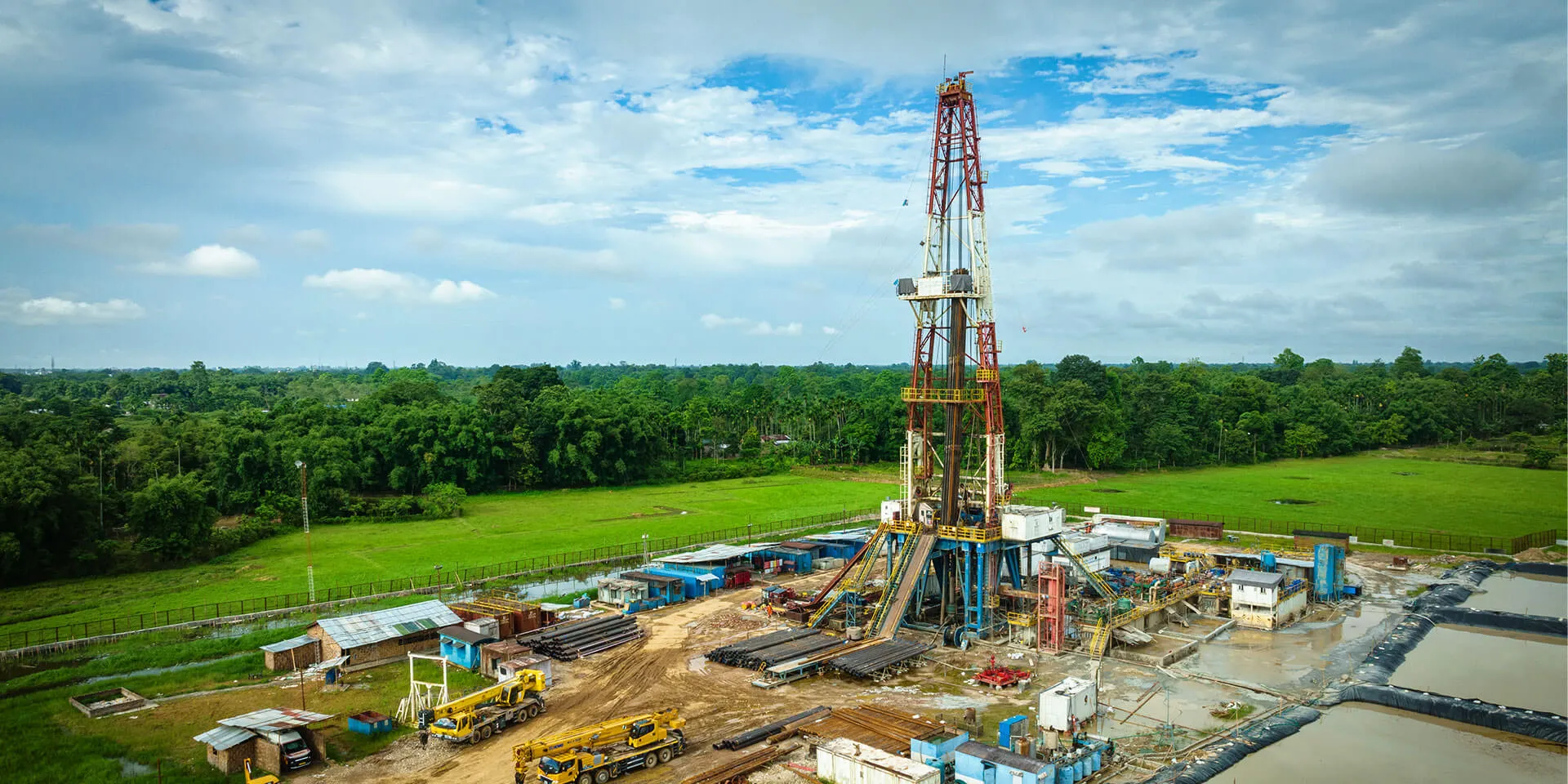
On a wall map of Indian petroleum history, one pin sits earlier and darker than all the rest: Digboi, in upper Assam, where the country’s first oil well was drilled in 1889, decades before the rest of India even began looking underground for fuel. More than 130 years later, Assam remains India’s oldest continuously producing hydrocarbon basin — and by several official reckonings, its single largest natural gas-producing state. That history is precisely why the Assam Hydrocarbon Exploration, Production and Upstream Ecosystem Development Policy, 2026, notified this month by the state government, deserves attention well beyond Guwahati and Dispur. It is not a headline-grabbing document. It contains no new oilfields, no dramatic royalty giveaway, no nationalization or privatization drama. What it does contain is something rarer in Indian policy-making: a serious, procedurally disciplined attempt by a state government to make itself useful to a sector it does not control.
That distinction matters, and the Policy is unusually candid about it. Petroleum in India is a Union subject. Exploration licenses, production-sharing and revenue-sharing contracts, royalty rates, marketing freedom — all of it flows from Central law and Central contracts with companies like Oil India Limited and ONGC, both headquartered or heavily rooted in Assam. A state government has no power to sweeten a contract, waive a royalty, or fast-track a well permit issued in Delhi. What Assam has done instead is legislate around the edges of that constraint — and the edges, it turns out, are where a great deal of value has been quietly leaking out of the system for decades.
Consider the numbers that make Assam’s hydrocarbon economy distinctive within India. The Northeast, and Assam in particular, is estimated to hold a substantial share of India’s onshore conventional and unconventional hydrocarbon potential — coal-bed methane, shale gas, tight oil — much of it undeveloped not because the geology is poor but because the state-level friction around land, right-of-way, environmental clearance coordination, and infrastructure has historically been high. India today imports roughly 85 percent of its crude oil requirement, a dependence that successive governments across party lines have identified as a strategic vulnerability. Every barrel produced domestically, especially from a basin with a century of proven geology and existing pipeline and refining infrastructure, is worth disproportionately more to national energy security than the price of crude alone would suggest. Assam’s new policy is built almost entirely around removing the State-side reasons that the barrel doesn’t get produced faster.
The Policy’s most substantial innovation is institutional rather than fiscal: a single-window Hydrocarbon Facilitation Cell backed by a Nodal Agency and a Sanctioning Committee, with hard service standards — applications acknowledged within three working days, completeness checks within fifteen, an overall State-side facilitation period capped at 120 to 180 days. In a sector where a single land-access dispute or an unresolved right-of-way permission can stall a drilling programme for a year, that kind of bureaucratic choreography is not a footnote; it is the policy. Notably, the drafters resisted the temptation to promise “deemed approvals” as a cure-all — the Policy explicitly withholds deemed approval from environmental, forest, safety, and tribal-rights matters, and defaults instead to escalation. That is a small but telling detail: it suggests a policy written by people who understood that regulatory shortcuts around environmental and tribal safeguards create more litigation than they save in time, particularly sensitive terrain in a state with significant autonomous council areas under the Sixth Schedule.
The fiscal architecture is similarly careful rather than lavish. Reimbursement of embedded State GST, a royalty rebate capped at 20 percent of royalty actually paid — payable only after the Center has been paid in full — stamp duty and electricity duty relief, and a modest per-employee hiring incentive are all designed to reward genuinely incremental investment and production, not to subsidize business as usual. The Policy repeatedly, almost obsessively, ring-fences these benefits to “new upstream projects” or “approved expansions” meeting a 25 percent fresh-capital threshold and a 10 percent production increase — explicitly excluding routine maintenance, workovers, and reservoir management from qualifying. This is fiscal conservatism dressed as investor facilitation, and it is the right instinct: Assam’s finances cannot and should not underwrite production that would have happened anyway.
For the Northeast specifically, the ecosystem provisions may matter more in the long run than anything touching crude barrels. Chapters on oilfield services, equipment fabrication, MSME vendor development, skilling partnerships with technical institutes, and a Hydrocarbon District Development Fund for producing districts point toward a longer ambition: converting a century of extraction into a durable, diversified regional economy rather than a resource enclave. The Northeast has watched resource booms elsewhere in India — coal in Jharkhand, bauxite in Odisha — enrich distant balance sheets while leaving local infrastructure and employment thin. A policy that conditions state facilitation on local procurement statements, vendor directories, and workforce forecasts is at least trying to write a different script, even if enforcement will be the real test.
None of this guarantees success. Operational Guidelines — the actual mechanics of eligibility, verification, and claims — are still to be notified, and policies of this kind live or die in their implementation, not their preambles. Land acquisition in a state with dense settlement, tea-garden grants, and Sixth Schedule areas remains genuinely hard, and no single-window portal dissolves that difficulty by decree. Nor does the Policy alter the deeper structural fact that Assam captures only a fraction of the value its hydrocarbons generate, since royalty rates, contract terms, and Central revenue shares remain entirely outside its reach.
But judged against a more modest and more honest standard — can a state government meaningfully improve the odds that its own oldest industrial asset gets developed faster, cleaner, and with more local benefit — the Assam Hydrocarbon Policy, 2026 is a credible attempt. In a country still overwhelmingly dependent on imported crude, and in a region still waiting for its resource wealth to translate into shared prosperity, that combination of energy-security logic and regional-development intent is worth more attention than a policy document usually gets.