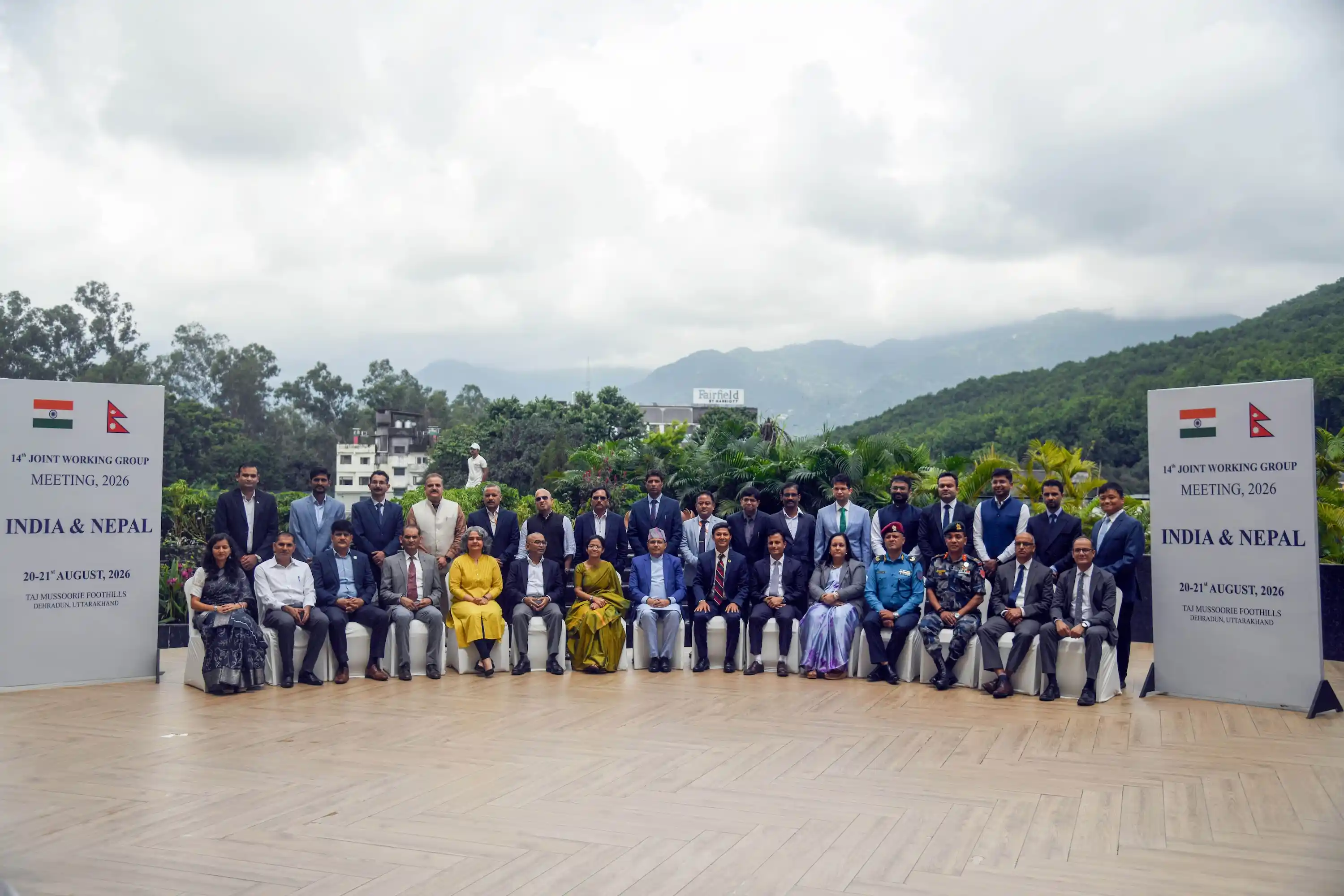
The relationship between India and Nepal has long been described through the lens of Roti-Beti; a civilizational bond of open borders, shared cultural heritage, and deep family ties. Yet, across South Asia’s shifting geopolitical landscape and strategic alliance-making, traditional sentiment alone is no longer enough, as open borders now face significant pressures.
Under the leadership of Balendra “Balen” Shah, Kathmandu has entered a dynamic political chapter. It faces the active decision to align with New Delhi’s progressives on humanitarian and developmental footprint, from post-disaster aid to high-tech capacity building, versus coercive power’s sophisticated ideological and economic force designed to reshape Nepal’s strategic posture.
India’s engagement with Nepal is quietly shifting from episodic aid and rhetoric to a dense humanitarian, developmental, and institutional partnership.
Defence as social capital
In an era of competing external influences, Indian Army General Dhiraj Seth’s recent visit to Nepal underlined how deeply India-Nepal defence ties are woven into society. The General’s receiving of the honorary rank of General in the Nepali Army from Nepal’s President Ram Chandra Paudel, laying of a wreath at Tundikhel, addressing student officers in Shivapuri and presiding over an ex‑servicemen rally in Pokhara where “Veer Naris” or war widows were decorated; created a social constituency for India-Nepal security cooperation that cannot be replicated by delegation visit’s or carefully choreographed photo‑operations.
The visit centred on expanding bilateral defence cooperation, boosting disaster preparedness, and transferring advanced medico-humanitarian equipment’s. It ensured that one of the world’s most storied cross-border military traditions adapts smoothly to modern service frameworks.
Modern Commerce: Startups and innovation as neighbourhood policy
Most recently, the India-Nepal startup story is one of the least‑noticed but most strategically significant strands of the relationship. The India-Nepal Startup Partnership Network (IN-SPAN) have linked young Nepali entrepreneurs directly with top-tier Indian tech incubators like IIT Madras upgrading the citizen’s relationship past traditional aid into co-innovation.
Designed as a self‑sustaining ecosystem, IN‑SPAN’s two cohorts have already supported nearly 50 Nepali startups in fields ranging from cybersecurity and ed‑tech to clean tech, aggrotech and climate tech. This engagement is giving young Nepalis tools to build their own companies and plug into India’s huge market and talent pool.
Pillars of Ongoing Bilateral Momentum
Beyond high-level diplomatic diplomacy, India continues to deepen daily structural cooperation across grassroots development, shared civilization, clean energy, and modern trade logistics. These tangibles highlight how bilateral ties are actively adapting to regional needs:
- High Impact Community Development Projects (HICDP’s): Recent reinforcements include eight new projects, MoUs worth approximately NPR 803 million across education, health, and agriculture; expanding a nationwide portfolio that exceeds 600 initiatives as vital physical infrastructure. As part of essentials-1,000 ambulances and hundreds of school buses across all seven provinces.
- Shared Spiritual and Civilizational Heritage: Recent institutional steps such as academic collaborations between Uttarakhand Sanskrit University and Nepal Sanskrit University and joint resolutions from the Nepal-India International Sanskrit Conclave that treats Sanskrit and Vedic knowledge as a collective civilizational asset, anchoring modern ties in ancient philosophical roots.
- Border Electricity Trade and Hydropower Integration: Cross-border energy cooperation has evolved into a strategic green corridor, with Nepal’s wet-season power exports to India generating record revenues and new 400 kV transmission lines (such as Inaruwa-New Purnea and Lamki-Bareilly) underway; facilitating sub-regional power trading with third countries like Bangladesh.
- Modernized Transit and Trade Logistics: The operationalization of the amended Protocol to the India-Nepal Treaty of Transit has enabled all types of containerized and bulk rail cargo to move directly from Kolkata and Visakhapatnam ports to key border terminals like the Biratnagar ICP and Nautanwa (Sunauli); significantly reducing transit and freight logistics costs for Nepali businesses.
Why is there a rift in the relationship?
Despite deep civilizational and people‑to‑people ties, India-Nepal relations are strained by a mix of resource and geopolitical frictions that keep resurfacing in public discourse. The open border, symbol of “Roti‑Beti ka Rishta,” is now increasingly seen as a channel for crime and insecurity; water and hydropower projects meant to bind the two economies have become sites of disagreement over benefits and costs; and Nepal’s balancing act between India and others injects a strategic uncertainty on bilateral negotiations.
The porous frontier has become a source of instability that sees large‑scale drug trafficking, arms and human smuggling, illegal movement of third‑country nationals, and cross‑border cyber frauds. Infrastructurally, the long‑stalled Pancheshwar Multipurpose Project and unresolved Mahakali Treaty issues highlight different positions on cost‑sharing, water accounting and benefit distribution.
These technical disputes are increasingly amplified by geopolitics and domestic politics. Prime Minister Balen Shah’s recent shift to one‑on‑one meetings with Indian and Chinese envoys in August signals a sovereign, non-aligned foreign policy, but also keeps each nation alert to a possible tilt. Sensitive issues like Tibet and border disputes, along with nationalist narratives over Kalapani-Lipulekh, the one‑rupee coin map, and border infrastructure, make compromise politically costly. This infuses long-term gaps in implementing agreed projects, fueling a trust deficit that turns differences into enduring sources of tension.
Must Areas of Necessary Cooperation for the Future
To cement its status as Nepal’s partner of choice, India’s future engagement must prioritize five decisive sectors that particularly emphasize traditional and non-traditional issues with an increased utilization of technology:
- Cross‑border digital connectivity and fintech: Expanding India’s digital public infrastructure into Nepal-UPI-NPI cross‑border payments, voice‑first language translation platforms, and interoperable e‑governance systems is a critical area for future cooperation. At a time when financial resilience is as important as physical connectivity, seamless digital corridors will lower remittance costs, curb informal channels, ease tourism and medical travel, and integrate Nepal’s consumer and startup markets with India’s.
- Joint Himalayan Ecological & GLOF Early Warning Systems: Establishing shared satellite and telemetry networks across transboundary river basins to combat climate vulnerabilities has become an important element of domestic resilience. Data and information for glacial lake outbursts (GLOFs) and recurring monsoon flash floods will enable data and climate coherency amongst South Asian nations.
- Agro-Tech and Fertilizer Supply Corridors: Institutionalizing long-term government-to-government supply chains of equipment’s such as drones and AI usage in agricultural inputs, modern cold-storage infrastructure along the border.
- Transit and logistics: As India is connecting other South Asian nation with rail, expansion of railways and inland‑waterway corridors under the Transit Treaty to western and far‑western Nepal must be integrated for electronic cargo tracking and customs simplification.
- Societal security and values: Build joint programmes on cyber security, disinformation resilience, and pluralistic religious education that can protect common information space and spiritual diversity from coercive narratives.
If India can align these future areas with its humanitarian foundations and treat Nepal as a co‑author rather than a buffer, it will remain the partner that not only shares borders and faiths, but also shares futures.