
India’s demographic structure places an unprecedented concentration of political and social power in the hands of a single cohort. According to UN World Population Prospects data, the age group roughly corresponding to GenZ, that is, aged between 14 and 29 years old in 2026 actually numbers approximately 407 million or nearly 28% of the national population. This is the largest generational bloc in the world today which is larger than the entire population of the US. It constitutes the decisive voter base for the coming decades and the primary reservoir of future economic and cultural leadership.
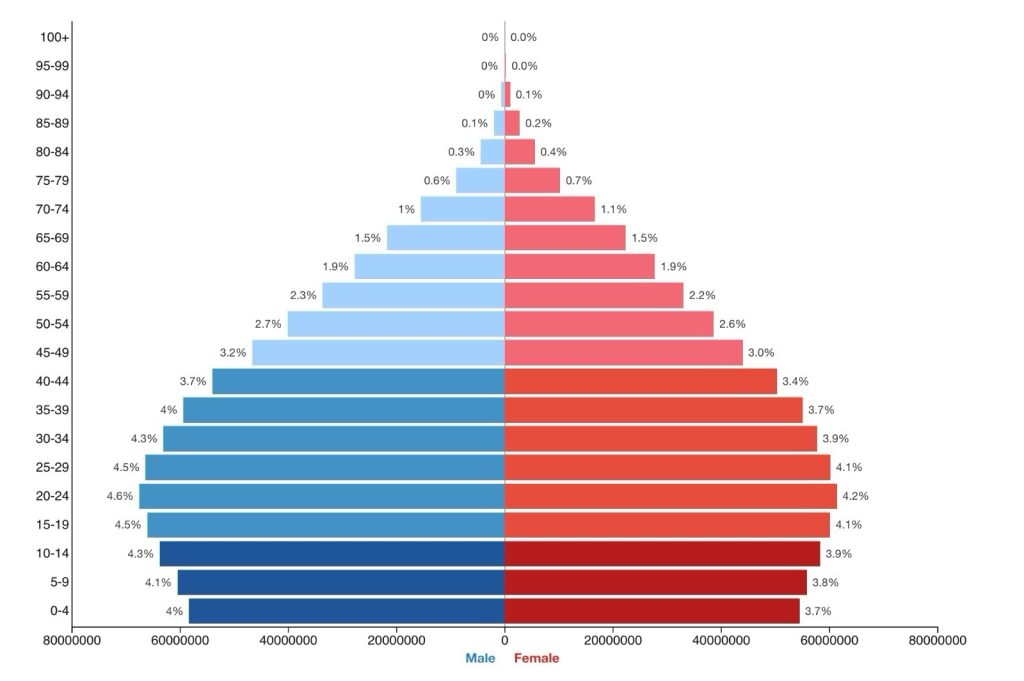
Critically, this is the first generation in the Indian history that has never known a world without the internet. From the childhood onwards, their primary window onto reality has been mediated by screens and the ranking systems that govern them.
Reportedly an IIM Rohtak study of nearly 39,000 respondents aged between 18 and 25 years recorded an average daily screen time of about seven hours with substantial portions devoted to social platforms. When hundreds of millions of young people devote this volume of attention each day to algorithmically curated feeds, then we must not ignore one disturbing fact that the content that reaches them is not a neutral reflection of reality. It is the product of systems engineered to maximise engagement as also the systems that systematically elevate emotional intensity polarising narratives because these metrics generate the greatest retention and advertising revenue.
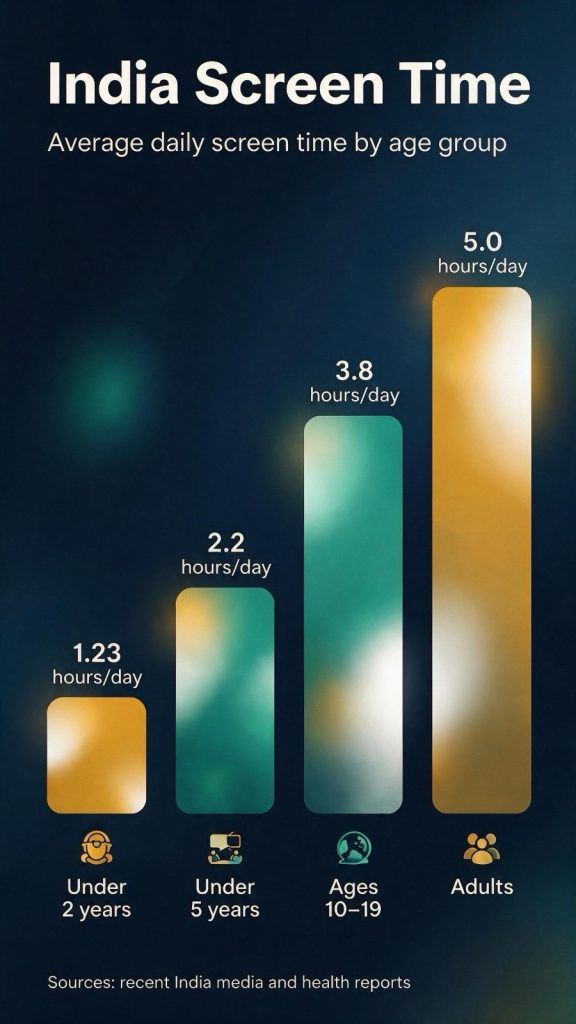
Think of these algorithms as highly paid attention merchants. They do not ask what is true or what is good for society. They ask only one question, that is, what will keep this person scrolling longer so that more advertisements can be sold. Anger keeps people longer than calm discussion. Fear keeps people longer than quiet hope. Outrage keeps people longer than measured analysis. The machine, therefore, learns to feed more of whatever triggers strong emotion. Over time the feed stops looking like a mirror of the world and starts looking like a carefully arranged sequence of emotional triggers. The young user does not realise the sequence is being written for them by a system whose only loyalty is to advertising revenue.
The core issue is that algorithm driven social media is not a neutral mirror of reality but it is, rather, designed to maximise engagement and that design often rewards outrage, polarisation and emotionally charged content. In practice, this can distort public debate, suppress inconvenient information and even intensify real world political violence. These platforms have become the most efficient propaganda tools ever invented. They do not need to invent lies from nothing. They simply amplify the most emotionally charged version of any story until it drowns out every quieter fact.
In the US, the Twitter Files and related disclosures have suggested that platform decisions around the Hunter Biden laptop story were influenced by internal policies and outside government pressure, raising concerns that information was managed rather than simply moderated. Meta has faced similar criticism. Its own systems have been accused of amplifying harmful content for engagement with especially severe consequences in places like Myanmar where Facebook’s recommendation engine helped spread anti-Rohingya hate and contributed to atrocities. UN investigators and subsequent Amnesty International report concluded that the platform’s algorithms played a determining role in radicalising populations and organising the dissemination of hate. The same infrastructure was later used by various actors to mobilise against the Tatmadaw following the 2021 coup. In both directions, the algorithm served as an accelerant for the real world political violence.
The technology of mass emotional steering has already been operational since over a decade as we had seen its impact during the Arab Spring. A decade earlier The Guardian revealed that the United States Central Command had contracted for specialised software that allowed military operators to control multiple fake online identities known as sock puppets. One operator could run up to ten separate personas complete with fabricated backgrounds and locations. These fake voices could then be used to steer online conversations on foreign social networks while hiding the true source. Intelligence agencies and military commands understood early that whoever controls the ranking systems controls the emotional weather of entire populations. The platforms that claim to be neutral public squares have repeatedly been used as quiet instruments of influence by those who know how to write the rules of visibility.
The same dynamics are now clearly visible across the South Asia region. In Nepal, in Sep 2025, a govt ban on major social platforms triggered a rapid GenZ uprising organised primarily through TikTok, Discord and other accessible channels. Hashtags targeting the children of the political elite spread at algorithmic speed converting latent resentment into street mobilisation that forced the resignation of the prime minister within few days. The platforms did not merely transmit information but rather they structured the emotional sequence of the revolt. Similar pattern was visible in Bangladesh too.
Now, India is experiencing a parallel episode in the NEET paper leak protests. Instagram Reels, AI-generated videos and coordinated influencer networks converted student grievance into sustained national mobilisation. Deepfake content and misinformation circulated at scale, some of it which were later traced to foreign-linked accounts have steered emotions of not only the GenZ but also of a large section of common mass too. Emotional footage of confrontations with police was algorithmically privileged, thereby, transforming episodic anger into a continuous feedback loop of outrage. Traditional media and institutional messaging struggled to compete with the velocity and emotional calibration of the platforms.
The current protest pattern is consistent, be it, whether in the suppression of the Hunter Biden story, the amplification of hatred in Myanmar, the information operations surrounding the Arab Spring, the GenZ revolt in Nepal and Bangladesh and now charging up India’s youth over examination integrity. This governing force is the same with proprietary ranking systems that select, amplify and sequence information according to the engagement metrics rather than the truth or social consequence.
The most worrisome is that these systems now sit at the centre of political life for the largest youth cohort on earth. They shape what nearly 400 million Indians see, feel and ultimately act upon for several hours every day. The organisations that control them, Meta foremost among them, actually now exercise a form of soft power that no democratic govt has yet constrained. The worrying consequences for the integrity of public opinion, social stability and electoral processes in India are already visible and will only intensify as this generation moves fully into political maturity. So, how do we now contain this growing Algorithmic Capture of India’s Youth?
Invoking outright ban on platforms like Meta, goggle and social platforms would provoke generational resistance leading to outright political costs. We, therefore, need to evolve strategies of digital control without outright platform bans, such as, prioritising legal ambiguity, economic leverage, infrastructural dependence and narrative framing instead of enforcing crude prohibition. The main idea is that digital platforms should be brought under control gradually instead of a direct clash. The govt can use laws, economic pressure, dependence on local infrastructure and public messaging to shape how these platforms behave.
First, the govt can create rules for platforms and intermediaries that require them to remove content quickly when directed and to follow local compliance requirements. These rules can be presented as being for national sovereignty, public order, child safety or stopping misinformation.
Second, the user data generated to be stored on servers located in India. This is called data localisation which will give the govt more legal and practical control over that data.
Once the data is stored within India, law enforcement and intelligence agencies can ask for records, metadata or even data used to train algorithms based on national security or public order laws.
In short, the strategy is to control platforms step by step through regulation, data rules and legal authority rather than through open confrontation or outright bans.
We need to draw lessons from, like, China’s cybersecurity and data-security laws which exemplifies the stricter end of this spectrum, Russia’s data localisation regime and Turkey’s requirements for social-network providers to illustrate softer variants. Thus, platforms facing the prospect of substantial fines, advertising restrictions or operational disruption are compelled to establish local data centres and compliance teams. These local entities become intermediaries through which ranking preferences, “positive energy” content quotas or demotion of sensitive topics are negotiated without a public ban. We urgently need to follow this model.
A two pronged strategy is required at the highest level. The first is to critically analyse and act upon likely social issues emerging in the populace. Like, in this case, it is a well known fact that the examination system has been repeatedly compromised over last 20 years. While multiple reasons can be assigned to each exam leak, like, different governing bodies, varying controls ranging from different States to the Centre, vested interests with large nexus and sums of money chain at political levels etc. The fact that such sustained flaws remained which cannot be ignored and this formed the basis for external and inimical agencies to build a ‘credible’ narrative. Hence, identification and acting upon of such social issues must be the first prong by the govt. In the current social milieu in India, there are a number of such issues which can be hijacked by inimical forces, like, examination system, unpunished rapes and murder of students, perceived syllabus in education system weighted against secular credentials, job creation, exploitation of youth by large Corporates etc.
The second prong is to vigorously churn out “counter algorithms” to counter fake and selective narratives used over digital media targeting creation of a young movement.
Implementation of both prongs is definitely a challenge for any govt as the first prong requires alertness, sincerity, forethought and implementation on multiple, complex fronts spanning States and the Union. The second prong contains a challenge because technologically digital domains are controlled by superpowers with well guarded resources within international jurisdiction. However, with an equally capable Indian talent pool, this must be dealt with a focussed approach and dedicated resources.
Govt must also consider enforcing tax and periodic large scale audits too. Parallelly, licensing or registration requirements for “significant social media intermediaries” can be conditioned on commitments to algorithmic transparency filings, user-data audits and cooperation on content prioritisation. This will contain propagating fake videos and false provocative narratives.
Besides the above stated measures, rather than solely removing content, Govt must also invest in high volume production of preferred narratives through official accounts, aligned influencers and coordinated networks.
Finally, we cannot turn a blind eye to the alarming fact that the algorithms already hold the attention of hundreds of millions of young Indians for hours every day. They decide which anger rises to the surface and which quiet facts are buried. This is not free speech but this is an engineered consent sold as convenience. The platforms that profit from division now sit as unelected powers shaping the next generation of voters, leaders and soldiers. We can continue to treat them as harmless entertainment tools or we can look clearly at the machinery of influence they have become. The youth who scroll through these feeds are not the enemy. They are the prize. They are being trained in real time to feel certain emotions on schedule and to act on those feelings before they have time to think. That is the quietest form of conquest. If we fail to reclaim the information environment that shapes our children then the invisible coup will succeed without a single shot being fired. A generation will grow up believing the version of reality that a ranking system decided was most profitable or most useful to interests that never appear on the ballot. No nation that values its sovereignty, its social peace or the minds of its young can accept that future without a fight.