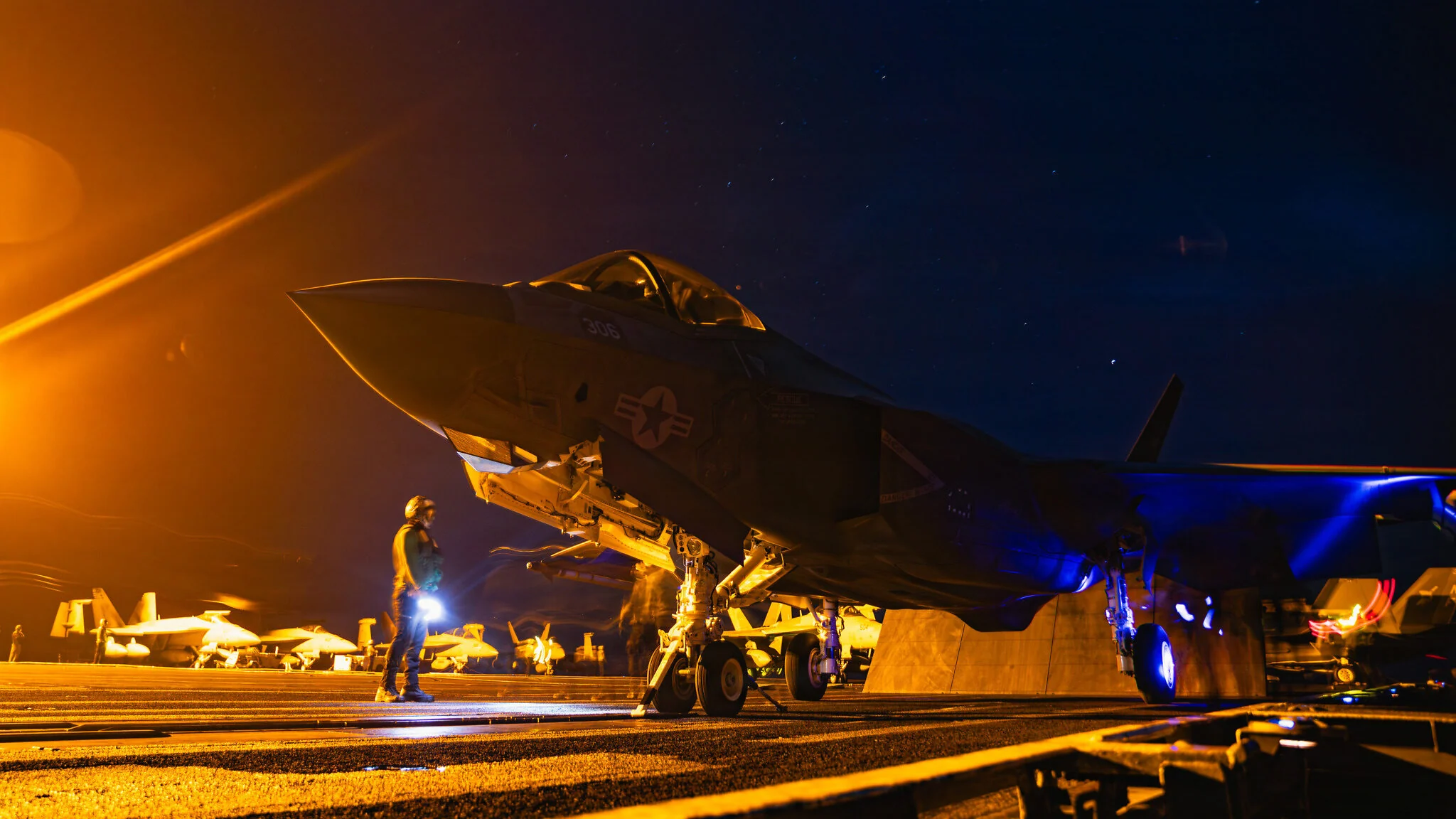
After Israel’s elections gave a fractured mandate and the US is heading for a mid-term poll in the next few days, amid these political bells ringing in both the US and Israel, both nations see a small window for swift strikes on Iran. While the risk of renewing strikes is no less than gambling, it will put the region’s stability under a more severe threat than the first episode of strikes.
The Election Factor
The election factor is one of the crucial factors in resuming the strikes in Iran. The recently concluded elections in Israel give Netanyahu some political bandwidth to proceed with strikes. The deadlock, because no party got a majority, gives Netanyahu an opportunity to remain Interim or caretaker Prime Minister, with no bar on making crucial operational or policy decisions under Israeli law, and to wait for fresh elections in spring next year if the deadlock continues. This situation politically favours Netanyahu, as it gives him a chance to rebuild his weakened security doctrine/narrative and restore broken faith by leaning into high-stakes regional operations. He can attempt to rebuild faith among voters who may have drifted after previous security failures. Resuming strikes or special operations against Iran would be one such action.
The Arab parties factor seems to be going nowhere. They may have gained kingmaker status in this election by securing considerable seats to influence government formation, but no bloc, especially the opposition party in Israel, may seek their support for the formation of the government, as there will be serious ideological friction between them. The Arab parties are sceptical of security actions, as they strongly oppose ongoing military operations in Gaza and Lebanon, and mainstream Jewish voters would likely view such a government as unstable or compromised on defence matters. If the opposition backs Arab parties, it would be vulnerable to political backlash.
In fact, the opposition, led by Gadi himself, strongly supports security actions in Gaza and aligns with Netanyahu on Israel’s national security matters, so involving Arab parties as key players in the current scenario is a high political risk. History offers two pieces of evidence for this. The first was in 1993, against the backdrop of the Oslo Accords, when the then Rabin-led government relied on the outside support of two Arab parties, and many analysts argued that Arab factions pressured the government to adopt a softer stance on Palestinian nationalism, leading to major concessions such as recognising the Palestine Liberation Organization (PLO) through the Oslo Accords.
Similarly, in 2021-2022, the anti-Netanyahu coalition led by Naftali Bennett and Yair Lapid collapsed due to ideological and issue-based friction with the Arab parties on which it relied. This gave Netanyahu the opportunity to mount sharp criticism of including Arab parties, arguing that any government relying on an Arab faction was fundamentally unstable. Given the present fragile circumstances in Israel’s strategic environment, any Arab support, even from outside, for government formation will place immense, unsustainable pressure on the coalition.
The recent four conditions laid down by the anti-Netanyahu coalition led by Gadi Eisenkot include dismantling Hamas, mandatory military service without exception, and recognition of Israel as a Jewish and democratic state. From Arab parties’ perspective, these principles will surely invite resistance. Most Arab parties strongly oppose mandatory national service, and the Hamas factor will also cause friction, as Arab factions focus on the broader plight of Palestinians in Gaza and the West Bank and advocate softer approaches.
In a nutshell, with four conditions, the prospects for government formation have further slimmed, at least from the opposition coalition’s perspective, giving Netanyahu more bandwidth to deepen this deadlock and remain caretaker Prime Minister.
The Trump Midterm Race
In the US, even Trump seems inclined to resume strikes against Iran. The electoral factor in his case seems unlikely to deter him from taking kinetic action against Iran. Three reasons the midterms for Trump, with respect to Iran, would not matter much. First, removing electoral pressure or the risk of kinetic action against Iran would invite political backlash from voters angry about spiking fuel prices or economic instability; once elections are over, that risk would diminish, giving Trump a free hand to launch fresh kinetic action. Second, there is no re-election pressure; Trump cannot run for a third term under the US Constitution, so he is less bound by national approval ratings and can focus entirely on his administration’s long-term strategic objectives against Iran. Third, historical trends suggest no President has won mid-term elections; only a few Presidents like Bill Clinton and George Bush managed to gain seats during mid-term elections. In this case, if the administration already anticipated losing congressional seats based on historical trends, those losses are already priced into their strategic timeline rather than acting as a deterrent.
The Bush Way
During the 2006 mid-term elections, then President George Bush faced severe backlash over the Iraq War, as public disapproval reached an all-time high. The Republican Party suffered a devastating “thumping” at the polls, losing control of both the House and the Senate. Instead of backing down or heeding the voter mandate, President Bush did the exact opposite. In January 2007—just weeks after the midterms he bypassed congressional opposition and authorised “The Surge,” sending an additional 30,000 U.S. troops into Iraq. It was a massive political risk that deeply angered the newly elected Democratic majority, yet Bush used his executive Commander-in-Chief powers to carry it out.
Similarly, in the 1950 midterms, voters punished President Truman’s administration for its handling of the Korean War and rising domestic fears of communism. The Democrats suffered severe losses in both chambers, decimating Truman’s domestic leverage. Despite the voter rebuke and weakened political standing, Truman did not de-escalate. He immediately doubled down on the war effort, rapidly expanding the military budget, authorising risky counter-offensives in Korea, and officially declaring a State of National Emergency in December 1950 to mobilise more troops.
Looking at the risky military or operational decisions by President Truman despite backlash and a midterm defeat suggests that those decisions worked in favour of the US’s broader security strategy, at least to some extent. In 1950, Truman’s refusal to back down successfully stopped the spread of communism into the southern half of the Korean peninsula. It preserved South Korea as an independent nation. Similarly, Bush’s decision to surge troops in Iraq, despite a humiliating defeat in the midterm elections, successfully brought Iraq back from the brink of an all-out sectarian civil war. Violence dropped significantly, creating a window of stability.
The window that President gets during this election season is known as the Lame duck window. The period between Election Day (November 3) and the inauguration of the new Congress (January 20) represents a window of maximum presidential independence. Even if the public votes decisively against the president’s party, the incoming lawmakers have no legal standing to block funding, launch formal investigations, or pass binding resolutions until they are officially sworn in. This gives an administration absolute executive authority to initiate short-term, high-risk military actions such as a sudden strike campaign. Both the President capitalised on this window to consolidate their power and deliver strategic messages that, despite losses, the President is still not weakened. Similarly, Trump, in all likelihood, may use the resumption of strikes against Iran as a strategic compensation strategy at the domestic level, pivoting to foreign policy and military action specifically to signal that he is not a weakened leader.
The Opportunity
As election pressure and electoral risks are gradually easing, especially in Israel, both Israel and the US seem inclined to capitalise on a window that is not only time-suited but also strategically suited. Iran is currently reeling from severe revenue and economic pressure, if reports are to be believed. The massive 90-million-barrel stockpile of crude that Iran kept on tankers in Asian waters to bypass sanctions was completely depleted by mid-October. Notably, energy tracker Kpler reports that Iran has loaded virtually no new crude or condensate onto vessels since August 25, effectively dropping seaborne exports to zero, and if it continues at such a pace, it may reach zero by December.
Iran’s resilience in financial networks is also severely tested. Beyond halting a staggering $25 billion in crude exports, the US military and Treasury have actively frozen hundreds of millions in Iranian digital cryptocurrency assets, choking off secondary transaction avenues.
The economic and revenue crises for Iran seem real now, giving the US and Israel an opportunity to inflict more serious damage, forcing Iran’s to snowball into systemic collapse. However, it is not as easy as it looks, allowing the US-Israel to easily exploit Iran’s vulnerable situation.
The Risk
US carried out defensive strikes on Qesham Island in Iran yesterday, just before the midterm election; this strike is another message of coercion and intimidation to Iran, rather than a simple pre-emptive strike. However, there is heightened risk in resuming the strike, even if it carries a strong promise of crippling Iran, because Iran’s response this time would be no less than an annihilating or apocalyptic counter-response, in which Iran and its proxy network will unleash their full might on Gulf allies, especially Saudi Arabia and its oil facilities.
If the situation deteriorates further and US-Israel continue their resumed campaign against Iran, the Red Sea could become a new theatre of conflict, along with the Strait of Hormuz, forcing a nosedive in oil markets. This time, the bloodbath for markets would be more significant if Iran resumes counter-retaliation through all reckless means, as Iran has already said that this time there will be no “geographic limit” to the response if US-Israel renew the conflict. Therefore, resuming the conflict carries serious risks. US-Israel must first establish a credible defensive response to contain Iran’s expected reckless and massive retaliation aimed at holding the region hostage before delivering a swift, destructive offensive, because without credible defence, a credible offensive will hold little value.