There was a time that seems so long ago, when the monsoon, whether advancing or receding, was a time to rejoice. The rains provided relief from scorching summer and rejuvenated the earth. But the times have changed. People in cities and towns are seen wading in knee-deep or even waist-deep water, risking limb and life. How can the mind not wander with the clouds to Mandu where the monsoon continues to be magical?
Madhya Pradesh is referred to as the heart of India and Mandu is the heart of Madhya Pradesh. The city was originally named Shadiabad, which translates as the ‘City of Joy’. It would be centuries before Calcutta would usurp this title. The fortified city stands on a plateau overlooking the plains of Nimad, almost hanging like a verdant garden over the lush jungles of Satpuda. High above the earth, nearer the sky, Mandu has the feel of a hill station.
Mandu is where the line between facts and fable, folklore, fantasy and history blurs. This is where the fairy-tale romance between the handsome and musically inclined young ruler Baj Bahadur and a tribal lass with an angelic voice blossomed. Legend has it that Baj Bahadur encountered the girl singing for herself as she shepherded her flock. He was enchanted and proposed to make her his queen on the spot. The girl, reluctant at first, consented when the King accepted her condition that he would bring her beloved river Narmada to the high hill of Mandu. The Badal Mahal is the highest point in the palace complex from where, on a clear day, one with sharp vision can sight a sliver of glass -the river flowing in the distance.
Many exquisite miniatures portray the handsome couple wandering around Mandu on horseback, enjoying nature and each other’s company. Baj Bahadur sang the deepak raga that lit all the oil lamps and ignited fires. The singer’s body temperature rose unbearably. The balance was struck when the Gujari Rani sang the soothing Megh Malhar that brought down showers to provide relief to the singer and the listeners. Some years passed happily, and Mandu became the musical Mecca. Raga Gujari Todi in the classical Hindustani repertoire bears testimony to this. Then tragedy struck.
The Mughal army dispatched by Emperor Akbar defeated Baj Bahadur, who most unchivalrously ran away from his capital to save his life, leaving Roopmati behind. Adam Khan, foster brother of Akbar and commander of the soldiers, sacked Mandu and tried to outrage the modesty of the queen. Roopmati chose death over dishonour and committed suicide. Infuriated, Akbar ordered Adam Khan to be thrown down from the ramparts to his death. Baj Bahadur spent the rest of his life as one of the nine gems in Akbar’s court.
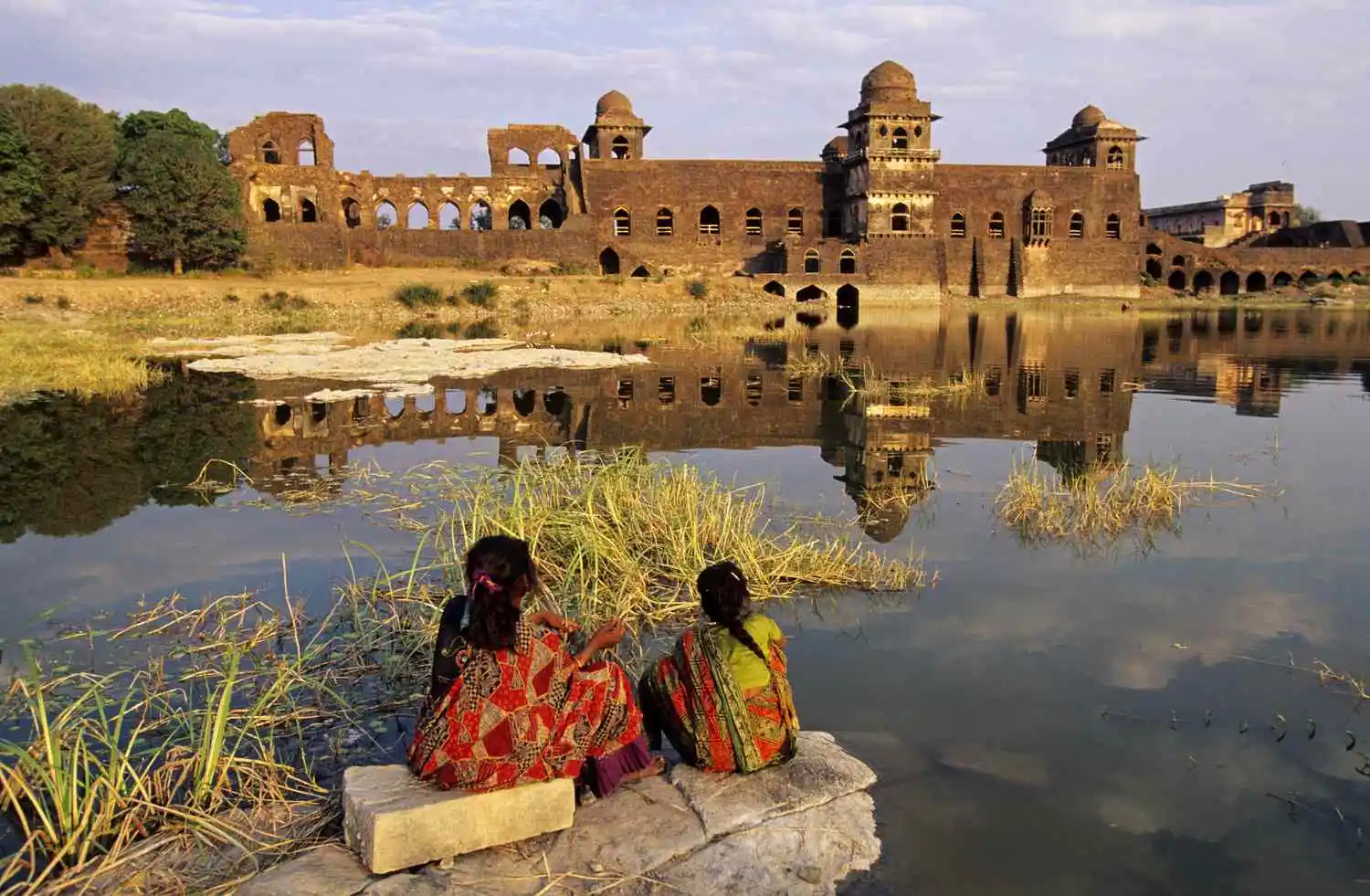
Moving away from this distressing tale, one can spend hours, if not days, entranced by Mandu’s architectural wonders that cast a powerful spell. There is the imposing Jahaj Mahal shaped like a ship, flanked by two ponds of water that create the illusion that ‘the boat’ is indeed sailing. A short distance away stands the Hindol Mahal with sharply sloped walls that create the illusion of riding a swing. Asharfi Mahal has its own story to tell. It is said that Jahangir fell in love with Mandu and spent some of his happiest times here with his consort, Noorjahan. To ensure that her feet were not soiled by dirt, the ground was covered with asharfi (golden mohurs). That is how the palace got its name. One building that for long remained in oblivion is Hoshang Shah’s tomb, which is believed to have inspired the Taj Mahal at Agra.
There are not many culinary temptations that Mandu offers. Proximity to cities ruled by Maratha Ujjain, Maheshwar and Indore ensures that visitors can quell hunger pangs with pohe, jalebi, sav and, if you try hard, you may find the Malwa staple daal bafla.
However, Mandu more than makes up for it with bewitching fragrances distilled here. Nemat Nama, an encyclopedic work on sensory delights compiled in the 15th century, refers to the ‘Perfumes of Mandu’. Expertly blending floral and wilderness notes of camphor, rose, lilies, ambergris and musk, they warm the body and soul, driving away debilitating humidity.
Local guides insist that Baj Bahadur in happier times had indeed brought the waters of the Narmada River through a canal to the palace so that Roopmati could bathe in its waters. No credible evidence supports this claim, though a beautiful song, Reva Maiyya tera paani kalkal, written by popular Hindi poet late Gorakh Pande, evokes the image of the sacred river beloved of the people flowing nearby. Listening to it in Mandu makes one believe that mother Narmada, also called Reva, did come to Mandu to her loving daughter Roopmati.