Pakistani security forces have responded to peaceful civil resistance in Pakistan-occupied Jammu and Kashmir (PoJK) with bullets, terror laws and a communications blackout—an unmistakable pattern of state repression that lends grim credibility to JAAC leader Shaukat Nawaz Mir’s charge that Islamabad has “unleashed a massacre.” Far from a law-and-order operation, the crackdown exposes how little regard Pakistan’s establishment has for Kashmiri lives when those lives demand rights rather than parrot its rhetoric on “self‑determination.”
Pakistan: Responding to the authorities’ violent and sweeping crackdown on protests in Pakistan-administered Jammu and Kashmir, Amnesty International said ⬇️
— Amnesty International South Asia, Regional Office (@amnestysasia) June 9, 2026
“Branding a grassroots organization as ‘terrorist’ on vague grounds, while simultaneously cutting the region off from the…
What triggered the crackdown
The latest spiral of violence is rooted not in separatism or militancy, but in a grassroots campaign for basic economic and political rights led by the Joint Awami Action Committee (JAAC). For over a year, JAAC has mobilised people across PoJK against crushing electricity tariffs, rising wheat flour prices, joblessness and systemic neglect of health, education and infrastructure.
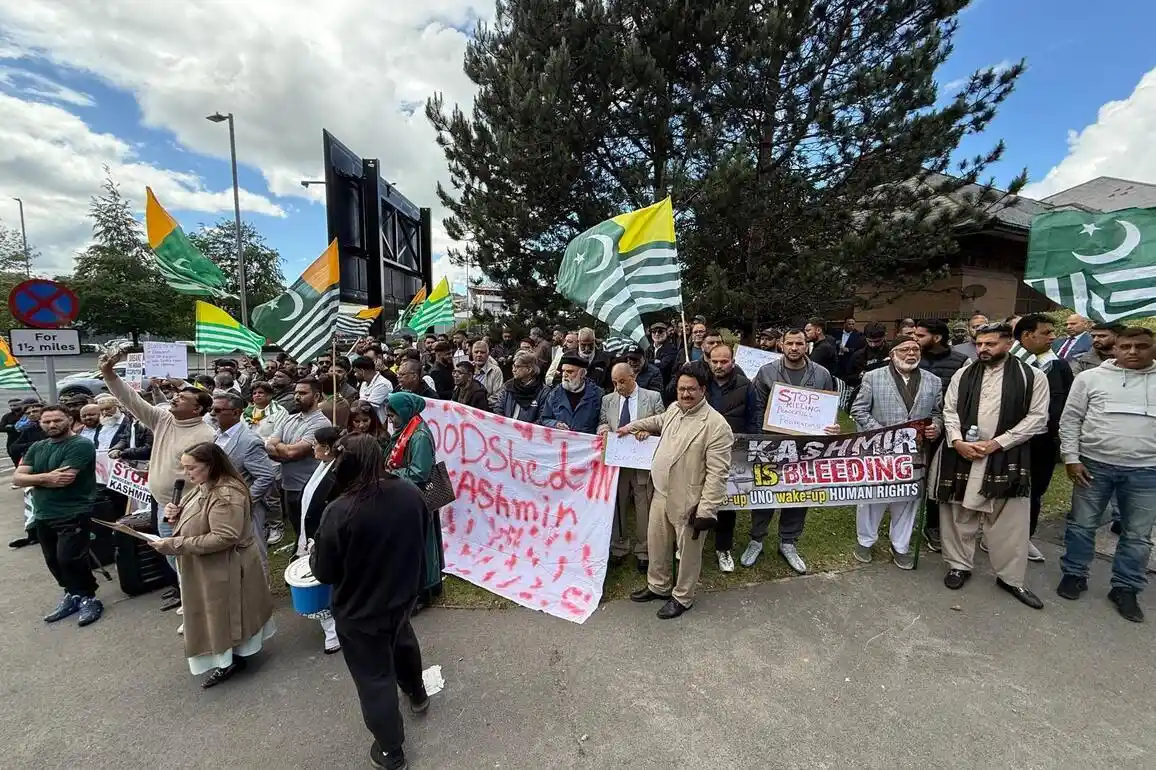
JAAC’s charter of demands has repeatedly called for affordable power from local hydel projects such as Mangla, relief on essential commodities, and an end to elite privileges and reserved seats that allow Pakistani parties to manipulate the region’s assembly. Ordinary Kashmiris have rallied not with guns but with slogans and shutdowns, blocking roads and markets to force Islamabad to honour promises it has made and broken for decades.
Islamabad’s response has been telling: instead of addressing grievances, the PoJK administration recently banned JAAC under anti‑terrorism laws, declaring a civil rights coalition a “terrorist” outfit. The group’s offices have been sealed, leaders targeted, and hundreds of activists rounded up ahead of a region‑wide strike called for June 9.
This criminalisation of dissent is not new. In earlier waves of protest over inflation and tariffs, Pakistani authorities also reached first for the stick—riot police, Rangers, and sweeping FIRs—before grudgingly offering temporary subsidies when unrest threatened to spiral. Treating every citizen movement as an internal enemy may suit Islamabad’s security-state reflex, but it strips away any moral authority it claims on Kashmir.
A ‘massacre’ in Rawalakot
The current crisis crystallised in Rawalakot, where security forces opened fire on protesters linked to JAAC as tensions mounted before the June 9 shutdown. Officials admit that at least 8–11 people have been killed in recent clashes—including civilians and police—while protest leaders allege higher tolls, with some accounts speaking of over 30 dead and around 200 injured.
In an audio message accessed by media, JAAC leader Shaukat Nawaz Mir accused Pakistani forces of issuing shoot‑at‑sight orders and “unleashing a massacre,” stressing that their campaign was “peaceful, non‑violent and unarmed.” Mir’s argument is devastatingly simple: if JAAC were truly a terrorist organisation, why did the same state hold multiple rounds of negotiations with its leaders over flour and electricity prices only months earlier?
Alongside bullets, Islamabad has deployed a more insidious weapon in PoJK—silence. Authorities have suspended internet services across much of the region, creating a de facto media blackout that makes independent verification harder and isolates protesters from the outside world. Videos and eyewitness accounts that do slip through speak of Rangers and police using indiscriminate firing and even shelling against largely unarmed crowds.
Local reports say the PoJK administration has requested up to 14,000 additional security personnel from the federal government to “control” its own citizens—an extraordinary militarisation of what began as a rights‑based agitation over inflation and representation. When a state answers the price of flour with thousands of armed men, it is not policing; it is collective punishment.
Those who dismiss the word “massacre” as agitational rhetoric ignore the pattern. In October 2025, at least 21 people, including civilians and police, were killed during days of clashes after JAAC‑backed protests over reforms and public facilities paralysed large parts of PoJK. Earlier, in 2024, multiple protesters were shot dead when Rangers opened fire during demonstrations against electricity and wheat prices, forcing the federal government to hurriedly announce a 23‑billion‑rupee grant and subsidies.
Each cycle follows the same script: neglect, peaceful protests, a heavy‑handed crackdown that turns deadly, and then partial concessions once the body count and international scrutiny rise. In between, entrenched structures that deny PoJK meaningful autonomy—such as the 12 assembly seats reserved for refugees in Pakistan, which JAAC argues are used by national parties to skew local politics—remain untouched.
Pakistan’s Kashmir hypocrisy laid bare
For decades, Pakistan has projected itself as the champion of Kashmiri self‑determination on the global stage. Yet in the territory it directly controls, peaceful calls for cheaper electricity, fair representation and basic services are met with terror labels, live ammunition and internet shutdowns. When Islamabad’s own citizens in PoJK demand dignity, it is the Pakistani state—not India—that appears as the primary oppressor in their lived experience.
The dissonance is stark: a government that lectures the world on human rights in the Valley but cannot tolerate a civil rights coalition asking why PoJK’s resources benefit Lahore and Islamabad more than Muzaffarabad and Rawalakot. By attempting to crush JAAC, Pakistan is sending a chilling message to PoJK: you may shout “Kashmir banega Pakistan,” but do not dare ask what Pakistan has done for Kashmir.
What should change
At minimum, Islamabad must restore internet and media access, and allow independent observers—including Pakistani and international human rights groups—to investigate deaths and injuries in Rawalakot and elsewhere. It must also engage sincerely with the movement’s core demands—economic justice, institutional reform, and an end to political engineering via reserved refugee seats—rather than hiding behind the convenient fig leaf of “counter‑terrorism.”
For India and the wider international community, the message from PoJK should be impossible to ignore. The images and testimonies emerging from across the Line of Control show that the people there are not Islamabad’s proxies but its newest victims. If Pakistan insists on turning PoJK into a laboratory of repression, it should lose any claim to moral superiority on Kashmir—and face growing pressure to answer a simple question from Rawalakot to Muzaffarabad: who is massacring whom in whose name?