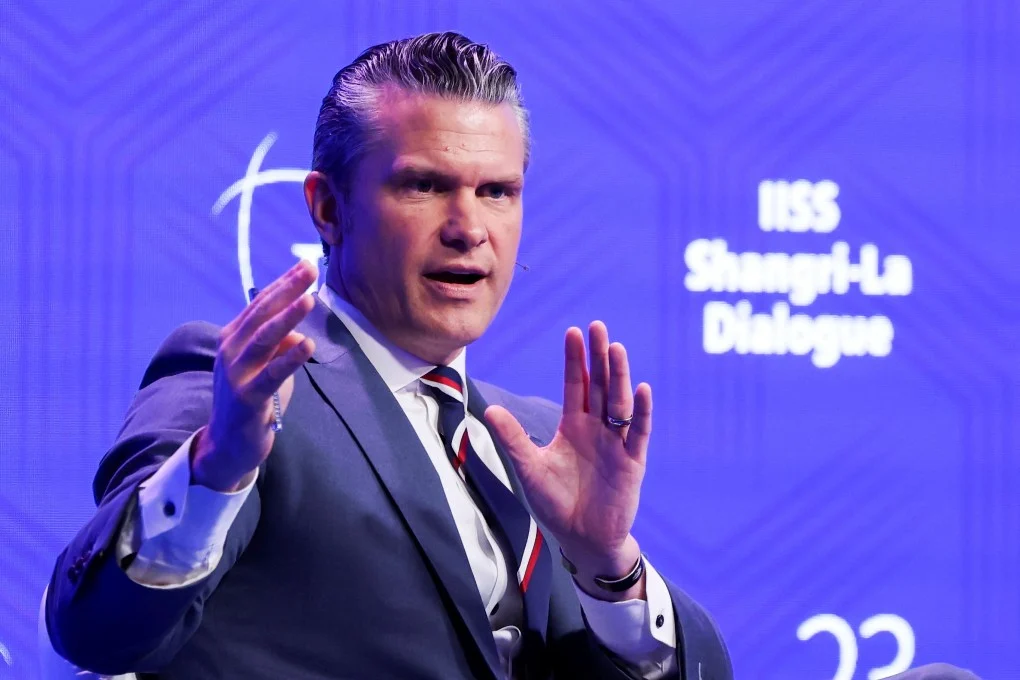
The current US foreign policy is widely perceived as assaulting the USA’s global alliance system, adhering to President Donald Trump’s unhinged and vacuous distaste for alliance politics. The Trump administration’s external policy seems guided by the President’s long-held belief that alliances are an unnecessary burden, wrongfully benefiting the allies who relax under the security umbrella of the USA without sharing the burden. Indeed, President Trump has triggered global unease and anger with his temerity, unleashing diatribes against US allies occasionally. However, undoing the US-led hub-and-spoke security structure is neither easy nor practicable, especially in the Indo-Pacific region’s context where China is the dominant power intending to unseat the USA from the regional US-led hierarchical power structure. Although the Trump administration broadly maintained the US security network in the region, it has also generated suspicion among its Indo-Pacific allies and partners regarding its commitment towards their security interests. In this context, the speech delivered at this year’s Shangri La Dialogue in Singapore by US War Secretary Pete Hegseth is significant since it conveyed a more confidence-building message rather than a nonchalant mood vis-à-vis USA’s Indo-Pacific partners’ security concerns.
In his speech, Secretary Hegseth called for a new course of alliance, moving away from the ‘model of dependency’ towards ‘true partnership,’ underlining that the USA needs ‘partners’ and not ‘protectorates’. Toeing his boss’s line emphasizing serving national interests over altruistic service to ideological commitments, US War Secretary duly flattered Indo-Pacific allies and partners, hailing their pragmatic realization of the incoming era of ‘alignment of national interests’ for ‘durable partnership’. However, what corroborated the misgivings about US plans to unravel from the Indo-Pacific scene is Secretary Hegseth’s emphasis on the importance of the region as the world’s largest and most dynamic market requiring a lasting and favorable balance of power amidst China’s historic military buildup and expansionist design. His assurance to prevent the unraveling of the regional balance of power by China presumably caused a sigh of relief to many China-wary Indo-Pacific countries. More interestingly, Secretary Hegseth endorsed ‘quiet and measured’ capacity enhancement of partners without constant escalation or confrontation, traditional US defense practice vis-à-vis adversaries which Indo-Pacific partners deprecate.
Although, classical power transition theory argues that rising dissatisfied power (with the international power hierarchy, in this case China) would attempt to unseat the dominant power (USA) leading to war, Steve Chan, in his book Rumbles of Thunder: Power Shifts and the Danger of Sino-American War, argues against such assessment asserting that transitional warfare between ‘incumbent hegemon and rising upstart’ is not a historical fact. On the contrary, Chan argues that great powers have historically picked up smaller or less powerful countries rather than directly taking on each other. Going by this argument, China’s Indo-Pacific neighbors are at risk of Chinese aggression and therefore need to be combat-ready. On the other hand, an incumbent power relinquishing its dominance to an adversary characteristically hostile to it is too unusual to presume. However, obligated to balance President Trump’s abhorrence against military aid to the allies, the current US administration has come up with a suitable alternative plan to handle the Chinese menace, augmenting the military capability of its Indo-Pacific allies and partners, including India.
Secretary Hegseth underlined India’s growing operational role in the regional security architecture by modernizing her military while highlighting deepening defense industrial cooperation with the USA. Indeed, the most strategically significant area of collaboration between the two countries lies in defense and security. The India-U.S Major Defense Partnership framework, renewed for 10 years recently, is the foundation of defense cooperation, promoting defense industrial cooperation, science and technology collaboration, and operational coordination while enhancing interoperability at the tactical, operational, and strategic levels. Besides, the U.S.-India Defense Technology and Trade Initiatives (DTTI) and India-United States Defense Acceleration Ecosystem (INDUS-X) initiative continue facilitating private sector partnership among Indian and American companies, investors, and researchers. Under the INDUS-X initiative, start-ups are developing technologies to improve naval interoperability, which will help the USA and its allies operate more effectively in the Indo-Pacific region with secure underwater communication. The US-India COMPACT (Catalyzing Opportunities for Military Partnership Accelerated Commerce and Technology) and 12 A (India and USA) Launchpad Program will connect leading Indian and American technology and defense innovators. Notwithstanding the US assurance of collaboration for defense preparedness, its Indo-Pacific partners are heeding more to Washington’s advice to share the security burden. Philippines’s Defense Secretary Gilberto Teodoro underlined at the Shangri-La meeting that the countries were unanimous in the need to upscale their individual defense capabilities. In fact, USA’s Pacific allies are waking up to the need of the hour to overhaul the US-centric security structure, promoting security partnership among them outside the US umbrella. Manila is already deepening defense cooperation with Japan, Australia, Canada and New Zealand, while the Five Powers Defense Agreement bloc, comprising Malaysia, Singapore, Australia, New Zealand and the UK, held a meeting over a regional security issue. Japan seems to be positioning itself as the hub of this growing security network outside the US-led framework, which recently overhauled its defense export rules, scrapping restrictions on overseas arms sales. India, whose foreign policy has traditionally been abhorrent to any super-power centric military bloc politics, finds the situation more conducive. Developing close defense collaborations with this emerging Pacific security bloc shields India from allegations of super-power tilt, surrendering her established non-aligned principles, while helping her integrate with the larger defense architecture of US-allied powers, with the USA in a supporting role. Thus, India pushes for defense collaborations with Japan, South Korea, and Australia while her growing defense exports to Southeast Asian countries, with BrahMos missiles in the lead, also underline her security contribution to the growing defense architecture in China’s neighborhood. Besides, the multilateral security collaboration via Quad with the USA and its Pacific allies, Japan and Australia, is an opportunity for India to integrate with a larger Indo-Pacific maritime security architecture, like a joint maritime surveillance and information-sharing initiative as decided at the Quad Foreign Ministers meeting in New Delhi last month. In a way, Secretary Hegseth’s Shangri-La speech this year, highlighting a non-escalatory and collaborative approach for a new Indo-Pacific defense architecture, suits India’s regional non-confrontational security objective vis-à-vis China, which is upgrading its own defense preparedness.