The war in West Asia has roiled global energy markets. The closure of the Strait of Hormuz, a critical maritime chokepoint, has disrupted transportation and business across the region as Iranian strikes hit Gulf states, including the UAE, before a fragile ceasefire last month. This has reminded the world, once again, how fragile global energy security can be. As tensions between the United States and Iran escalated, the narrow and vital shipping channel that carries a large portion of the world’s oil trade has become a zone of risk. For India, the world’s third-largest oil importer, the disruption was immediate and concerning. Supplies from the Gulf dropped sharply, imports fell, and the possibility of higher fuel and cooking gas prices loomed large over households and industry alike.
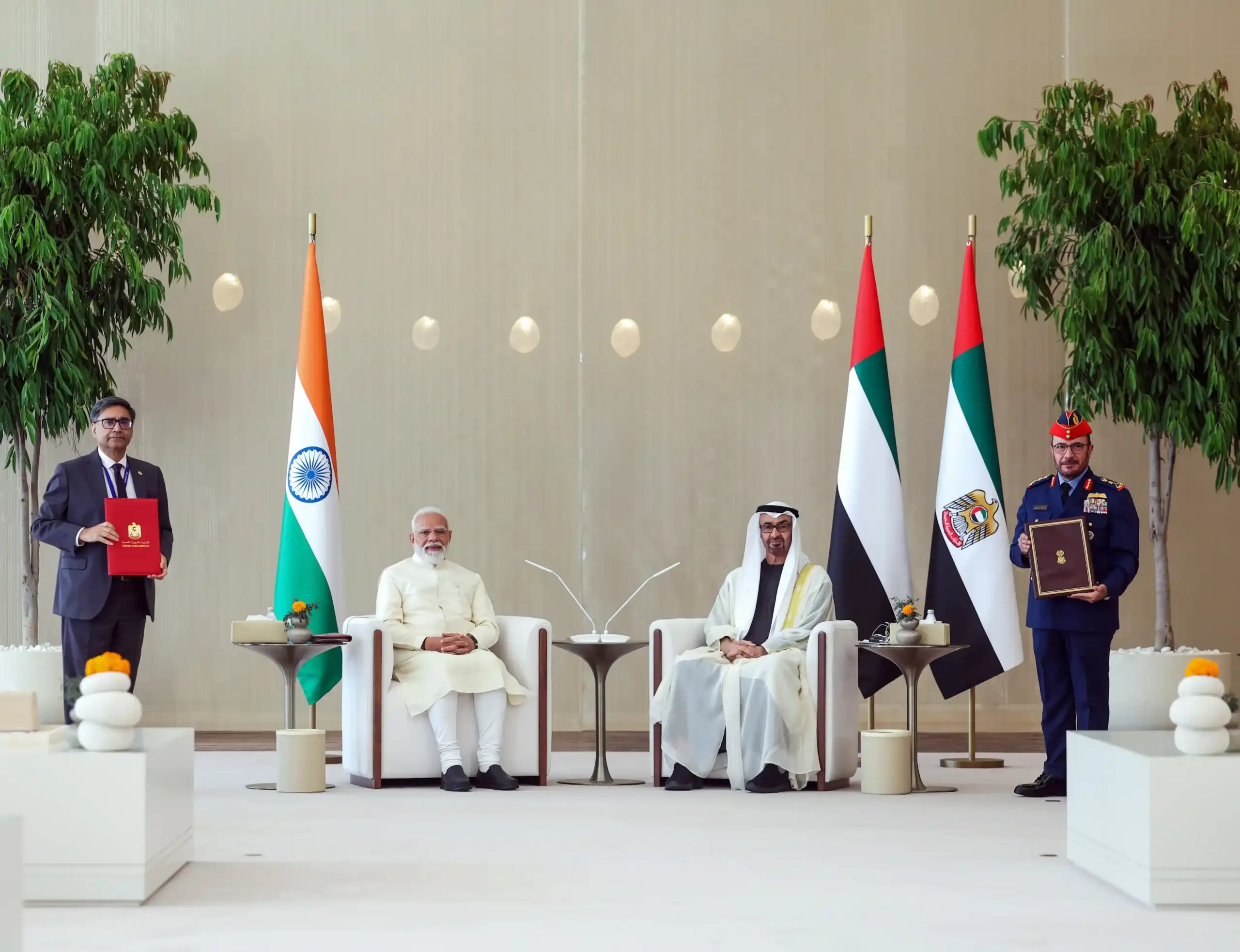
It is against this backdrop that India’s latest strategic agreements with the United Arab Emirates during Prime Minister Narendra Modi’s Abu Dhabi visit on May 15, 2026, may ultimately be remembered not merely as another diplomatic success but as one of the most consequential geopolitical energy arrangements India has pursued in the post-pandemic era. At a time when global oil markets are rattled by fears of a wider escalation of Iran-United States tensions, attacks around the Gulf region, and uncertainty surrounding the Strait of Hormuz, India has moved decisively to secure both energy stability and strategic depth. The agreements signed with Abu Dhabi on strategic petroleum reserves, long-term LPG supplies, defence cooperation, and a reported $5 billion UAE investment into India’s infrastructure and energy sectors reflect a mature and pragmatic approach to energy diplomacy. In an era when energy has become a tool of geopolitical leverage, such partnerships are not luxuries but necessities.
India today imports nearly 85% of its crude oil requirements and over 50% of its natural gas needs, and consumes around 5 to 5.5 million barrels of crude oil per day. Roughly half of this oil passes through the Strait of Hormuz, and thus, India has been among the hardest hit by the resulting energy crisis. Herein lies the significance of partnering with the Gulf nation, along with its geographical proximity.
Domestic production meets only a modest share of this demand, making the country heavily dependent on imports. High import dependency makes the country susceptible to global supply disruptions. The country’s Strategic Petroleum Reserves at Visakhapatnam, Mangaluru, and Padur currently provide limited cover, roughly around 39-40 million barrels when full, enough for just 9-10 days. With reserves only partially filled earlier this year, the vulnerability was evident when Hormuz-related disruptions hit the global arena. This is where the UAE agreement assumes enormous significance. Under the new arrangement, Abu Dhabi National Oil Company (ADNOC) will reportedly store up to 30 million barrels of crude oil in India’s strategic reserves, under a strategic collaboration agreement between ADNOC and Indian Strategic Petroleum Reserves Limited. This dramatically strengthens India’s emergency energy needs while ensuring quicker accessibility during wartime or supply disruptions. Unlike conventional imports that depend on uninterrupted shipping lanes, oil stored domestically offers immediate strategic availability. From a geopolitical perspective, the deal also strengthens India’s strategy of multi-alignment. While Russian crude has helped bridge the immediate gap with imports, rising significantly to meet the shortfall from the Gulf, reliance on any single source carries risks related to distance, logistics, and sanctions. The UAE partnership allows India to balance this equation more effectively. By deepening ties with Abu Dhabi while retaining Russian imports, India is constructing a multi-vector energy strategy that reduces vulnerability to any single geopolitical bloc. A separate arrangement between Indian Oil Corporation and ADNOC for long-term LPG and LNG supplies was also concluded, which further secures cooking gas supplies for millions of families, particularly those benefiting from the Ujjwala scheme.
There is also a larger geopolitical message embedded in these agreements. The Gulf powers are gradually repositioning themselves amid shifting global alignments. As American influence in West Asia evolves and China aggressively expands through the Belt and Road Initiative, India is seeking reliable regional partnerships that preserve its strategic autonomy. The UAE, with its investment strength, logistical connectivity, and diplomatic flexibility, fits naturally into India’s emerging Indo-West Asian strategy. In this regard, the Modi government deserves appreciation for moving swiftly to safeguard energy supplies at a critical juncture. However, this partnership must only be seen as part of a larger effort to develop strategic reserves, with greater focus on domestic production, and a determined push for green energy sources amidst global energy uncertainty.
The India-UAE agreements are therefore far more than just routine strategic signing of deals. The Prime Minister’s long visit to the Gulf nation and the series of strategic deals that followed cannot be seen as mere symbolic diplomacy but a major economic vote of confidence in India’s growth story, resulting in concrete strategic gains for the nation. This visit underlies a measured strategic move by India in securing energy, defense, and economic interests, with the redefining of the Gulf nation as a multi-domain partner. Such deals are part of India’s broader attempt to secure strategic diplomacy with countries in an increasingly volatile world order, in a way that goes beyond transactional ties to strategic interdependence. At a moment when wars, sanctions, and maritime channels are redefining global energy politics, India is signaling that not merely military strength but energy preparedness will define the next era of national power, establishing “energy alliances” along with “military alliances”. The India-UAE axis has emerged as a model for “middle-power diplomacy,” a cooperation marked by flexibility and pragmatic cooperation, allowing both the nations to navigate a fragmented global order while maintaining autonomy from great-power rivalries.