
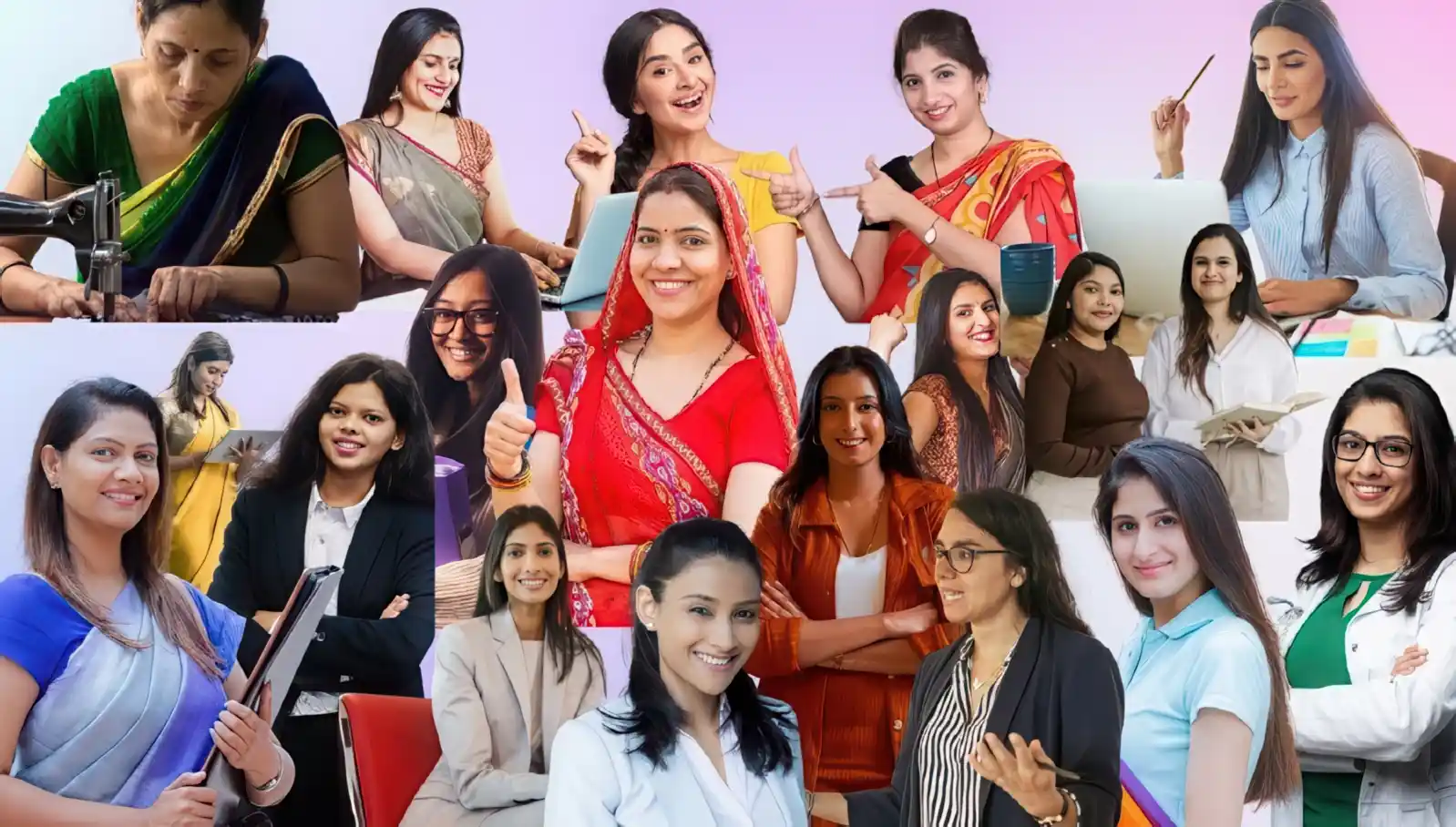
Public procurement represents one of the largest organized markets in India, historically dominated by established suppliers with the capacity to navigate complex bureaucratic systems. The emergence of digital platforms such as the Government e-Marketplace (GeM) has fundamentally altered this landscape by introducing transparency, standardization, and accessibility. Within this transformation, the Womaniya Initiative—launched in 2019—stands out as a targeted intervention aimed at integrating women entrepreneurs into formal government procurement systems.
Before initiatives like Womaniya, women-led micro and small enterprises (MSEs) and Self-Help Groups (SHGs) faced systemic barriers to accessing public procurement opportunities. These included lack of market visibility, dependence on intermediaries, limited knowledge of procurement processes, and challenges in meeting formal compliance requirements. The informal nature of many women-led enterprises further restricted their participation in large-scale, institutional markets.
Womaniya addresses these constraints by embedding inclusion directly into the procurement architecture. Rather than treating women entrepreneurs as peripheral actors, it creates a dedicated pathway for them within the GeM ecosystem.
The Platform Solution: GeM as an Equalizer
GeM, launched in 2016, is a fully digital procurement platform enabling government departments, ministries, and public sector units to purchase goods and services online. It operates as a paperless, cashless, and contactless system, ensuring efficiency and transparency.
Womaniya builds on this infrastructure by introducing a dedicated interface for women entrepreneurs, allowing them to register, list products, and directly engage with government buyers. This digital integration reduces asymmetries in access and information, effectively leveling the playing field.
Design Logic: Targeted Inclusion Through Categorization
One of the most significant design elements of Womaniya is its category-based approach to product listing. The initiative groups products into segments such as handicrafts, grocery and pantry, office accessories, handloom textiles, and personal hygiene.
This categorization is not arbitrary—it reflects sectors where women-led enterprises already possess strong production capabilities. By curating these categories into searchable storefronts, GeM enhances product discoverability for institutional buyers, enabling procurement at scale.
This approach demonstrates a key policy insight: inclusion is most effective when it builds on existing strengths rather than attempting to create entirely new capabilities from scratch.
Institutional Integration: The Role of SWAYATT
Womaniya is not a standalone initiative but part of a broader inclusion framework under the SWAYATT programme (Startups, Women & Youth Advantage Through e-Transactions). SWAYATT aims to remove entry barriers for marginalized groups and improve ease of doing business on the GeM platform.
By aligning with this broader framework, the initiative benefits from a larger ecosystem of policy support, ensuring that inclusion is embedded across multiple dimensions—digital access, training, and procurement policy.
Operational Mechanisms: How It Works
The effectiveness of the initiative lies in its operational features, which systematically address the constraints faced by women entrepreneurs:
1. Digital Onboarding
Women-led enterprises are onboarded through a streamlined digital process using verification systems and essential documentation. Training workshops—both online and offline—help build familiarity with the platform.
2. Standardized Catalogue Listing
Products are listed using uniform templates with defined specifications, ensuring comparability across sellers. This reduces ambiguity for buyers and enhances trust in procurement decisions.
3. Fully Digital Procurement Cycle
From bidding to payment, all processes are conducted digitally. This eliminates the need for intermediaries and enables direct buyer-seller interaction, increasing transparency and efficiency.
4. Time-Bound Payments
Digitized workflows ensure timely payments—critical for small enterprises that often operate with limited working capital.
5. Capacity Building and Outreach
Training sessions, buyer-seller meets, and onboarding drives strengthen seller readiness and expand participation across regions.
Together, these mechanisms create an enabling ecosystem that not only facilitates entry but also supports sustained participation.
Scale and Impact: From Access to Economic Empowerment
The impact is both quantitative and structural. The initiative has achieved significant scale:
- Over 2.1 lakh women MSEs registered
- 13.7 lakh orders secured in a single financial year
- More than ₹28,000 crore in contract value awarded
- A 27.6% growth over the previous year
- Women-led enterprises accounting for 5.6% of total orders, exceeding the mandated 3% procurement target
These figures indicate that the initiative has moved beyond symbolic inclusion to become a substantive channel for economic participation. It has effectively transformed public procurement into a tool for gender empowerment.
Grassroots Linkages: The Role of SHGs
A critical dimension of the initiative is its integration with Self-Help Groups (SHGs), which serve as grassroots institutions for women’s economic activity. Over 10 crore women are mobilized into more than 90 lakh SHGs, forming a vast network of collective enterprise.
By linking SHGs to formal procurement systems, the initiative bridges the gap between informal community-based production and institutional markets. This transition is crucial for scaling income-generating activities into sustainable enterprises.
A Systems-Level Perspective: Why It Matters
The initiative’s significance lies in its systemic approach. It combines:
- Digital infrastructure
- Policy alignment
- Capacity building
- Demand generation through government procurement
These elements create a feedback loop of inclusion—greater participation leads to higher visibility, which in turn attracts more demand and investment in capacity.
Toward Inclusive Market Architecture
This initiative represents a shift in how public procurement is conceptualized—from a purely administrative function to a strategic instrument for social and economic inclusion. By providing women entrepreneurs with direct access to government markets, it transforms existing production capabilities into formal economic opportunities.
In a broader sense, it illustrates how digital platforms, when combined with targeted policy design, can democratize access to markets and reshape economic participation. It offers a replicable model for inclusive growth—one where women are not just included but empowered to lead.

