
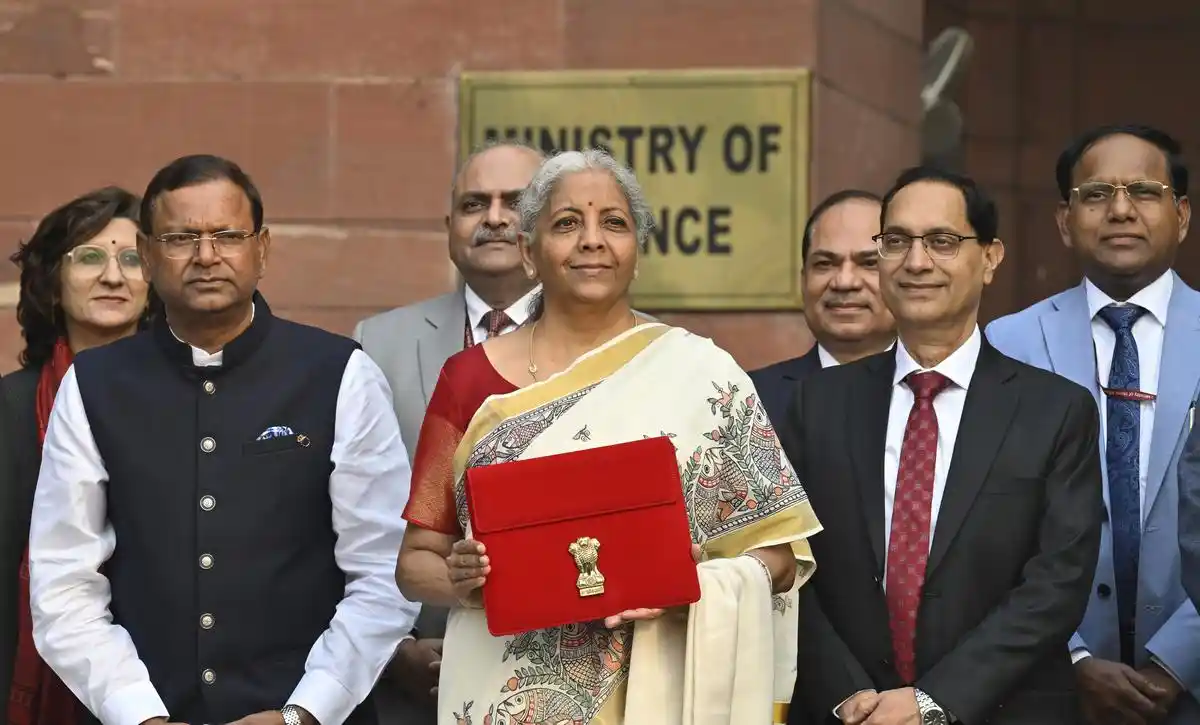
India’s Union Budget for 2026–27, to be presented today, on February 1, comes at a delicate moment: growth is reasonably strong, but the space for fiscal largesse is narrowing, and expectations from households, markets, and businesses are all pulling in slightly different directions. As Finance Minister Nirmala Sitharaman rises to present what could shape the next phase of India’s growth story, the big question is how she will balance fiscal consolidation with the political and economic imperative to keep investment, jobs, and consumption humming.
Macroeconomic and fiscal stance
- Growth projections for FY26–27 are in the 6.8–7.2% range, supported by domestic demand and capex-heavy public investment.
- Consensus is that the Centre will stick to a glide path of fiscal deficit reduction, with expectations of capping FY27 deficit near 4.3% of GDP versus 4.4% budgeted for FY26, the lowest since FY19.
- Commentators expect disciplined revenue spending and subsidies, with room created for higher capital allocation rather than stimulus-style consumption boosting.
Capital expenditure, infrastructure and housing
- Analysts expect central government capex to rise by roughly 10% year‑on‑year to the ₹12–13 trillion range (about 3.1% of GDP), sustaining the capex‑led growth template.
- Infrastructure is likely to broaden beyond roads and railways, with higher allocations anticipated for power, nuclear energy, logistics, electronics manufacturing and critical minerals.
- Housing and urban development are seen as key pillars: asks include faster approvals, support for green/sustainable housing, and infrastructure‑led expansion in Tier‑2/3 cities to stimulate real estate and allied sectors.
Taxation: income tax, GST and compliance
- Multiple tax experts flag that drastic changes in personal income tax slabs are unlikely, but there is expectation of a higher standard deduction under the new regime to mildly boost disposable incomes.
- There is also lobbying for a higher deduction limit on home loan interest, with figures like raising the cap towards ₹3 lakh being cited as a reasonable ask.
- On the structural side, businesses expect simplification of direct tax rules and faster dispute resolution, along with GST input tax credit (ITC) reforms aimed at easing working capital and compliance burdens for SMEs and MSMEs.
Sectoral expectations: defence, railways, MSMEs and exporters
- Defence and allied industries are seen as major beneficiaries, with projections of double‑digit growth in defence capex and continued push for indigenisation, drones, and “Make in India” platforms.
- Railways are expected to see increased budget allocation and capacity expansion, although some analysts anticipate a more range‑bound increase compared to the last few years’ surge.
- MSMEs are looking for enhanced, more targeted credit support, especially last‑mile access for micro and small enterprises through guarantees, interest subvention, and better digital infrastructure.
- Export‑oriented sectors want expansion of the Export Promotion Mission and measures to cushion labour‑intensive industries like textiles, leather, toys and others impacted by external tariffs and trade disruptions.
Markets, households and investors
- Equity markets are going into Budget 2026 expecting continuity in fiscal discipline and capex‑led growth, with sectoral optimism around defence, clean energy, AI, infrastructure and digital platforms.
- Households are hoping for incremental relief that nudges up disposable income and savings—primarily through standard deduction changes and better salaried‑class tax benefits rather than a complete overhaul.
- For mutual fund and retail investors, commentary highlights opportunities in defence, infrastructure, power, EVs and digital services as key long‑term themes if the capex and reform momentum is maintained.
The success of Budget 2026–27 will be judged less by headline announcements and more by whether it signals a credible path: steady deficit reduction without choking public capex, modest but meaningful relief for the middle class, and a transparent policy push for sectors like defence, infrastructure, green energy and MSMEs. If the Budget can reassure rating agencies, excite investors and still leave ordinary taxpayers feeling that the state has heard them—even without dramatic giveaways—it will have quietly done the heavy lifting for India’s next leg of growth.

